Suggested reading: Create a WhatsApp Business Standard Template on InOne
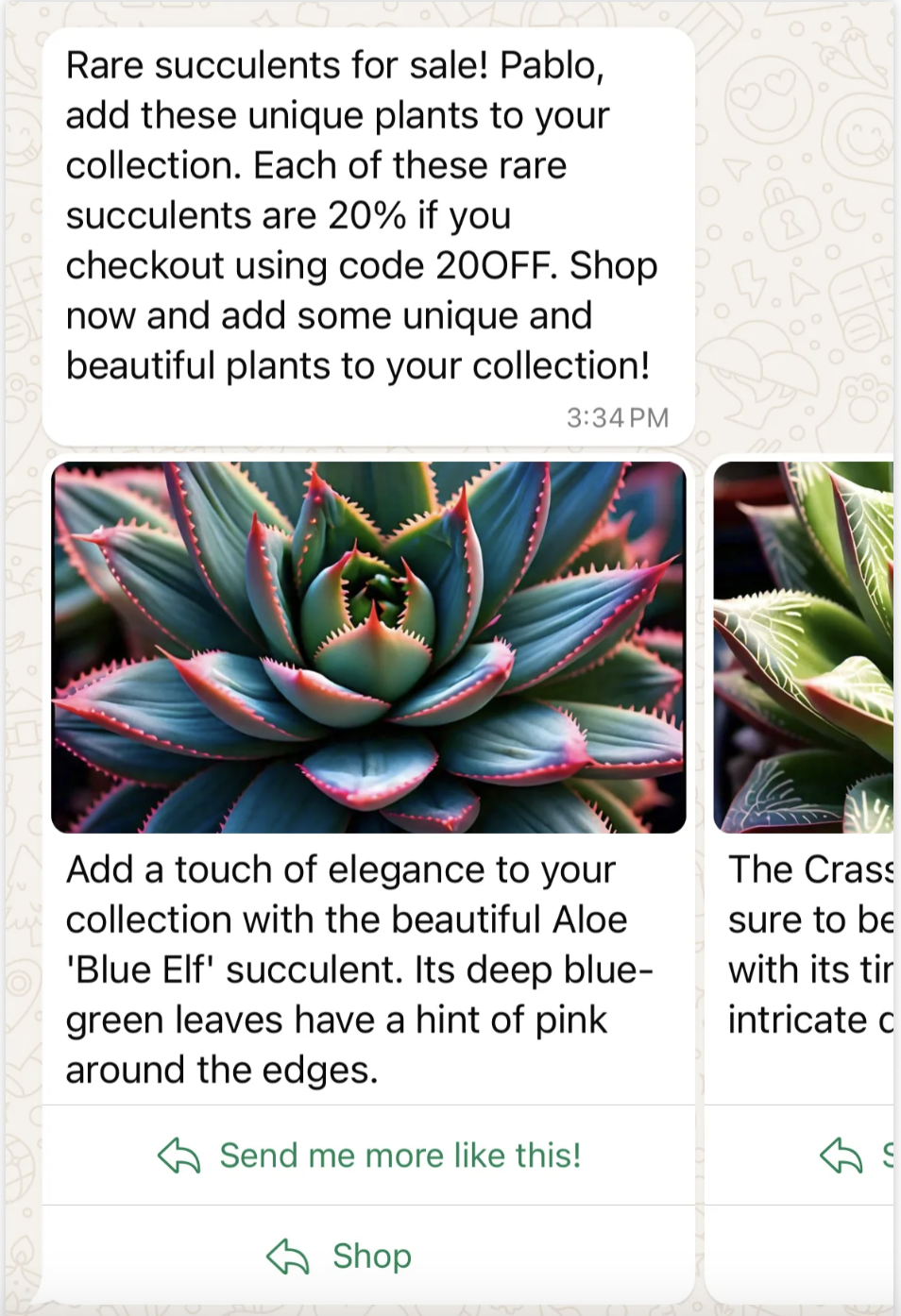
WhatsApp Business Carousel Templates, also known as carousel messages, let you send a swipeable set of product cards in a single WhatsApp message. Each message can include up to six cards, and each card has its own image and description. This format gives you an engaging way to tell a story or showcase several products at once.
This guide aims to answer these questions:
Elements of Carousel Templates
Carousel templates consist of a message body and up to six media cards. Each card includes an image or video header, body text, and up to two buttons.
You can't combine quick reply buttons and URL buttons on carousel cards.
The Carousel templates include the Message bubble, Card header, Card body, and Card buttons.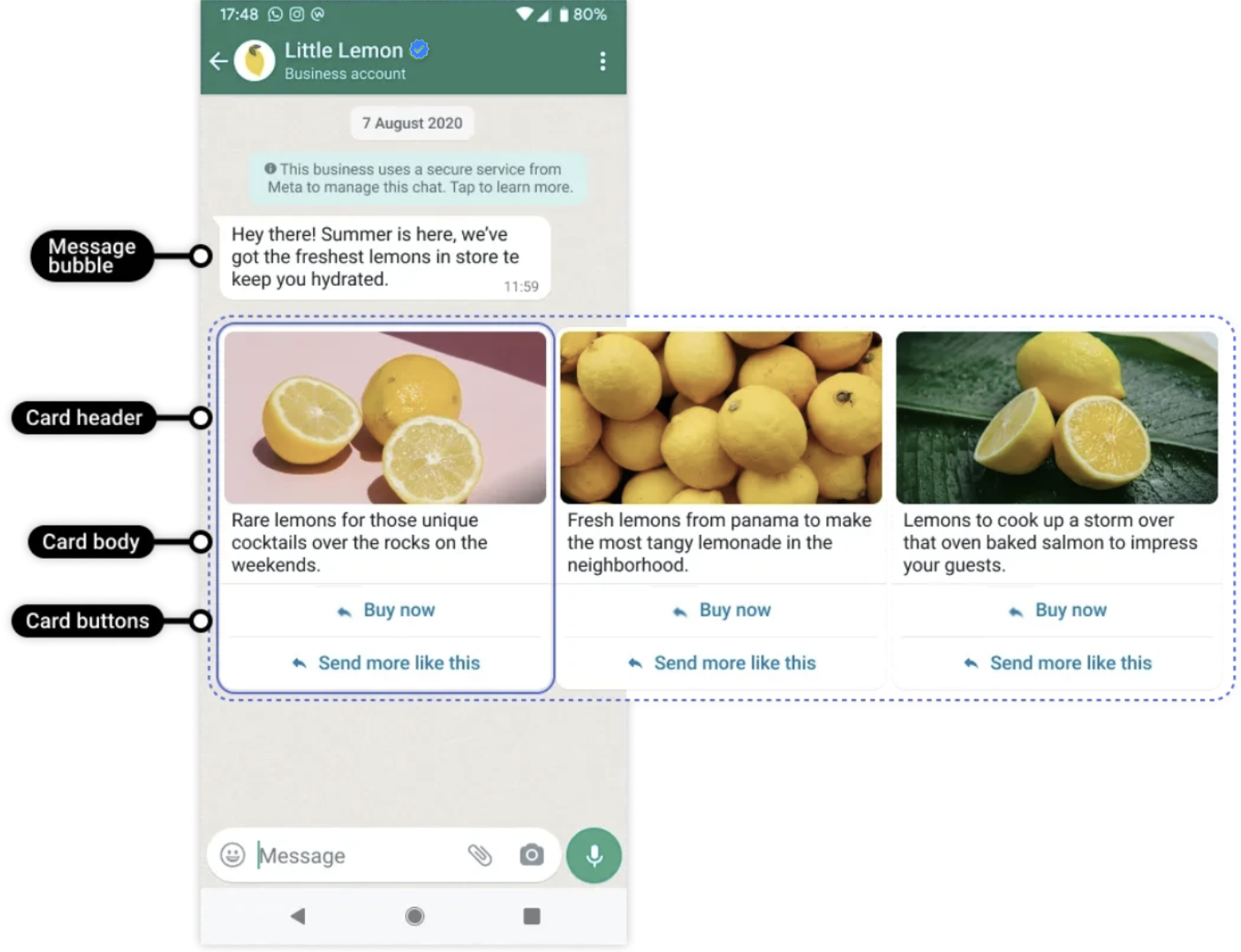
Create a Carousel Template
To create a Carousel template,
Navigate to Campaigns > Messaging > WhatsApp.
On the listing page, switch to the Templates tab and click Create.

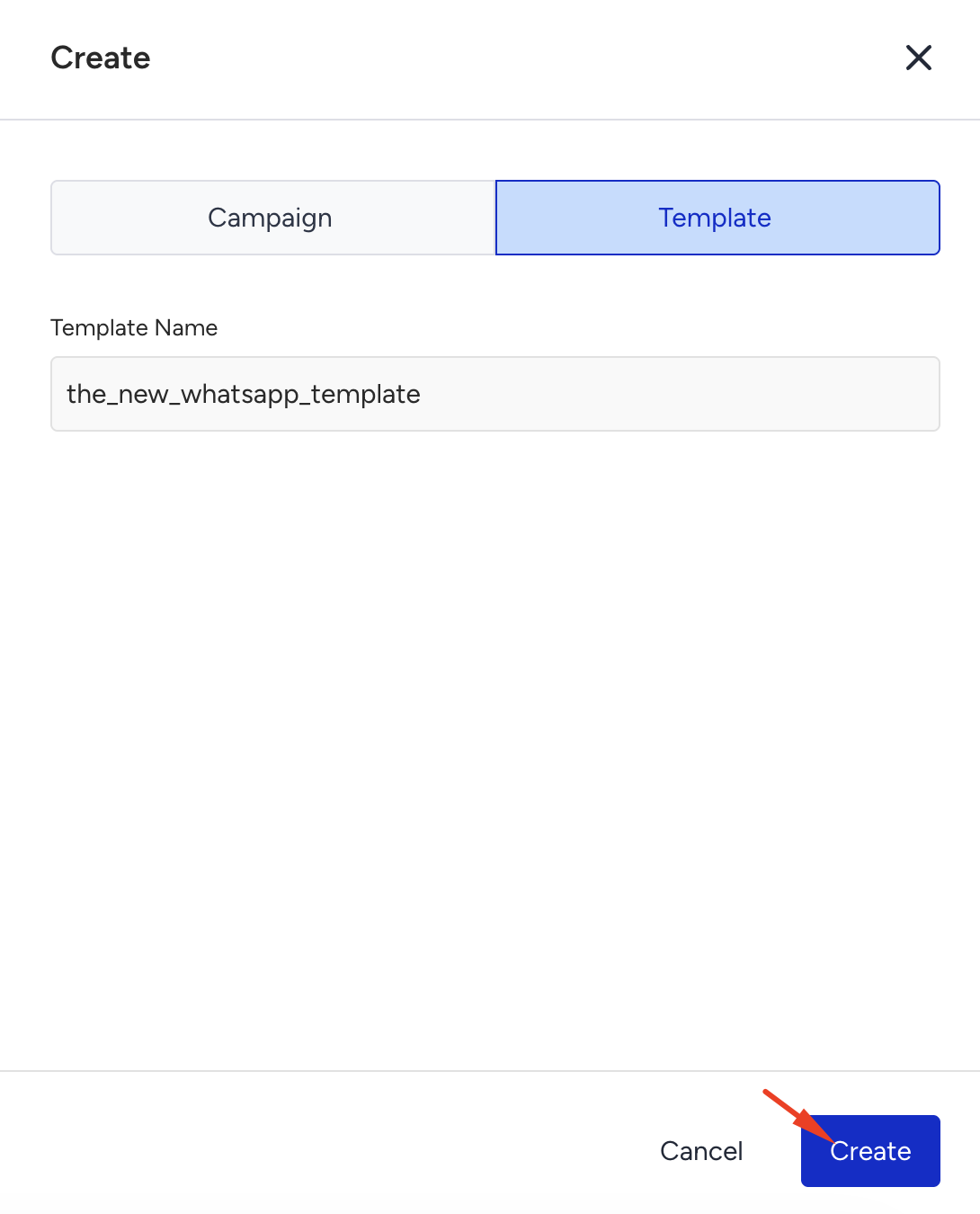
Name your template, click the Create button, and proceed to the template creation screen.
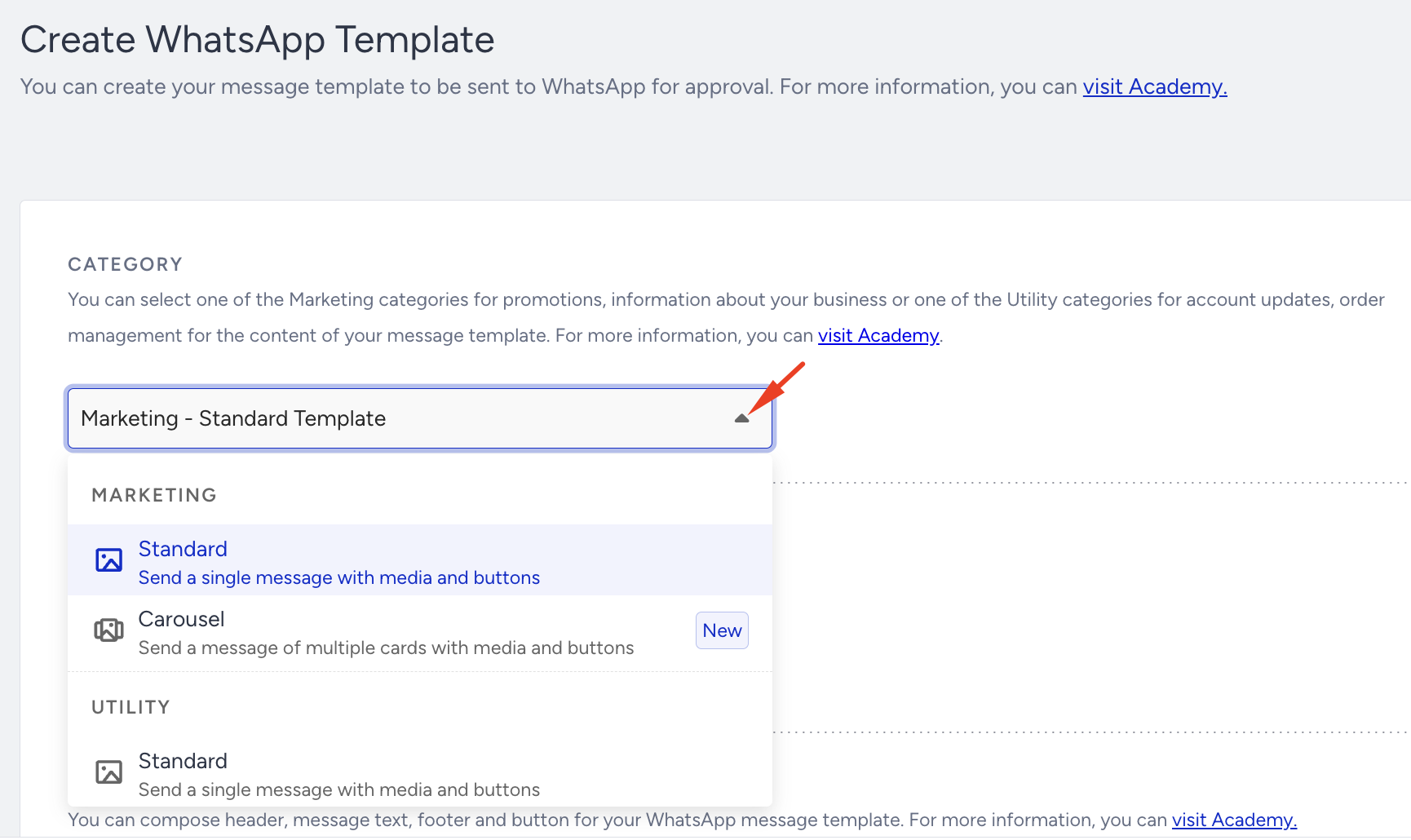
On the template creation screen, select Marketing as the category. You can select the template categories below:
Standard: Suitable for messages with media and a single button.
Carousel: The carousel template allows you to display multiple cards with media and buttons in a single message.
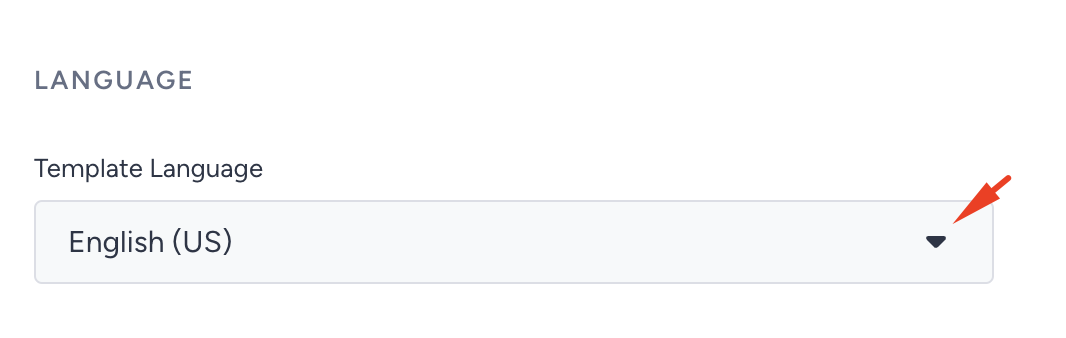
Select the language for the Carousel template.
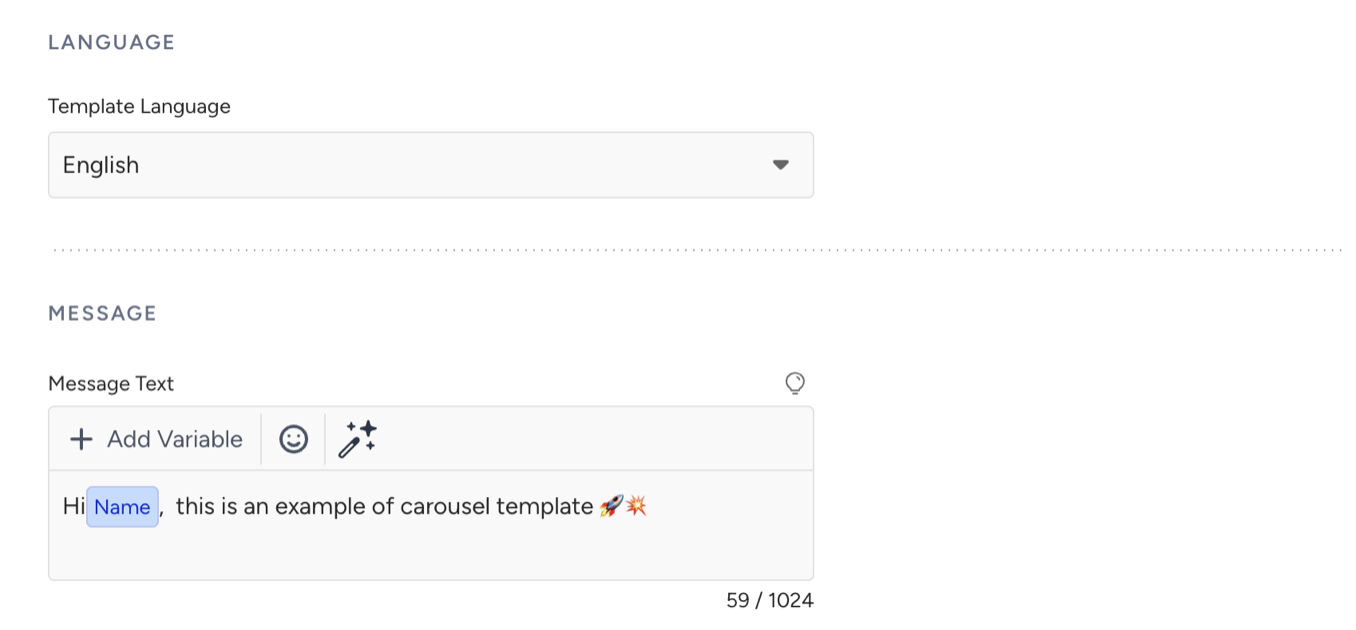
Enter your message in the Message text field. In this field, you can create the main content of your message with a maximum limit of 1024 characters (including template variables).
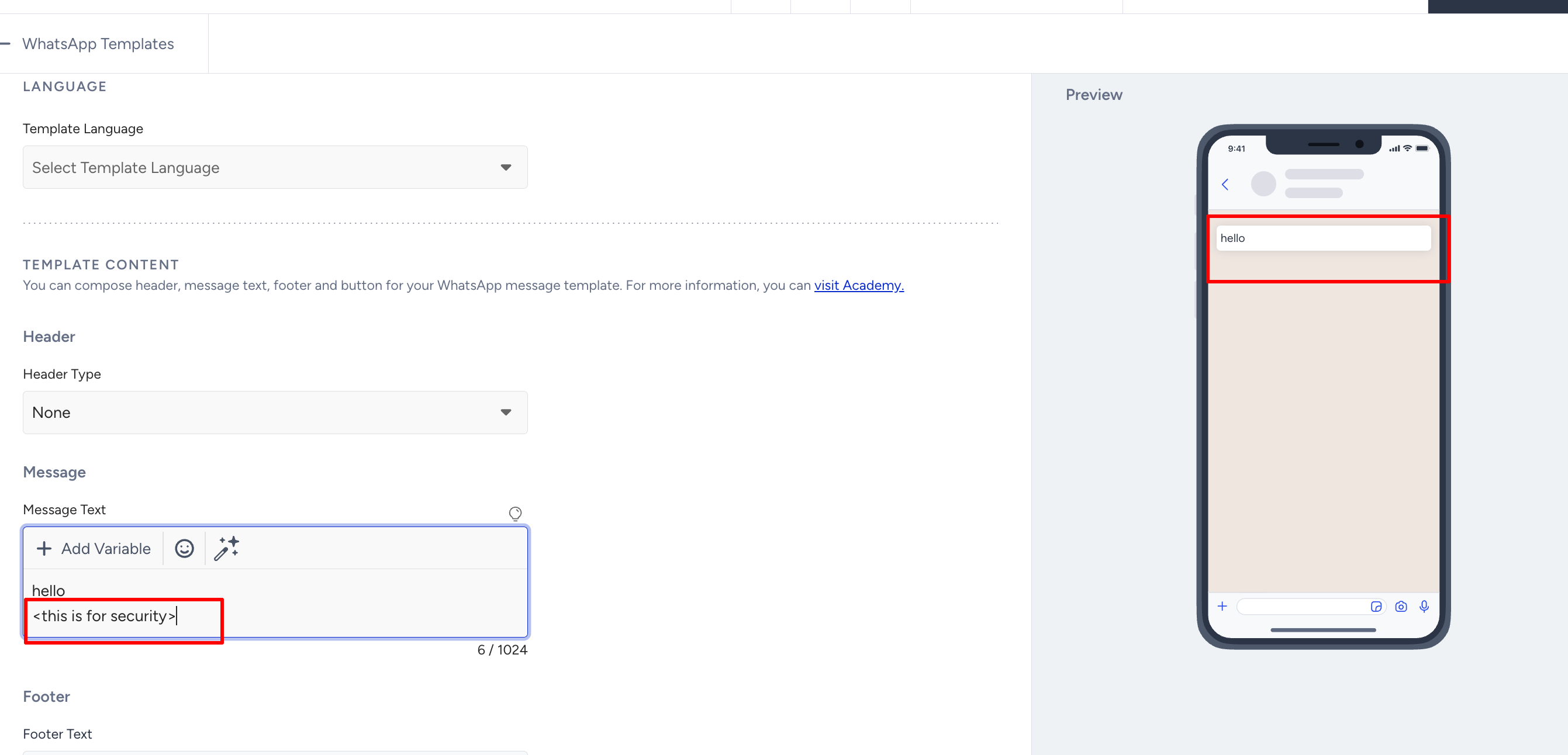
If you include angle brackets (< >) in the Message text field, any content within them will not be displayed in the message preview or sent message. This security measure prevents potential code injection or message manipulation attempts, as angle brackets can be used to embed executable or unsafe content.
Important: Template Rejection Rules
To reduce the chance of rejection, follow these key rules when creating your template:
Do not start a template with a variable.
Do not end a template with a variable.
Do not place two variables back-to-back without text in between.
You can use emojis to make the message more engaging, add variables to personalize the message for users, and select from default or custom attributes. There’s no restriction on the number of variables you can include in a template.
Choose the Header type for the Carousel cards. To create more engaging content, you can add an image or video as a header to your carousel template.
Avoid adding emojis to the header, footer, CTA button text, or any section without an emoji selector. Meta doesn’t support them in these areas, and including them will cause a submission error.
- If you want to use an image in your template, you can upload images with a maximum resolution of 1920 × 1920 pixels and a maximum file size of 5 MB in supported formats. Media with any aspect ratio can be uploaded. WhatsApp automatically resizes images as needed, with no cropping or rejection based on aspect ratio. For the best visual results, Insider One recommends uploading images with the highest possible resolution within the supported limits.
- Videos must be in MP4 format, with a maximum size of 16 MB. The first frame of the videos will be used as the preview.When uploading videos, changing a file's extension to .mp4 does not convert it into the correct format. The video must be originally encoded in MP4 or 3GPP; otherwise, it might fail the format check and result in an error.
3GPP (.3gp) video format cannot be uploaded during template creation due to Meta limitations. If you want to use a 3GPP video in your campaign, upload an MP4 video when creating the template, then replace it with your 3GPP file during the campaign creation step.
If you encounter a media upload error related to the video codec when uploading a video URL, refer to the troubleshooting steps below to resolve the issue.
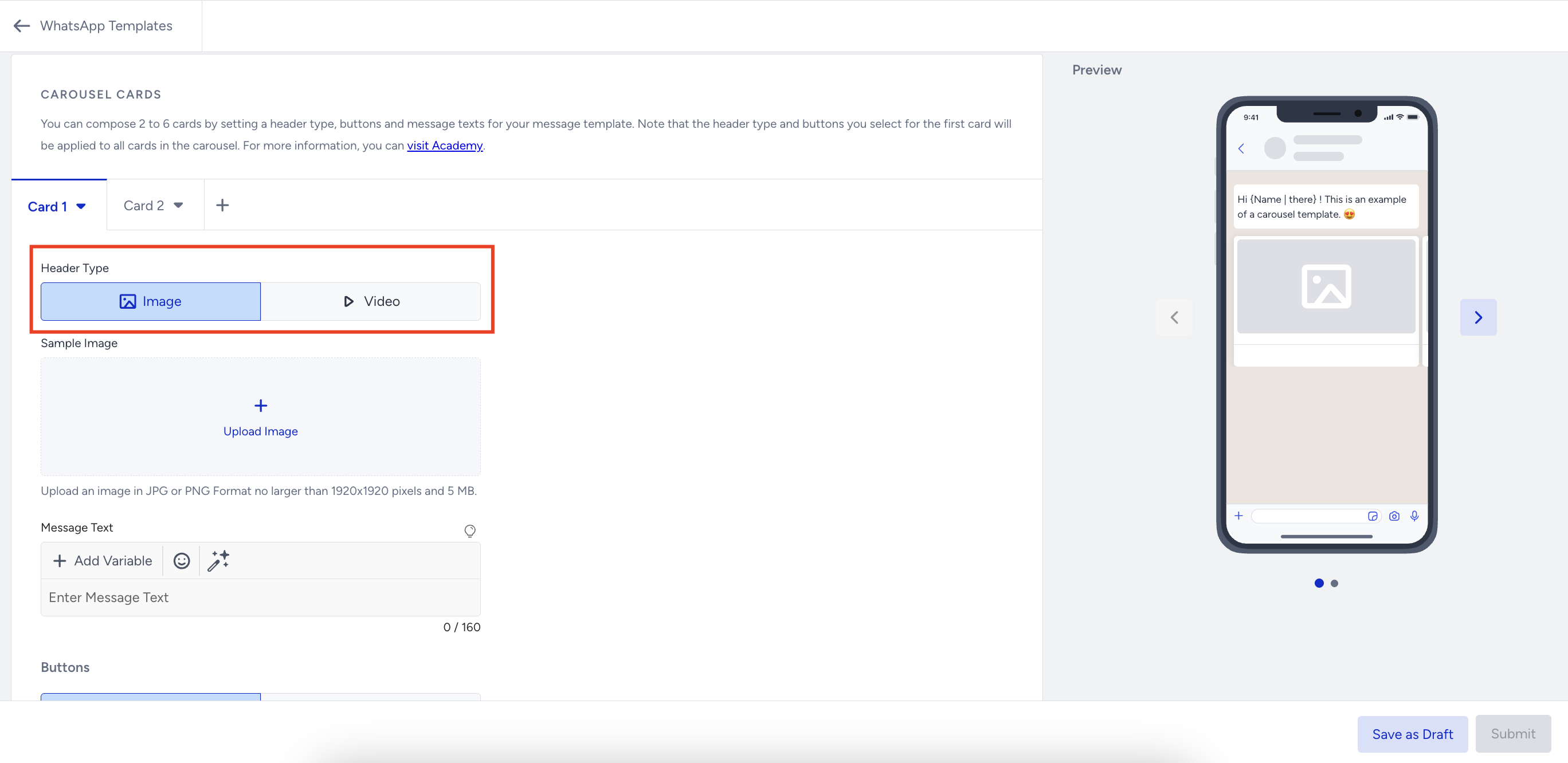
All cards must have the same header type. For example, if the first card uses a video header, all subsequent cards must also use video headers. You may not mix different media types across cards.
Enter your message for each card in the Message Text area. The text area allows up to 160 characters, including template variables. You can include emojis and personalization variables (default or custom attributes) to craft a more engaging message.
You can add as many variables as you want, as they depend on "user attributes" for personalization.
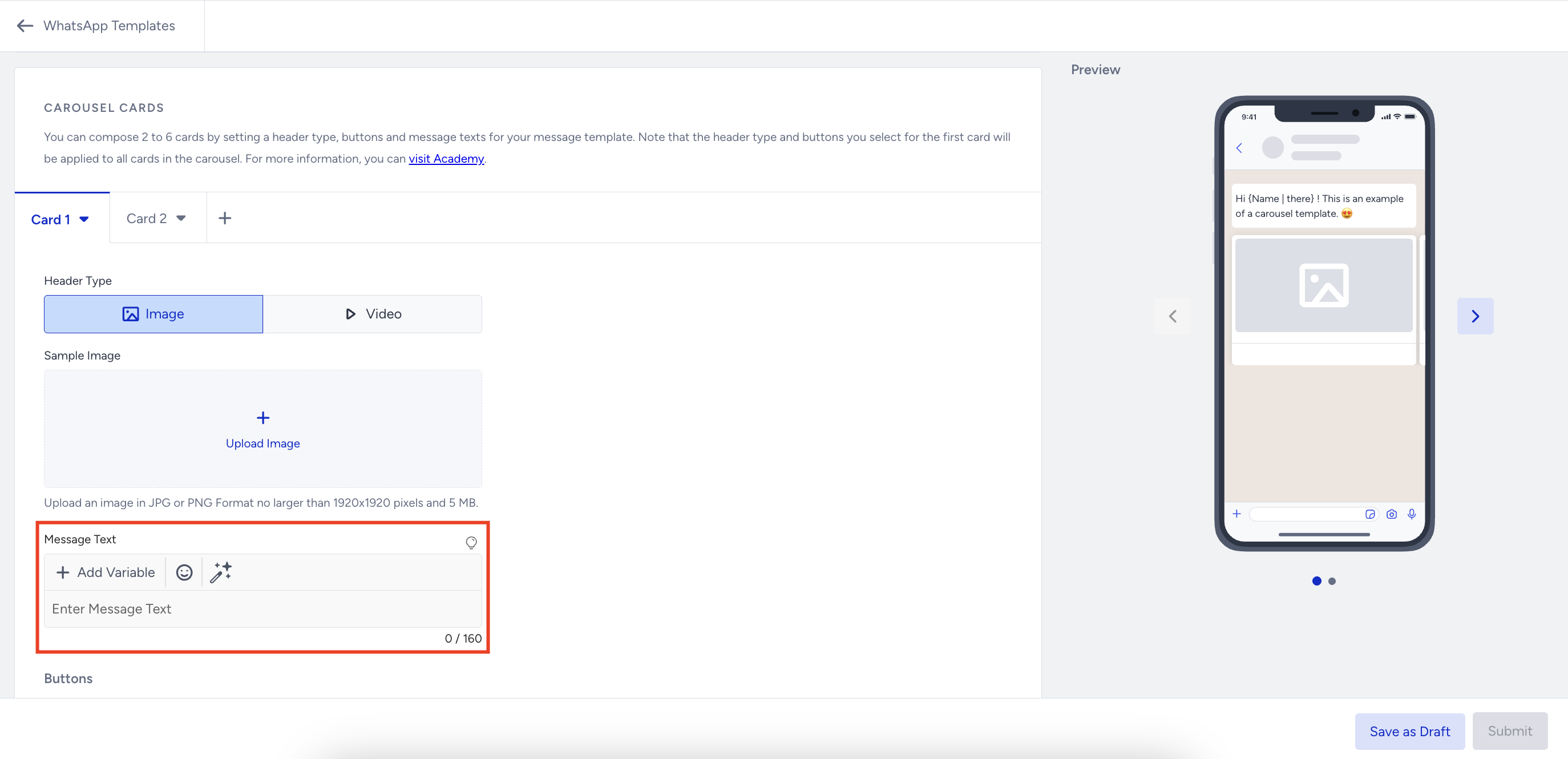
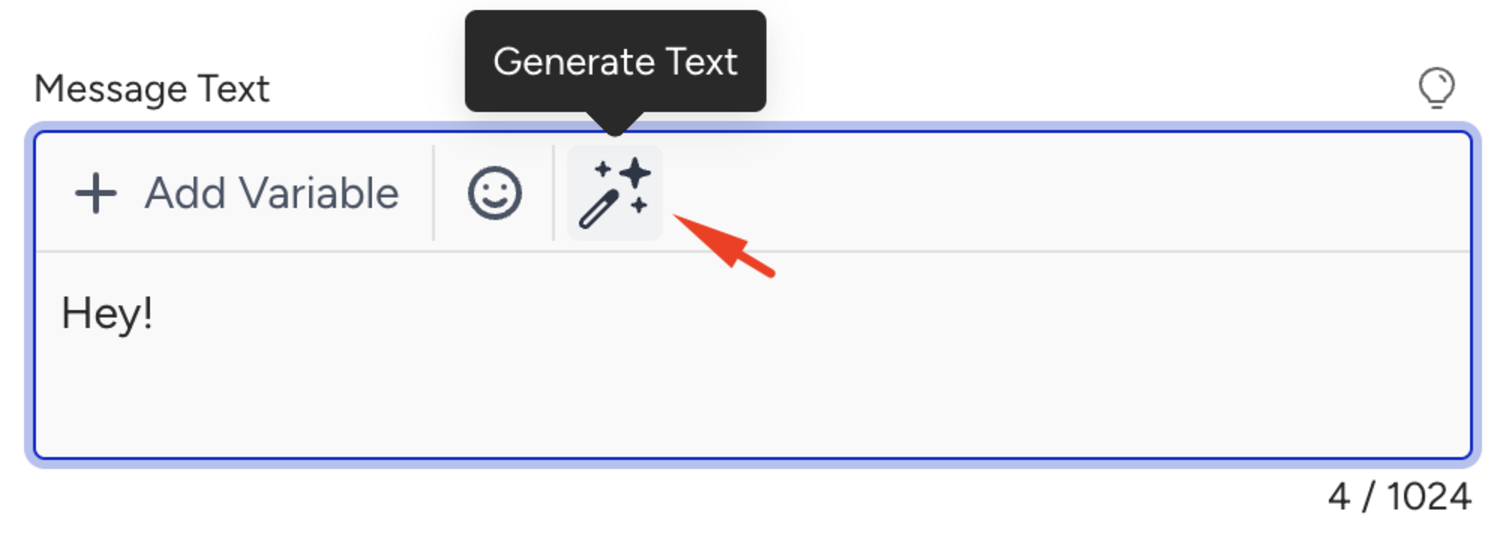
If you need inspiration to create your message text, you can use the Generate Text option.
Refer to WhatsApp AI Text Generator to use AI-generated text in your messages.
In the Buttons section, you can add two types of buttons to the cards:
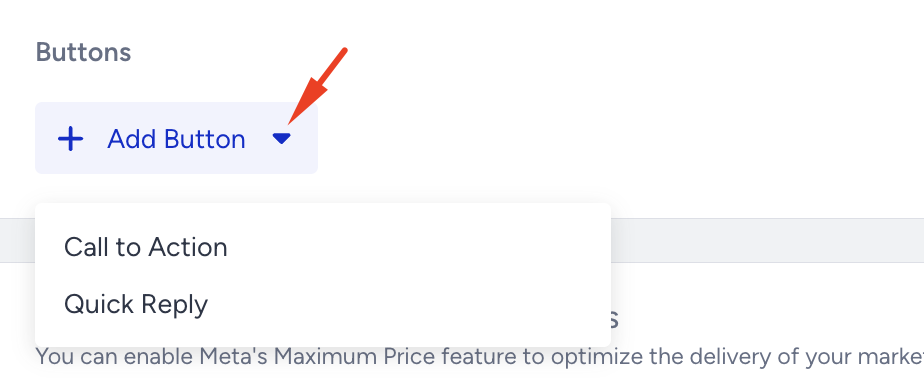
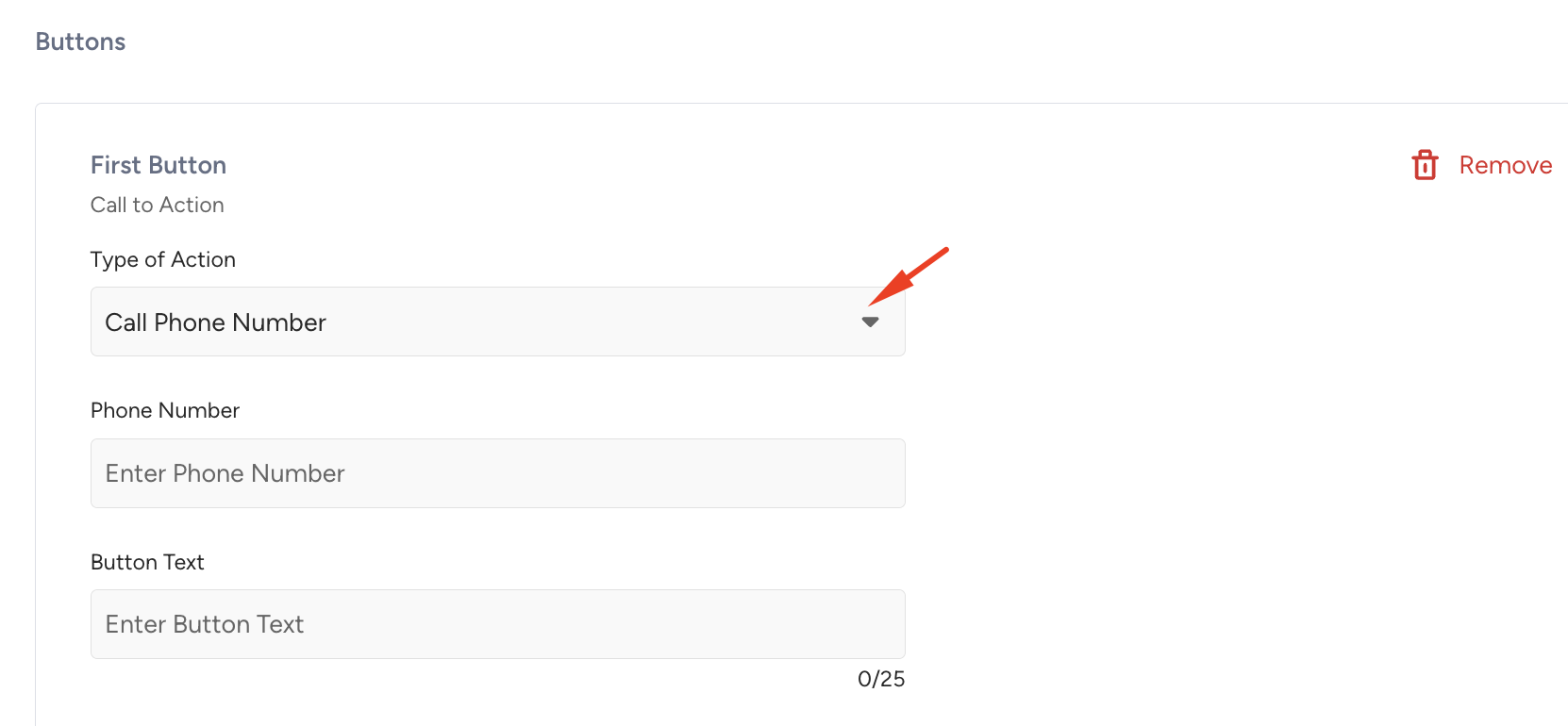
Call-to-Action (CTA) Buttons: Use CTA buttons to increase engagement and drive users to take action. Each card can include Call to Action buttons, Quick Reply buttons, or one of each. The supported CTA types for Carousel templates are listed below:
Visit Website: Redirects users to a web page.
Static (Custom) Link: Uses a fixed URL across all messages.
Dynamic Link: Uses attributes to generate a personalized URL.
Visit Website CTAs also support deep links, allowing you to direct users to a specific screen or feature within your mobile application using a custom URI scheme.
You can use deep links in CTA buttons:
Select Visit Website as the button type.
Select Dynamic Link or Custom Link.
Enter your deep link in the URL field. Example:
myapp://product/123Save and submit the template for Meta approval.
You can also include deep links directly in the message body text.
Enter the deep link directly into the template body.
Enable URL Shortener if you want the link to be tappable for recipients.
Deep links follow the same routing flow as standard URLs. When recipients tap a deep link, the link passes through Insider One's tracking domain to record click analytics before the mobile operating system opens the relevant app screen.
Deep links work only on mobile devices and require the related mobile application to be installed on the recipient’s device. They do not work in web browsers. If the application is not installed, the behavior depends on the app’s own deep link configuration.
Call Phone Number: Allows users to call a phone number directly.
Quick Reply: You can add a maximum of two quick reply buttons for each card, with button names set in the template and response options defined during campaign creation.
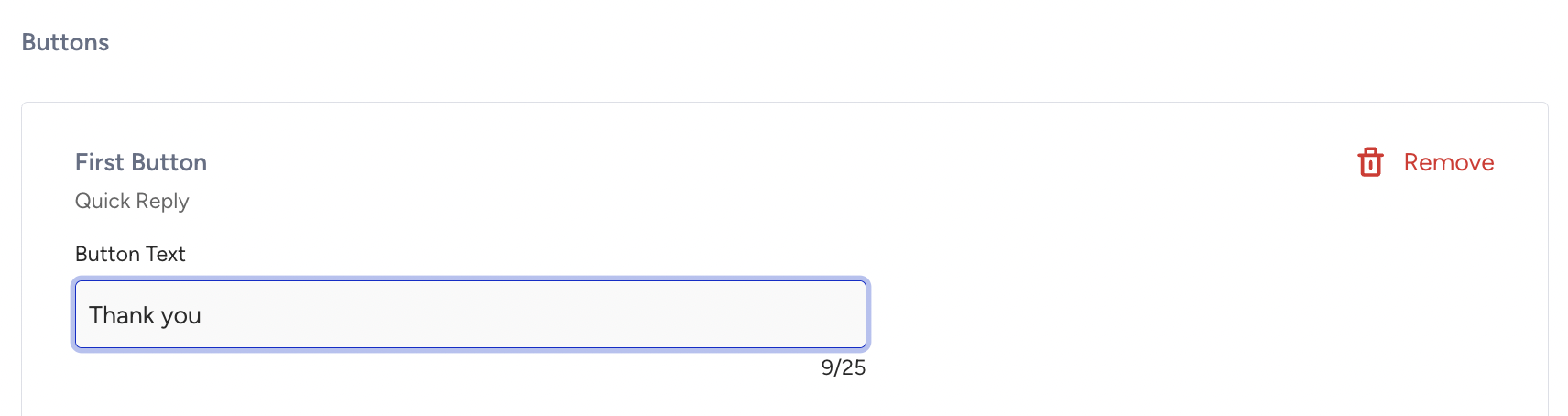
A card holds a maximum of two buttons, so a combined card carries one Call to Action button and one Quick Reply button.
The button type and number must remain consistent across all cards. A card that pairs a Call to Action button with a Quick Reply button sets the shape that every other card in the carousel follows.
To add more cards to your carousel template, click the plus (+) button next to the cards. 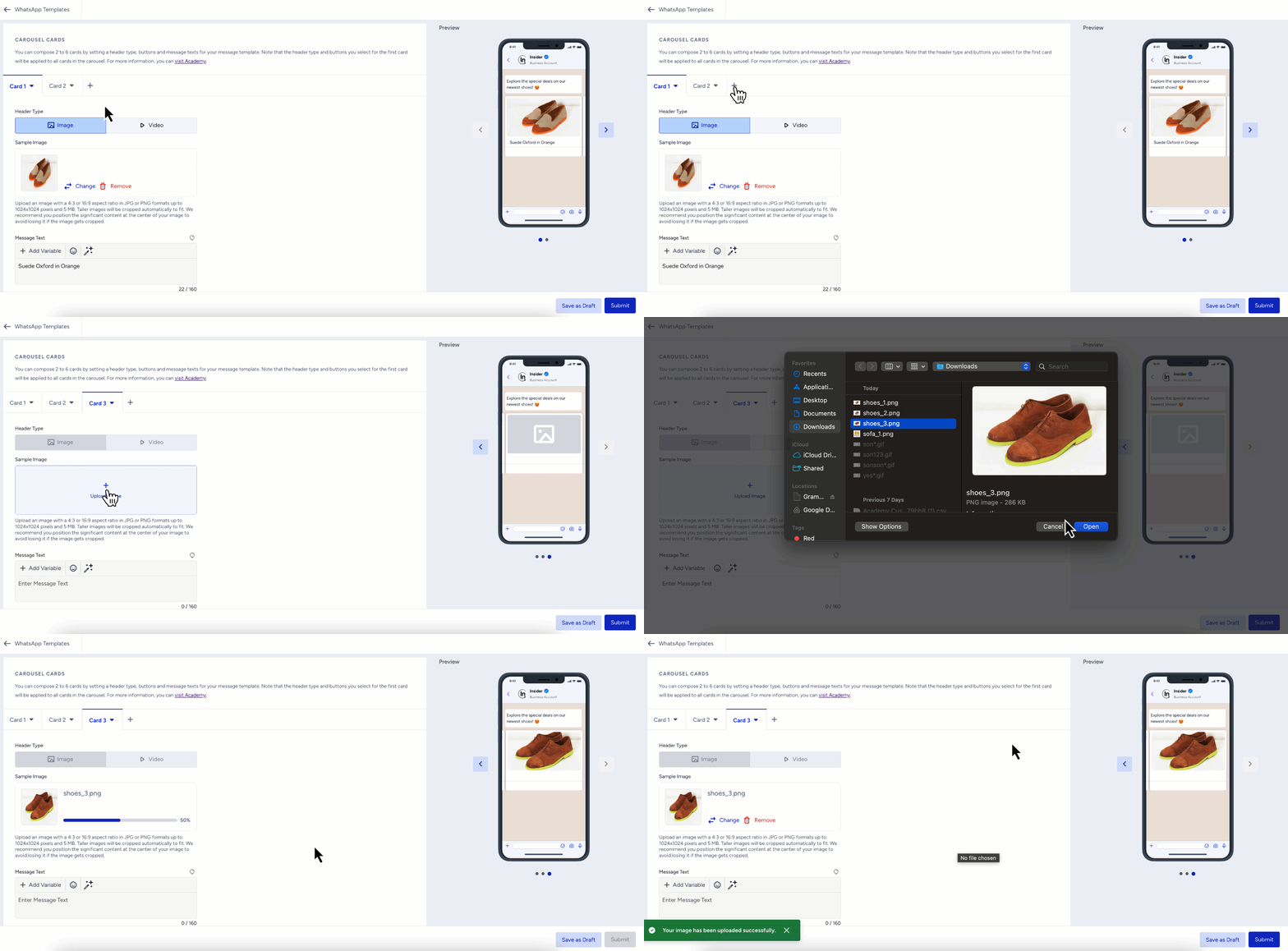
You can also duplicate or remove cards as needed. Click the relevant card and select Duplicate or Remove.
Review each card in the preview before submitting the template to ensure all elements are accurate and consistent. 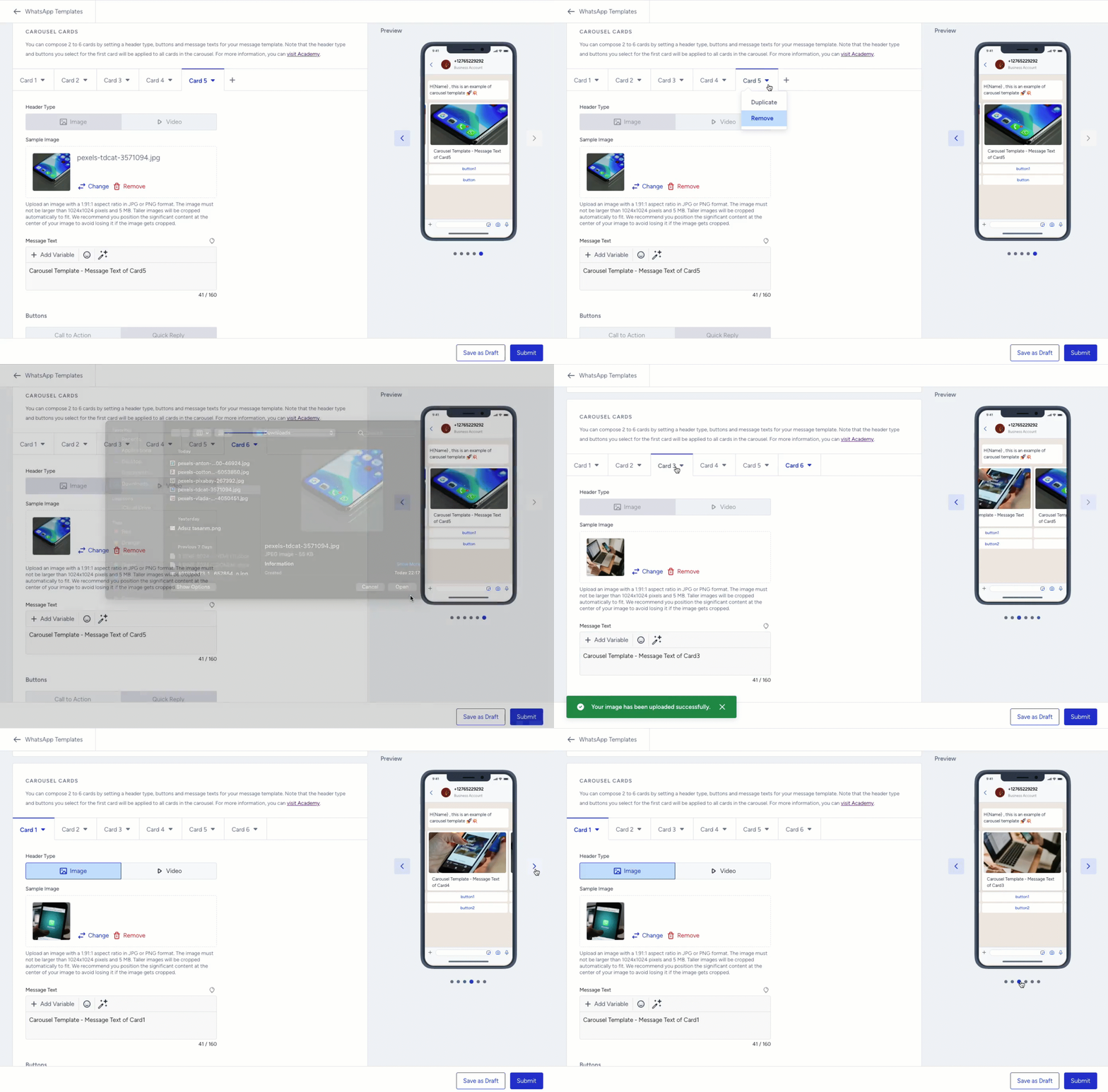
You must add at least 2 cards and can add up to 6 cards.
Link Previews on WhatsApp Templates
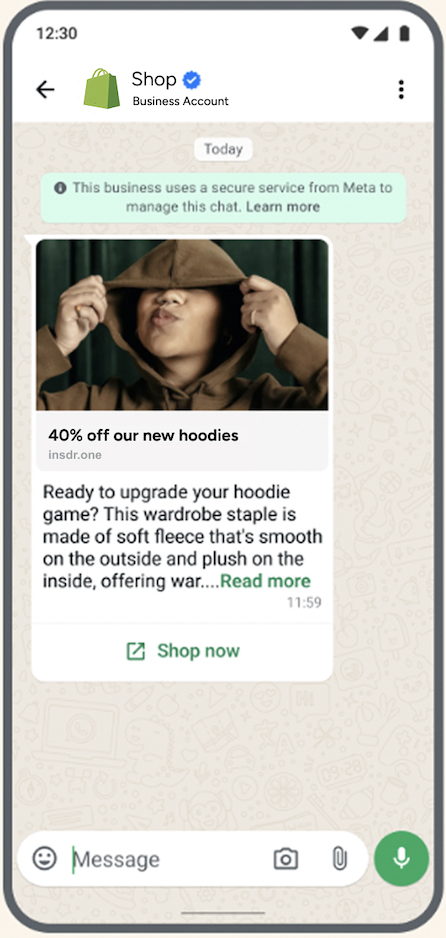
You can now use tappable image headers in your WhatsApp message templates to let users preview and open links directly from the message.
When you include a link, WhatsApp automatically displays a preview of the destination page, showing the website domain and a short description to help users understand where the link leads.
Users can open the link by tapping either the CTA button or the image header, creating a more seamless and engaging experience that improves click-through rates.
All links are routed through Insider One's secure tracking domain (insdr.one), ensuring every click is verified, measurable, and safely redirected to the final destination. You can also set a custom redirect domain to display your own branded domain in link previews and tappable image headers. Refer to the Custom Redirect Domain for more information.
10. Once you have updated all the fields with the necessary information, click the Submit button to send your template for WhatsApp approval. If you want to continue later, you can save it in draft mode and edit it as needed.
Only Administrator and Editor roles are authorized to submit a template to be approved by WhatsApp.
You can refer to WhatsApp's Message Templates Guidelines for further information on statuses and common rejection reasons.
Troubleshoot WhatsApp video upload errors (codec issues)
If you receive a media upload error related to video codecs while creating a WhatsApp template, the uploaded file might not meet Meta’s media requirements. Follow the steps below to inspect and fix the video file.
Download the video file. Get the video URL from the campaign, paste it into your browser, and save the file locally (right-click > Save As).
Check the video properties. You can use one of these free online tools to inspect the video codec, resolution, and file size without installing anything:
MediaInfoOnline: Upload your file, and it will show full codec details
Metadata2go: Drag & drop your video to see metadata
Look for the Video Codec field in the results.
Compare against Meta's WhatsApp requirements:
Video Codec: Must be H.264 (not H.265/HEVC)
Audio Codec: AAC
Format: MP4 or 3GPP
Max File Size: 16 MB
Common rejection reasons:
Video encoded with H.265 (HEVC) instead of H.264
File size exceeding 16 MB
Non-AAC audio codec
Corrupted or non-standard MP4 container
4. If the codec is wrong, convert to H.264. You can use these free online converters:
FreeConvert: Select MP4 + H.264 as output.
CloudConvert MP4 Converter: Choose MP4 with H.264 codec.
Convertio MP4 Converter: Simple drag & drop conversion.
Upload the video, select MP4 (H.264) as the output format, and download the converted file. Then re-upload it to the campaign.
No software installation is needed for any of these steps.
Alternative: CLI approach (for technical users)
If you have FFmpeg installed, you can use the terminal instead:
Inspect codec, resolution, duration, and file size:
ffprobe -v error -show_entries stream=codec_name,codec_type,width,height,bit_rate,duration -show_entries format=size,duration,bit_rate -of default=noprint_wrappers=1 video.mp4or:
ffmpeg -i video.mp4
Re-encode to H.264 if needed:
ffmpeg -i video.mp4 -c:v libx264 -c:a aac -movflags +faststart output_h264.mp4