Single Web Push is a type of Web Push notification designed to send one-time or recurring messages to your entire subscriber base or specific user segments. It’s ideal for promotional announcements, updates, reminders, and time-sensitive offers.
With Single Web Push, you can personalize messages based on user behavior, attributes, or predefined segments, ensuring delivery at the most relevant time.
Before using Single Web Push, ensure that Web Push is properly set up in your channel settings and that the opt-in collection is active.
This article walks you through every step of the process:
Create a Single Web Push notification
To create a Single Web Push notification,
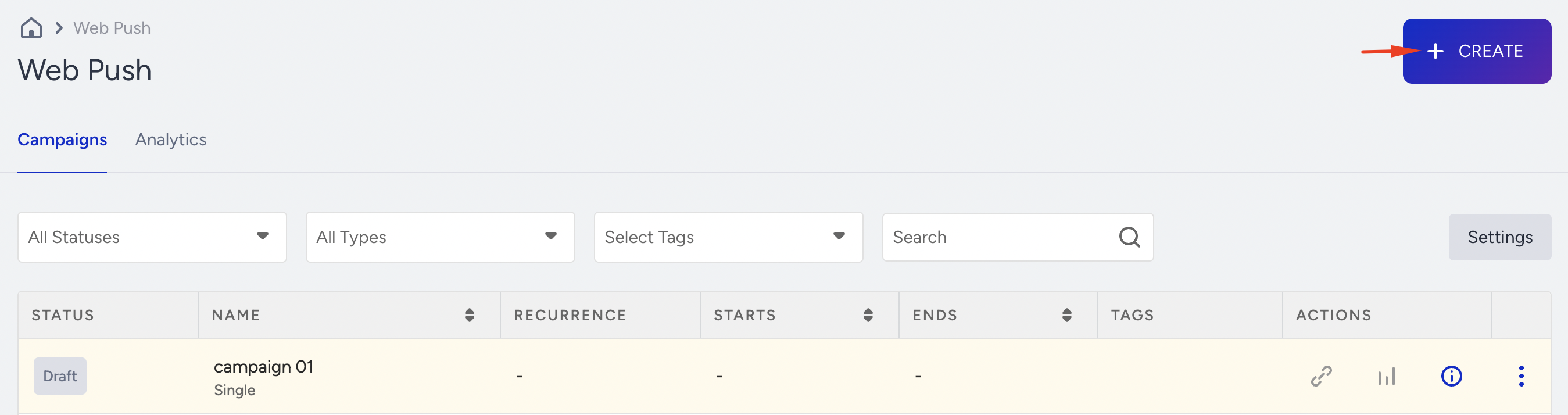
Navigate to Campaigns > Messaging > Web Push.
Click the Create button to start.
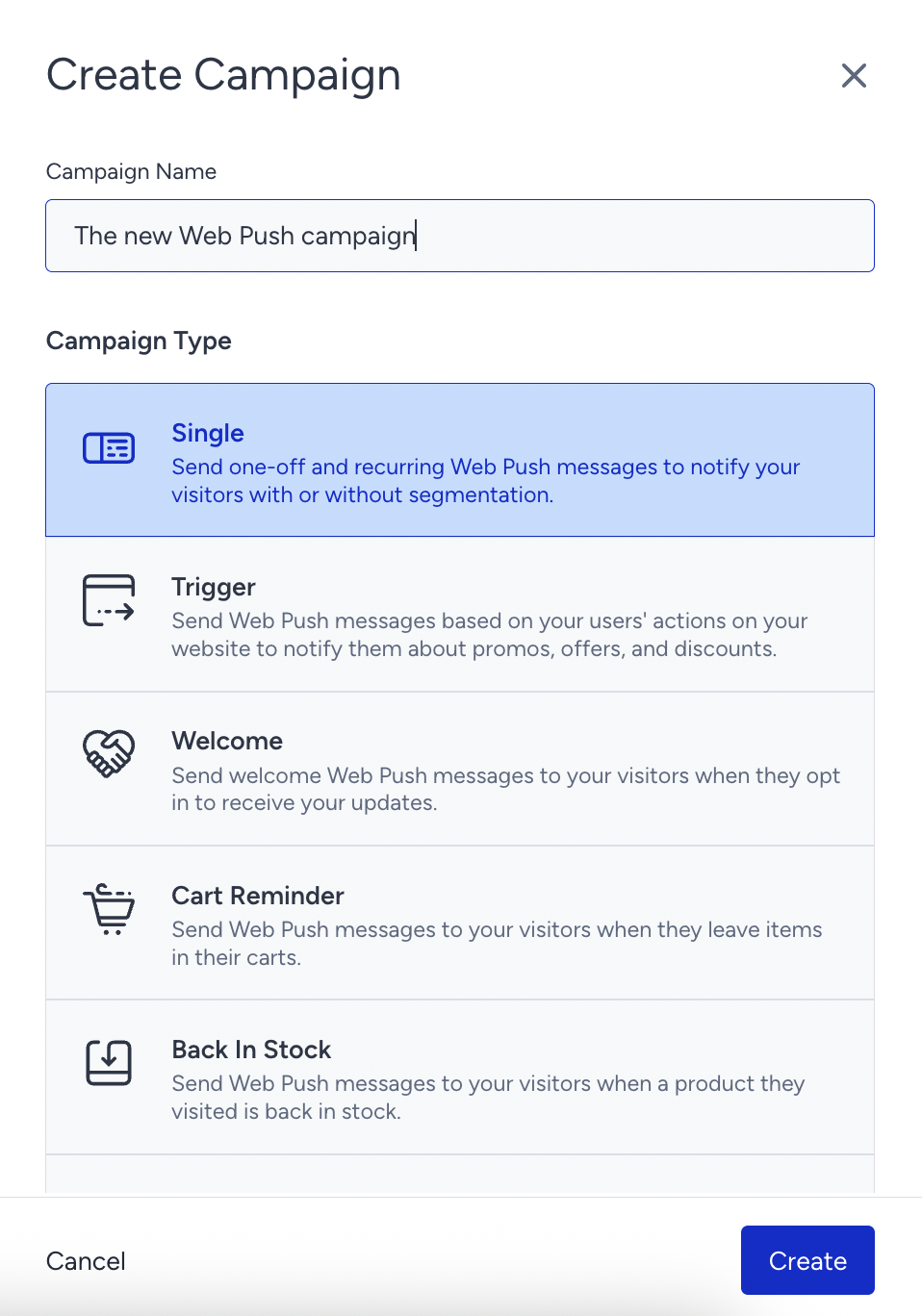
Name your campaign, choose your campaign type, and click the Create button to proceed.
Segment your audience
To narrow down and target the right audience, define your users in the Segments step of your campaign.
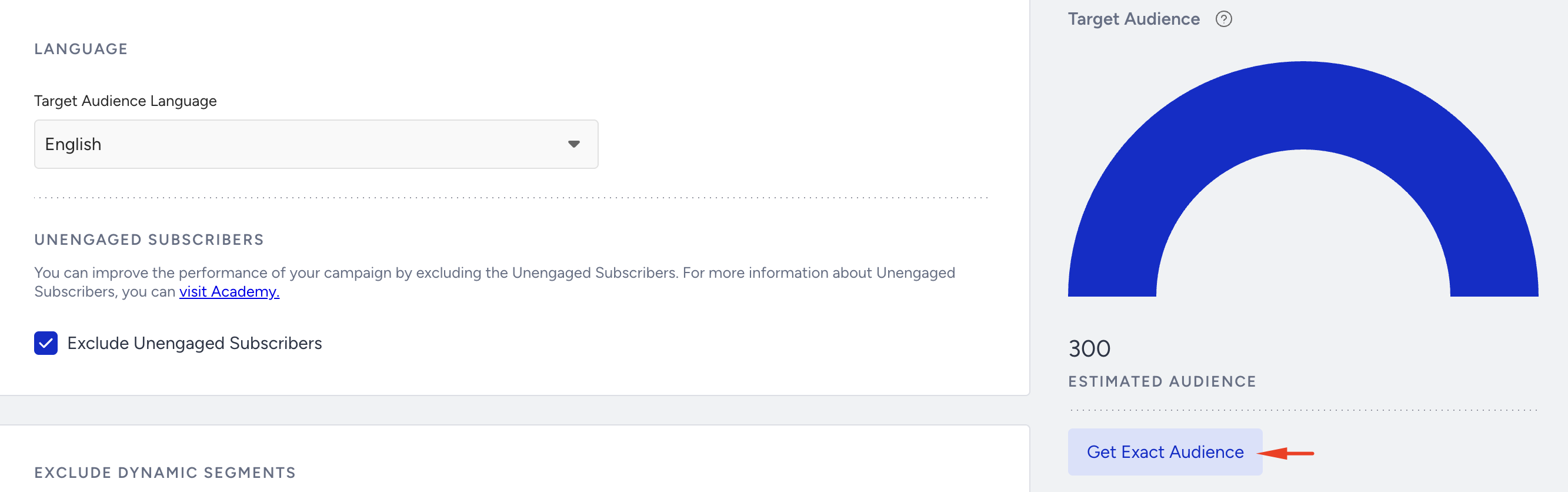
Choose your target audience's language first, then send it to the opted-in users who have opted in for that language. To target all your subscribers, select the "All Languages" option.
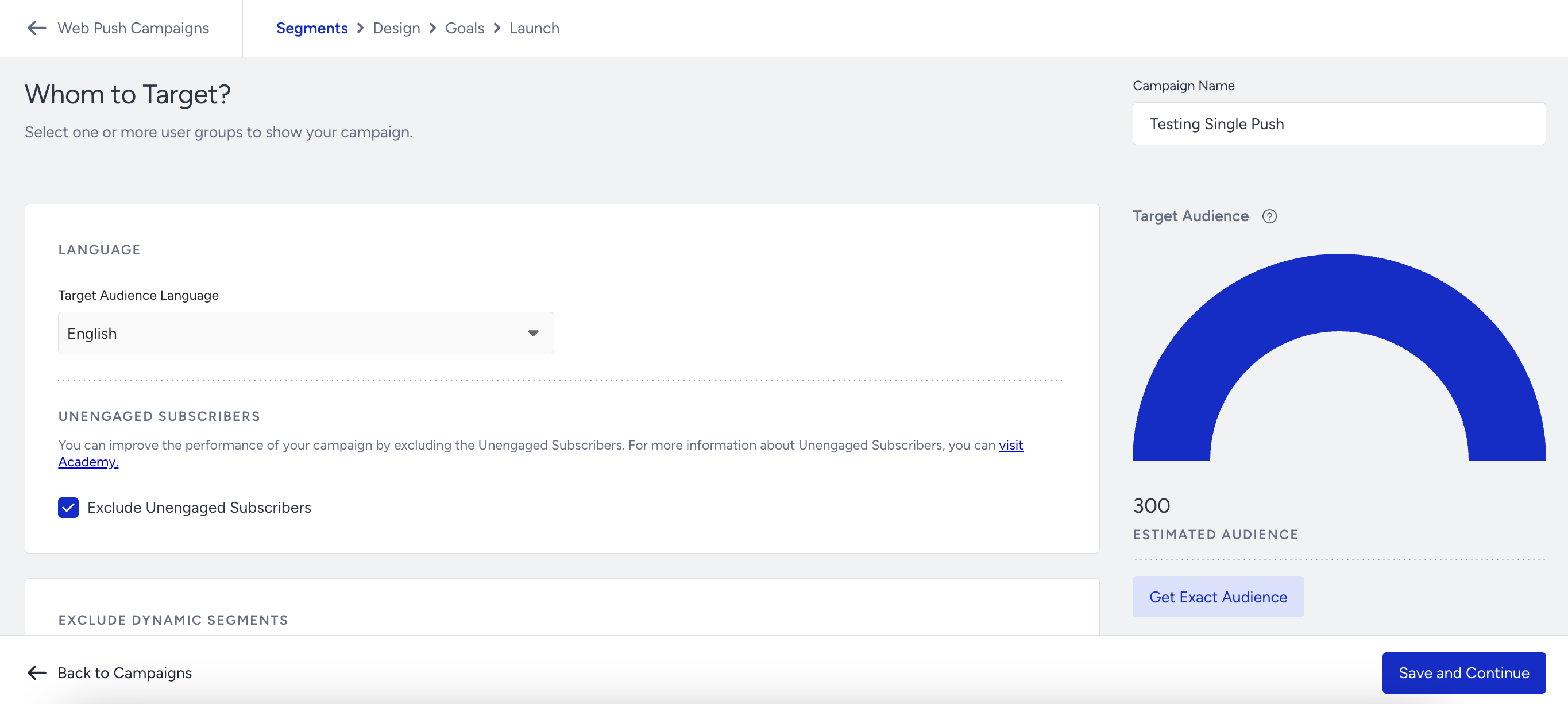
You can enable the "Exclude Unengaged Subscribers" checkbox if you want to exclude your inactive users. Using the Exclude Unengaged Subscribers option, you can send your web push notifications only to engaged users, resulting in more realistic Sent and CTR rates.
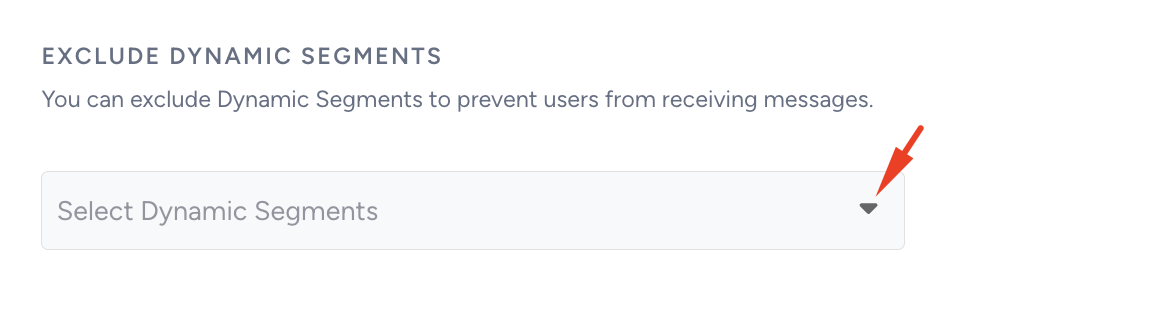
You can exclude Dynamic Segments to prevent certain user groups from receiving Web Push notifications.
Then, continue by selecting your segment groups. You can choose one or more user groups to display your campaign.
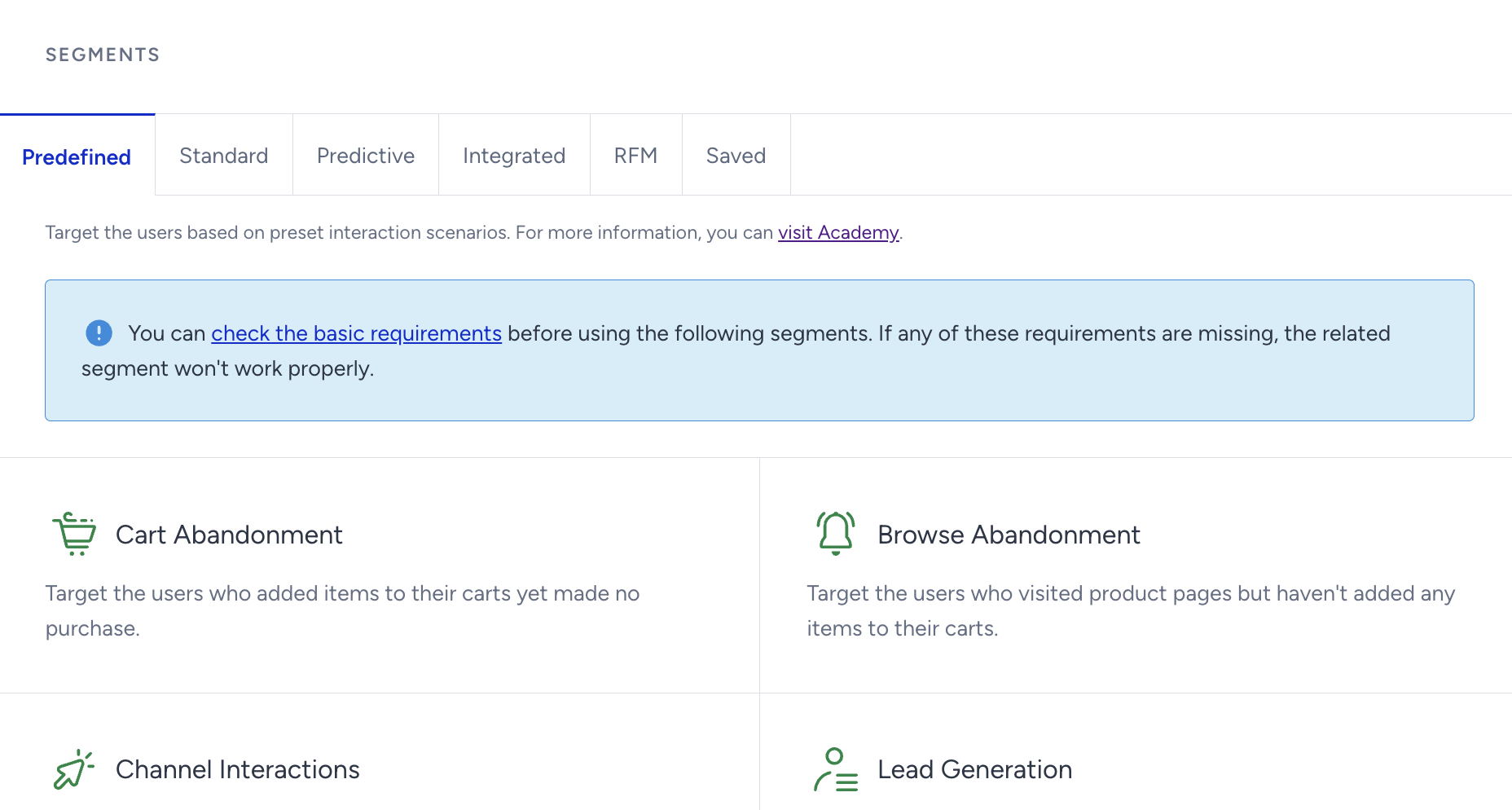
To use Events to segment your audience to send a Single Web Push notification, select Events listed under Standard Segments.
After your configurations, click the Get Exact Audience button to see the number of subscribers resulting from your segmentation.
You can also save your current segmentation as a Dynamic Segment to apply and target users for your campaigns later. Click the Save as a New Segment button to save your segment.
Design a Single Push notification
In the Design step, customize your campaign's text and visual content.
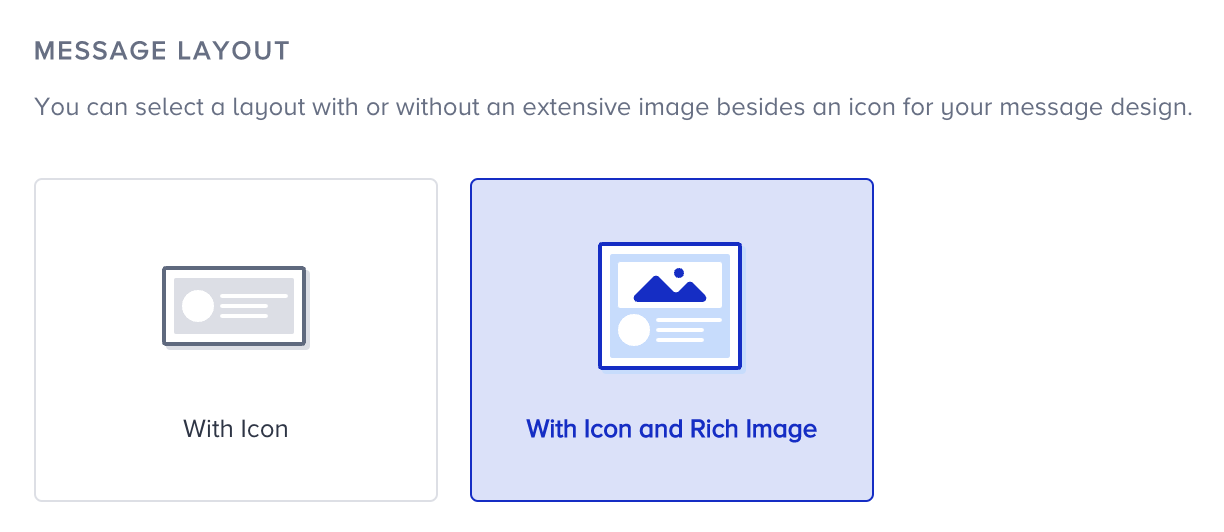
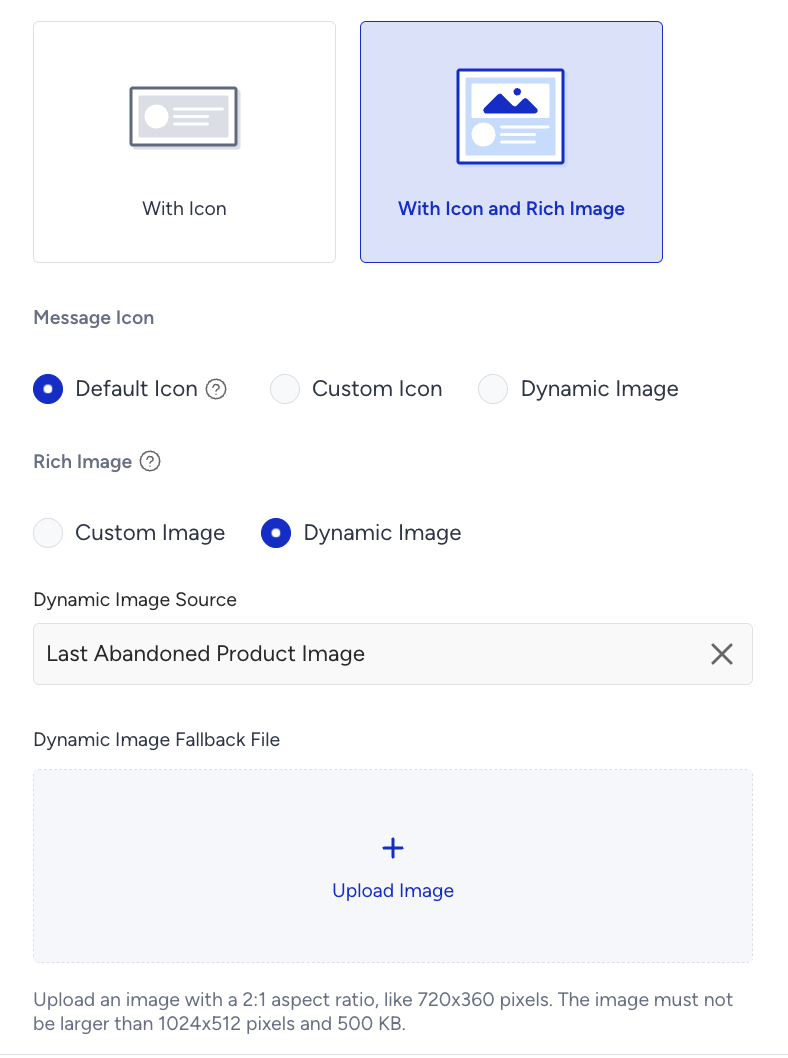
Select a layout to start designing your notification. It can be with an icon or an icon and a rich image.
Provide an icon for your Wen Push notification. Choose the type of rich image if you have chosen the layout with a rich image. You have three different options for the icon;
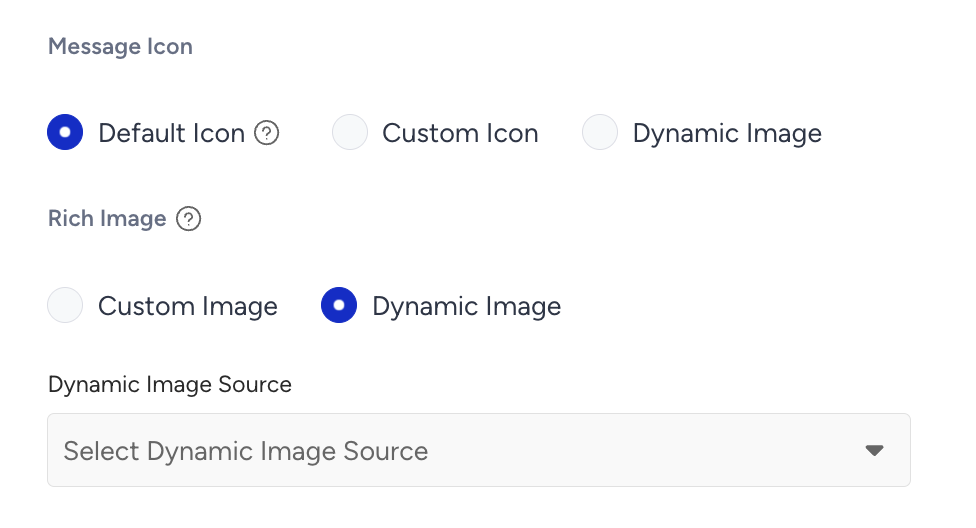
Default Icon: An icon configured on the Settings page of your panel.
Custom icon: Upload an icon from your computer.
Dynamic Image: Fetch an image using a URL (e.g., last visited product image or a product from an abandoned cart).
When you select the dynamic image as the message icon, you can also define a fallback to ensure your Web Push notifications are not broken if the image source is empty. 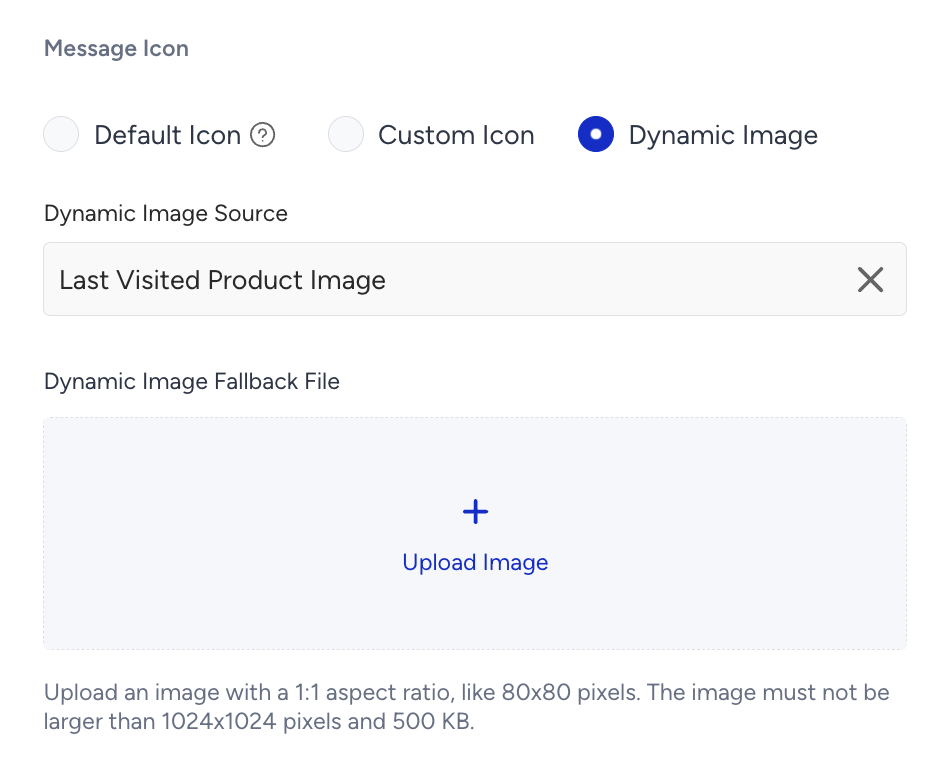
The recommended resolution is 80x80 pixels, and the image size should be less than 500 KB.
Rich image: You can either upload an image or provide a dynamic image URL for the rich push image.
Make sure that the rich push image size complies with the rules:
Select an image with a 2:1 aspect ratio, such as 720x360 pixels.
The image must be 1024 x 512 pixels or smaller, and its file size cannot exceed 500 KB.
Similar to the dynamic image for the message icon, you can also define a fallback for the rich image to prevent your Web Push notifications from appearing broken if the image source is empty.
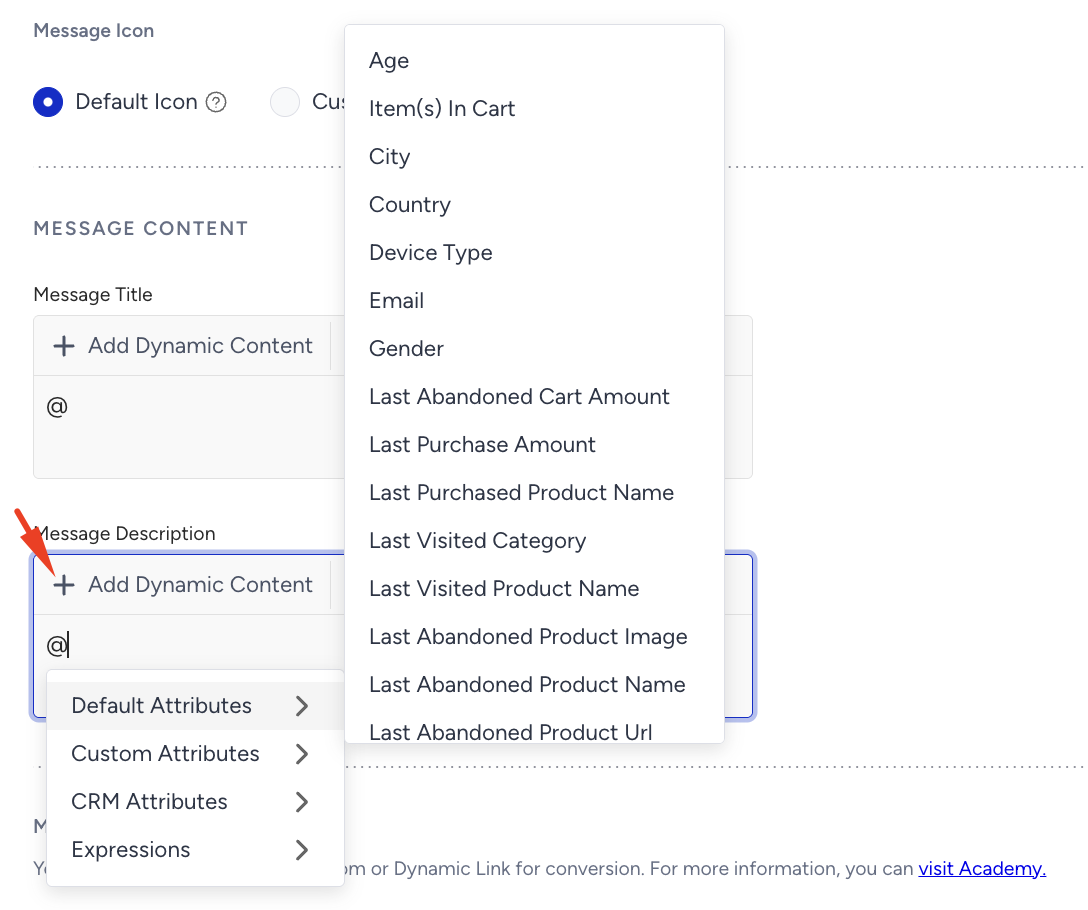
You can add text and emoji characters or use attributes to personalize your Web Push notifications further. You can choose from different attributes when you click the + Add Dynamic Content. To add conditions, fallbacks, and formatting to the title and description, turn on the Liquid Tags toggle.
Smart Recommender Attributes: Contains personalized product and product category attributes.
Default Attributes: Contains attributes like user name, last visited product name, last visited category, and search query, which are already defined during the initial system rule definitions.
Custom Attributes: Can contain any information related to user behavior or first-party data. These attributes need to be pre-defined.
CRM Attributes: Contains attributes you shared via the Upsert API.
Expressions: Formulas used to create new attributes by combining one or more existing ones.
When you add any user attributes, you can also define a fallback or alternative text to ensure your Web Push notifications are not broken if the attributes' values are empty.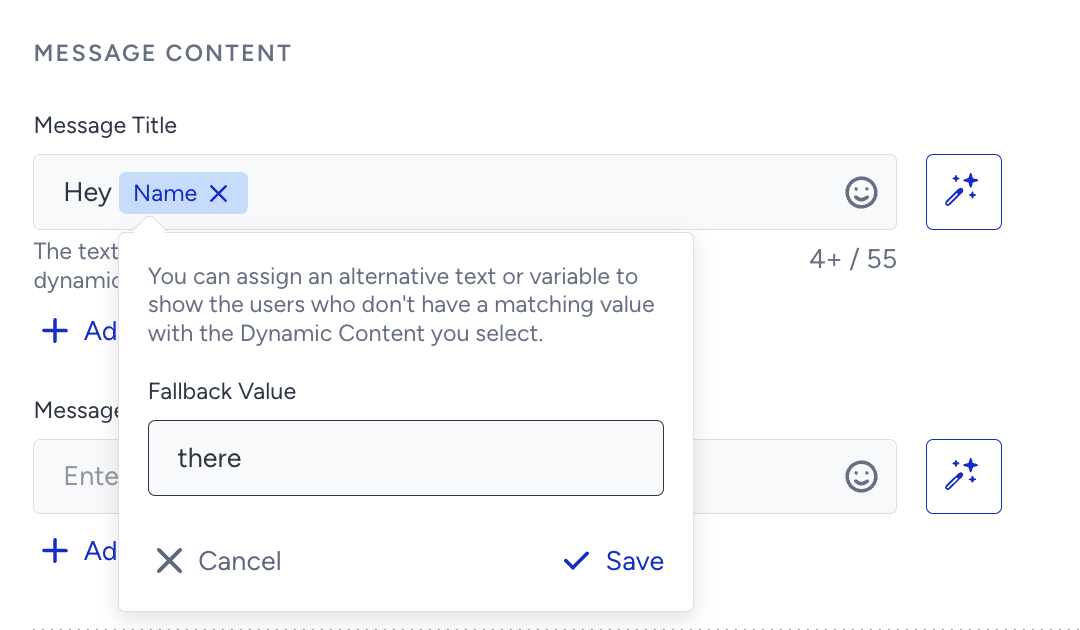
You can also get assistance from the text generator to create your title and description.
We highly recommend keeping your content brief, as the title and description may be trimmed on some devices due to browser, operating system, screen resolution, or input language limitations.
Define the message the user will be redirected to when they click the notification. You can provide it in two types:
Custom link: The static URL you enter manually.
Dynamic link: You can use default or custom attributes, which should be pre-defined in custom user attributes. You can also define a fallback to ensure your Web Push notifications are not disrupted if the URL source value is empty.
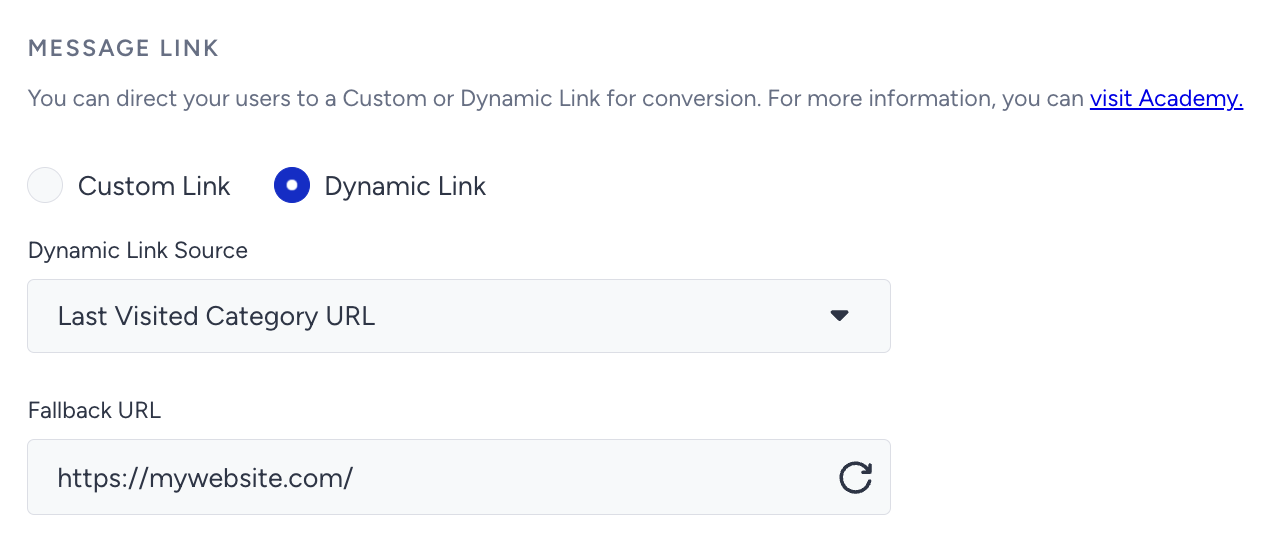
The Fallback URL field will automatically take the value set in the Web Push Settings and display it on the screen. If you leave the input field empty, the fallback value will still be used.
You can add up to two optional Message Action buttons to push notifications to increase user interaction. These buttons are a great way to conduct mini-surveys and polls. Using this option, you can direct your user to different links by clicking on the notification body, action button 1, or action button 2. When a user clicks any of them, the push will disappear.
An example of using these buttons could be to direct your user to download a report, visit different product or category pages, or even conduct mini-surveys/polls with a Yes/No option.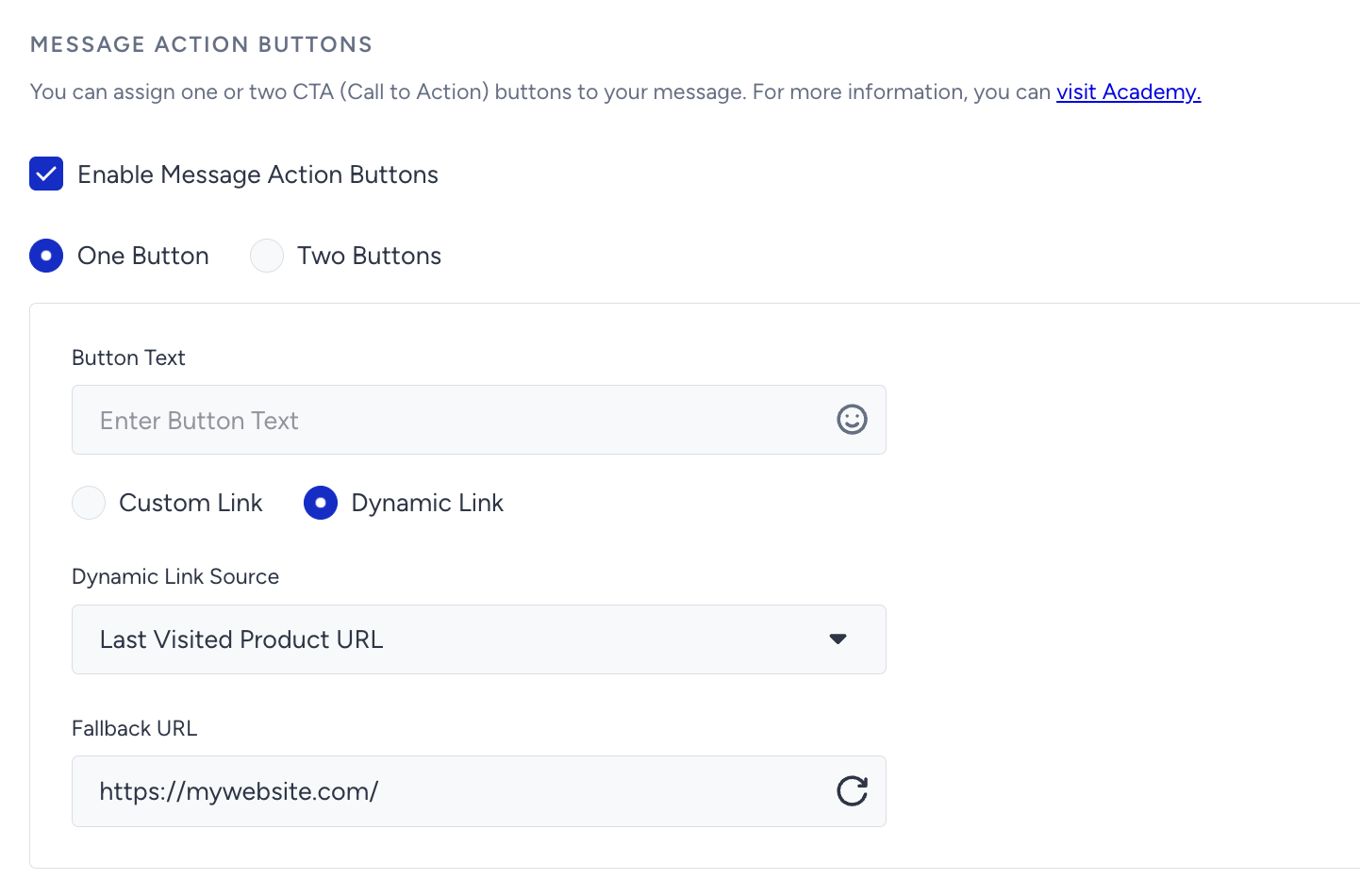
Just like the action link in the notification body, you can give an action button a custom or dynamic link URL (default or custom). When you select a dynamic link, you can define a fallback to ensure that your Web Push notifications are not disrupted if the URL source value is empty.
The Fallback URL field will automatically display the value set in the Web Push Settings on the screen. Even if you leave the input field empty, the fallback value will still be used.
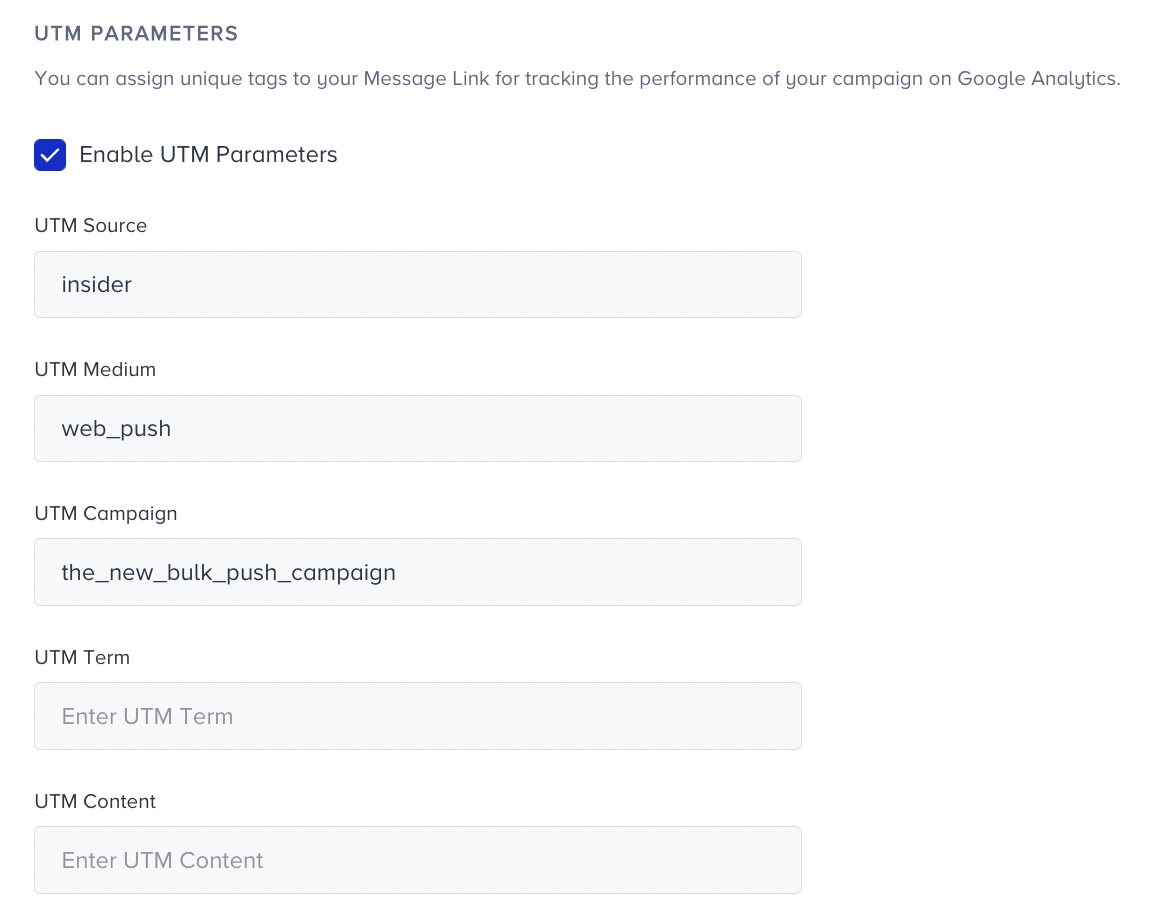
UTM Parameters are simply tags that you add to a URL. When your notification is clicked, the tags are sent back to Google Analytics if you have your website's Google Analytics tracking code. Enter the necessary information if you have Google Analytics to track the performance of your campaign there.
Preview a Single Push notification
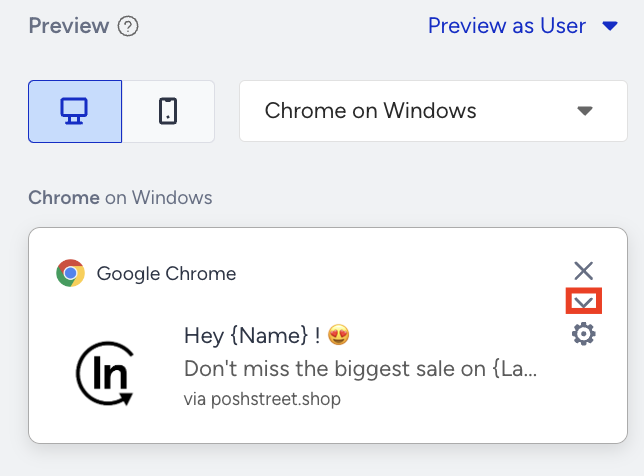
While designing the push notification, you can see a live preview of what your subscribers will receive. The preview area, located on the right of the screen, displays the text, image, icon, link, and button elements. 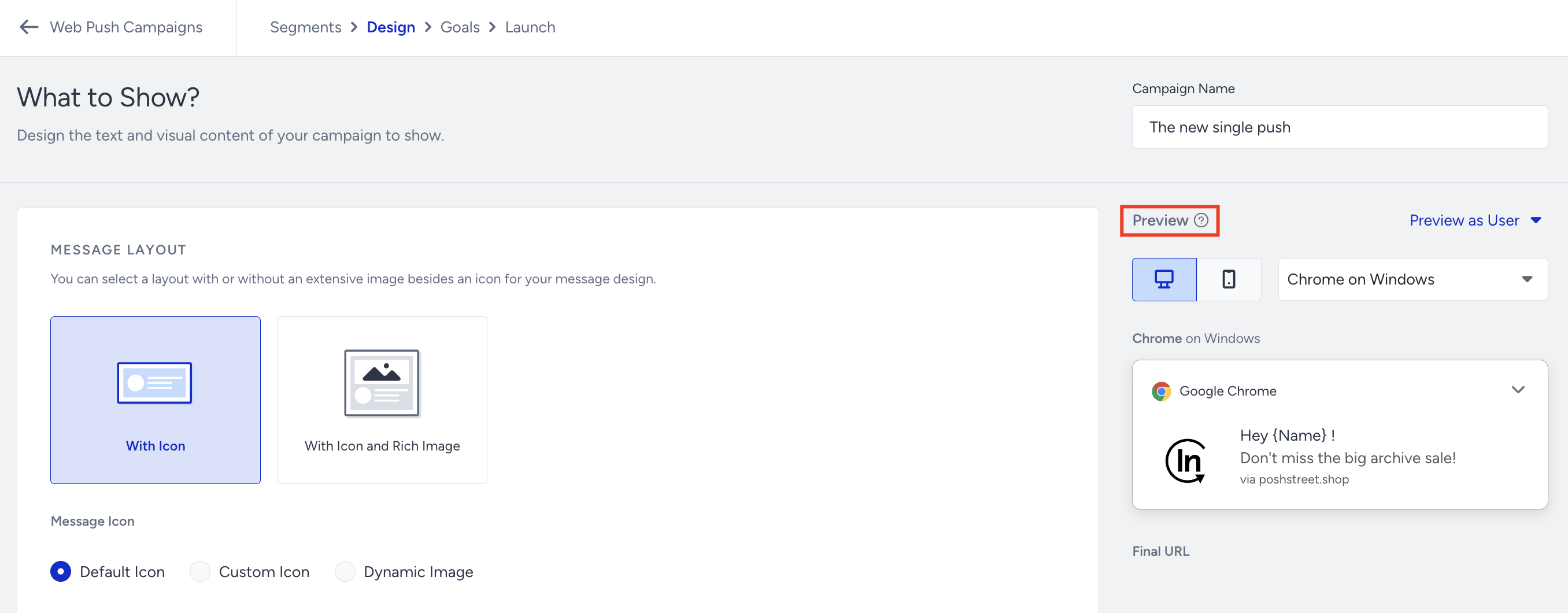
You can click the collapse/expand button on the preview Web Push notification to view the collapsed and expanded versions.
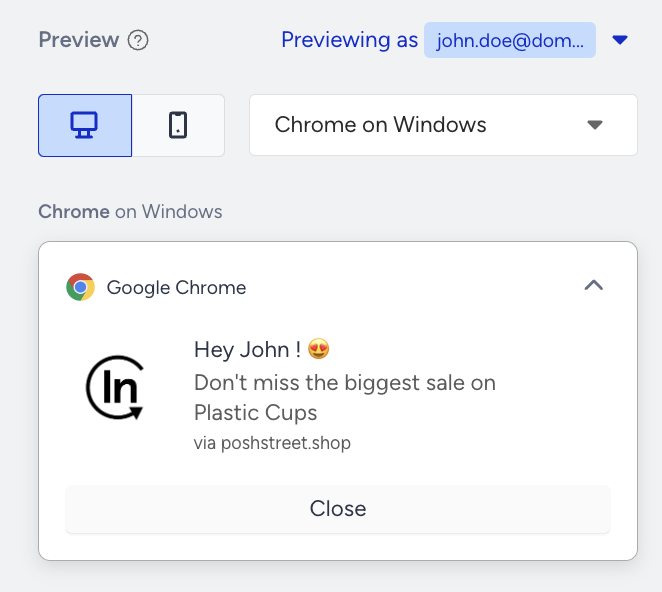
You can also preview the dynamic content in your Web Push notification as a user. Click the Preview as User button to preview your Web Push notification with real values of the dynamic content.
You can select one of the two User Selection Methods:
User Identifier will allow you to search for a user by Profile ID, Email Address, or Phone Number identifiers.
Recent User will list the 10 recently searched users for you to choose from.
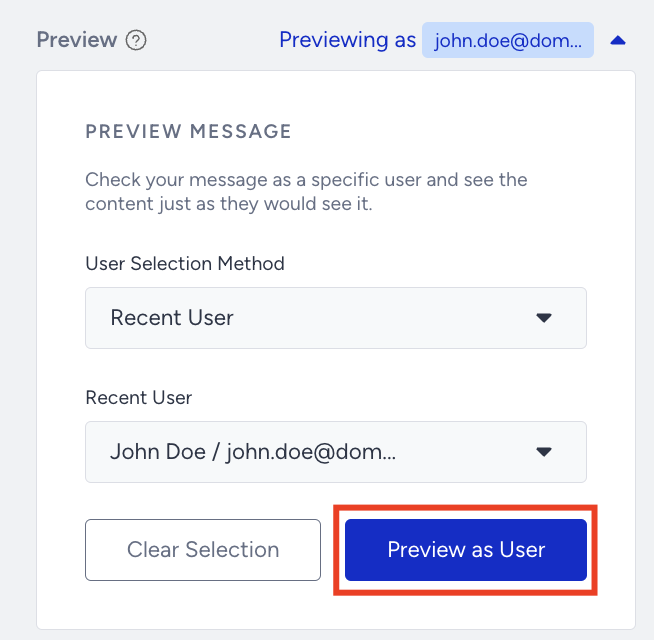
When you select your user, click the Preview as User button to preview your Single Web Push notification with real values of dynamic content for the user.
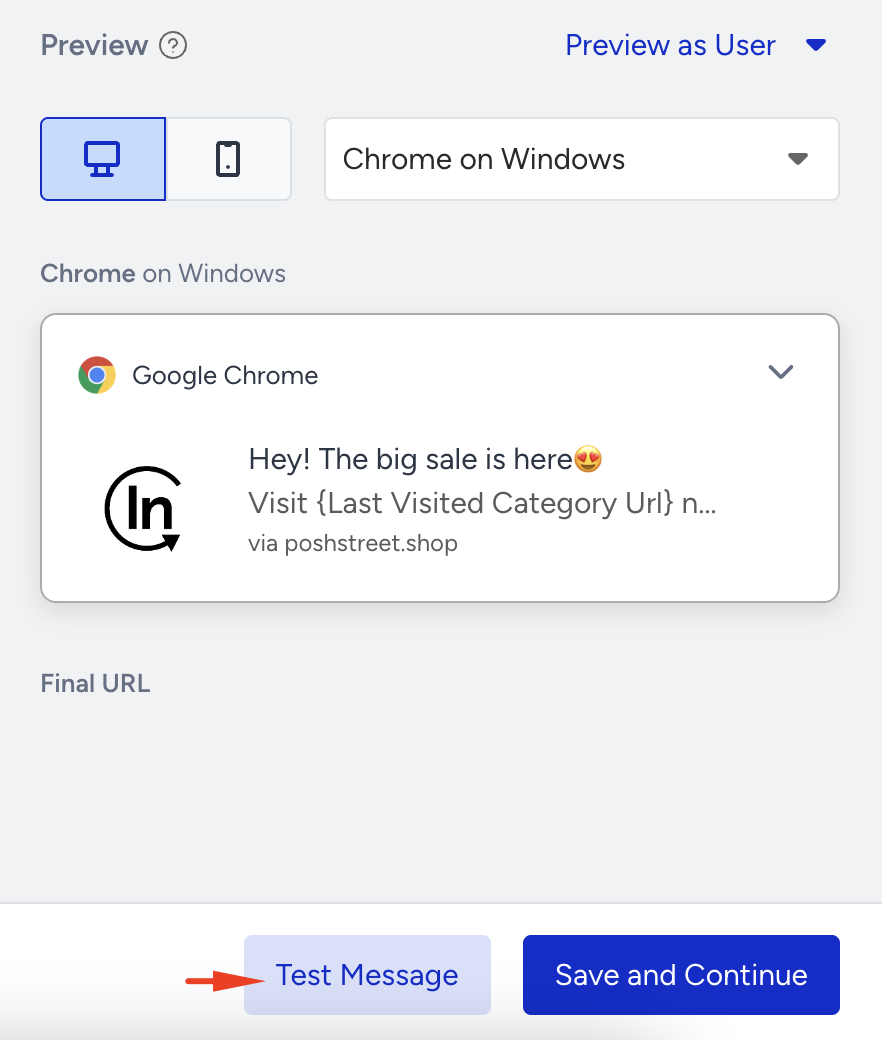
You can view how your Web Push will look in different operating systems and browsers. First, select the device, then choose the operating system and browser from the dropdown menu to preview your Web Push notification.
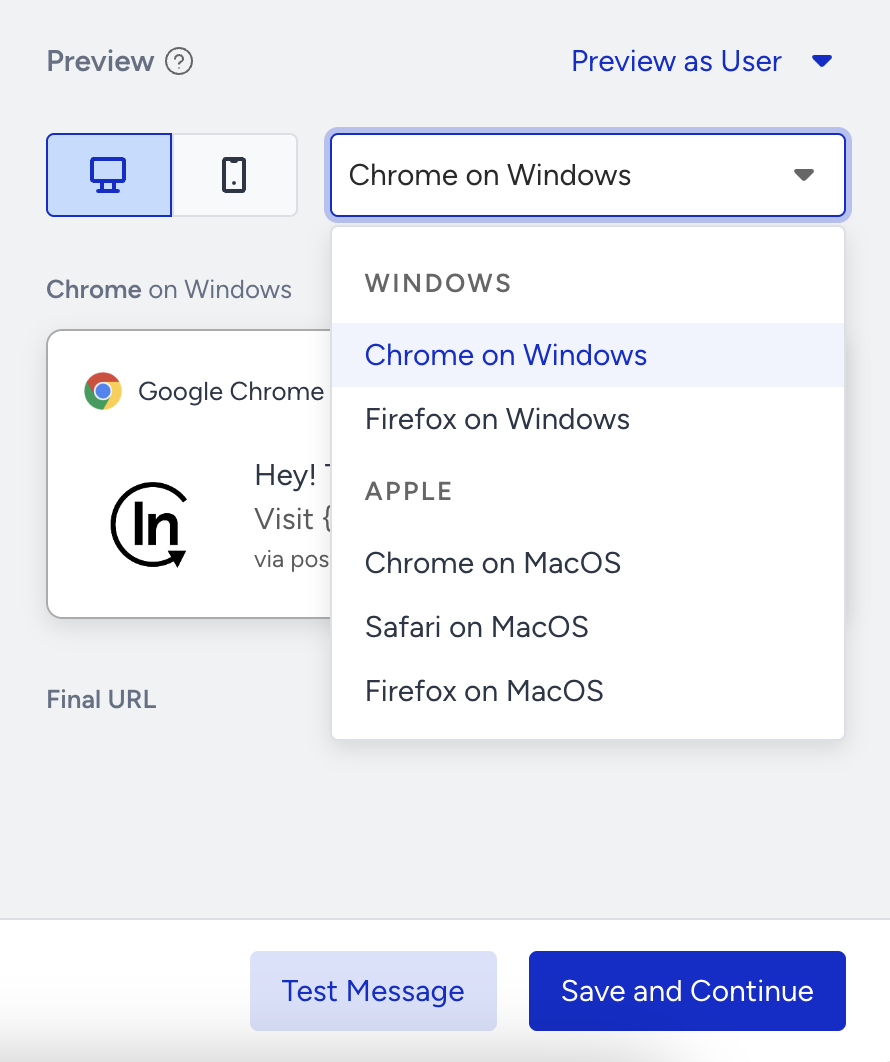
To test your Single Web Push notification on your device, click the Test Message button. You will receive a Web Push notification preview with the dynamic content filled in.
Set goals for a Single Web Push notification
You can set goals to track your campaign's performance. The default goal is Purchases; you can change it to Clicks. Under Conversion Duration, you can set the time for users to accomplish the campaign's goals.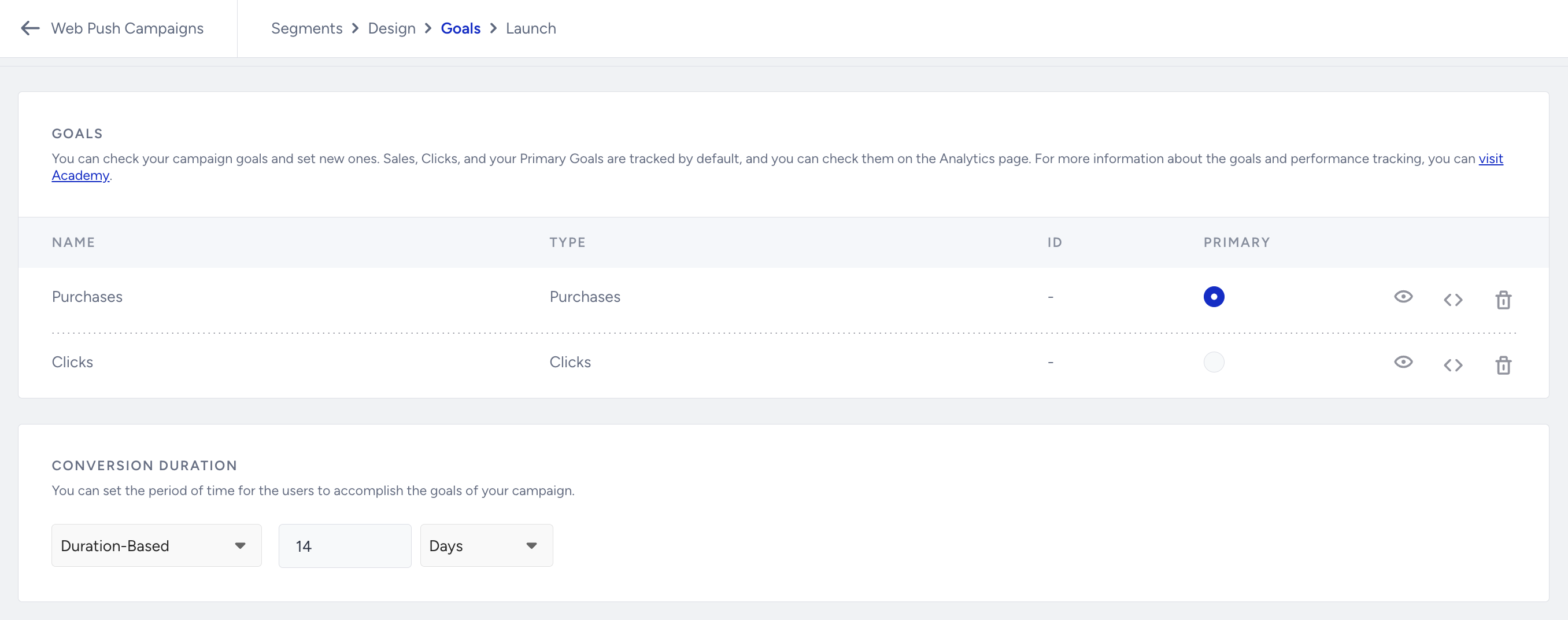
Launch a Single Web Push notification
In the Launch step of your campaign,
1. Once you're ready to launch your Web Push notification, select the campaign status from Draft, Send Now, Send Later, Send Recurring, or Pause.
Draft: Your campaign has not been sent yet and is currently in draft status. You can make changes to it later.
Send Later: The push notification will be scheduled for a future date/time. This is very useful when organizing push notifications before the campaign date and time.
Send Recurring: After scheduling once, users will receive a push notification daily, weekly, or monthly. For example, if you have a discount campaign for the 5th day of every month, this feature is very advantageous; you set it once, and your users receive the notification regularly. You determine the campaign duration by specifying the Start Date and Time, as well as the End Date and Time values.
Pause: You can pause your campaigns temporarily.

2. Time to Live refers to the expiry time of the Web Push. All Web Push notifications will be sent out at the specified time. However, for users who do not have their browsers open when the web push is sent, they will receive it the next time they open their browser, unless the time to live passes.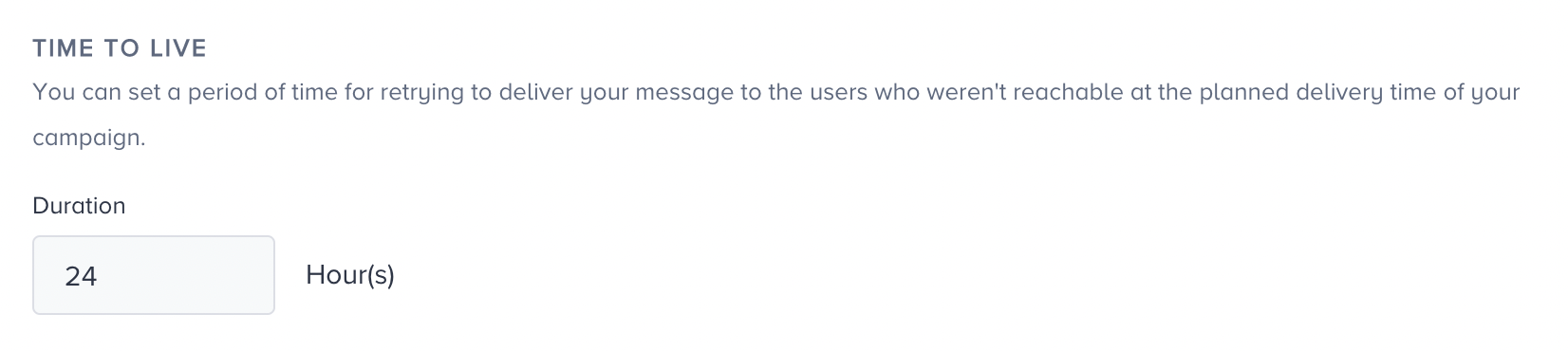
For example, imagine a Single Web Push scheduled to be sent at 10:00 am with a Time to Live of two hours. If User A’s browser is not open at 10:00 am and they open their browser at 11:00 am, they will receive the Web Push at 11:00 am. If they only open the browser at 12:30 pm, they will no longer receive the Web Push, as it has already expired at noon. This is useful for time-sensitive offers that you promote with Web Pushes.
3. Frequency Capping enables you to limit the number of Web Push notifications that a user gets in a day. To turn off the defined delivery limit for your campaign, you can enable the Bypass Channel Frequency Capping checkbox.
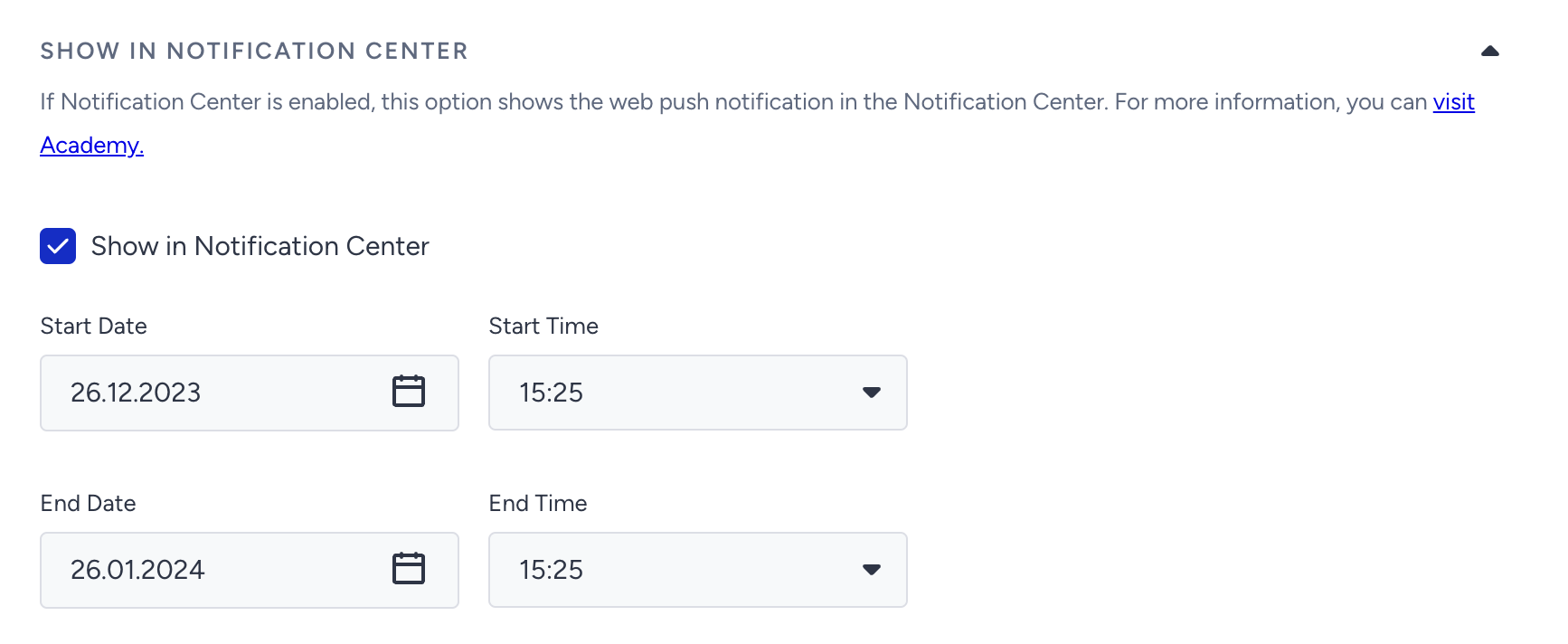
4. If you want to show the Web Push content in the Notification Center, you can send it with the Show in Notification Center option.
Once checked, the notification will require a start and end date to be displayed in the Notification Center. Once you select the start/end dates, a campaign will be automatically created on the Notification Center listing page.
Please note that your Web Push language should match the language used in your Notification Center, ensuring it is displayed correctly.
You can only send Web Push notifications to the Notification Center if you select Send Now as the campaign activation status.
5. You can use tags to find or filter your campaign easily. You can add previously created tags to the campaign. You can add up to 6 tags per campaign.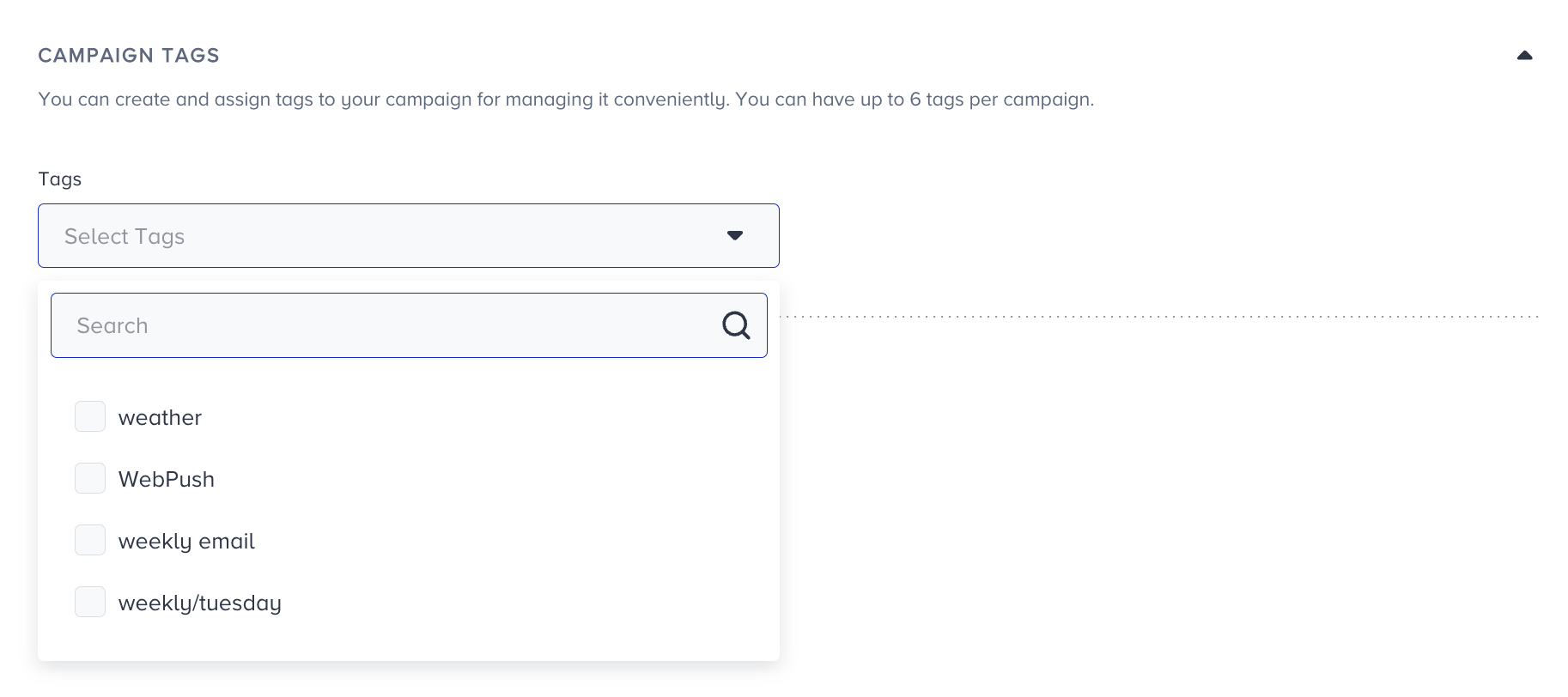
You can also create new tags and save them for later use.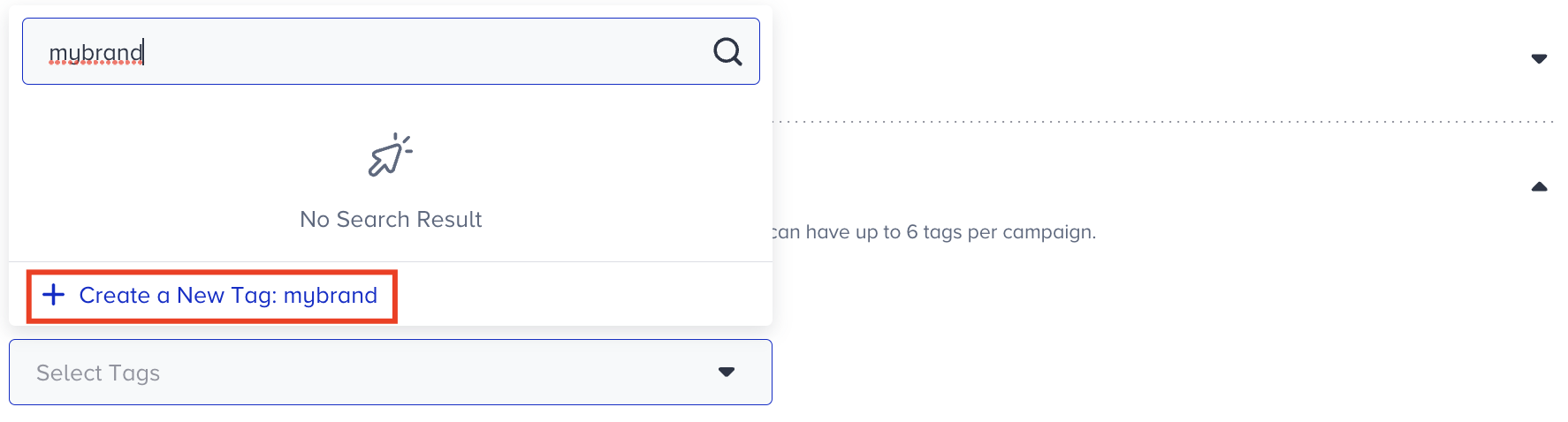
6. You can write notes in the designated area to remind yourself or your team members about the campaign.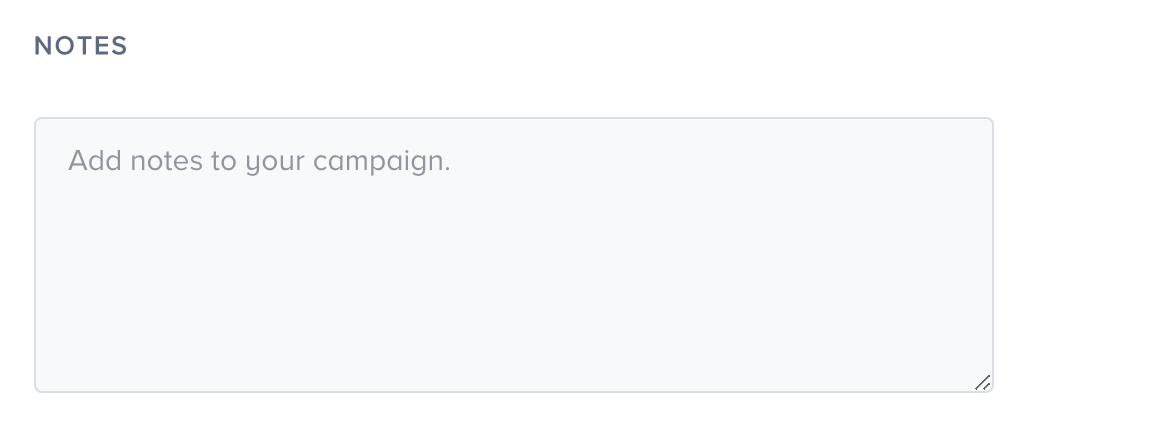
7. You can see if your campaign is ready to go and the number of subscribers. When you are ready, click the Launch button.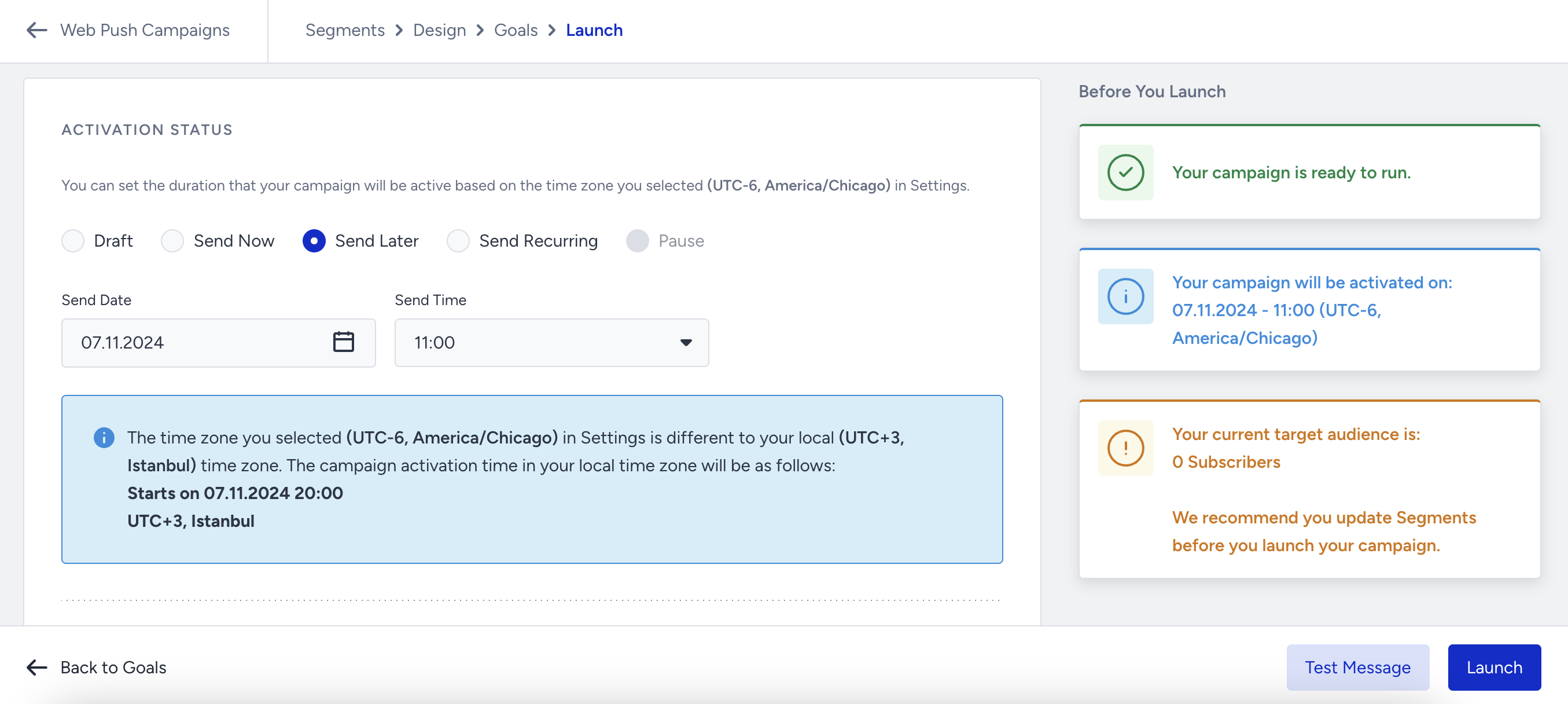
You can call the language system rule on your website to check the current language of your website.