Toys and games spark curiosity, creativity, and connection, making this a highly dynamic vertical influenced by age, developmental stage, personal interests, and gifting occasions. Shoppers may be parents seeking educational puzzles, collectors chasing trending items, or families looking for classic board games.
In this context, customers value guidance, excitement, and reliability when making decisions. Well-designed recommendations play a key role by simplifying choice, inspiring discovery, and thoughtfully curating add-ons or bundles that increase both cart size and customer satisfaction.
What you can achieve with Smart Recommender
Age-appropriate discovery
Help parents or gift-givers find the right fit by recommending toys based on age ranges—such as puzzles for toddlers or STEM kits for ages 6–8—on product and category pages.
Highlight what’s hot right now
Use real-time behavioral signals to surface trending or newly launched items like “Top-Selling Toys This Week” or “New Arrivals for Ages 3–5”, encouraging spontaneous exploration.
Personalized interests and themes
Tailor recommendations using behavioral patterns—for example, featuring dinosaur-themed toys for kids who browsed prehistoric items, or art kits for those interested in creative play.
Retarget lapsed shoppers with new editions or releases
Re-engage customers who browsed or bought collectible card games, building kits, or console accessories by showcasing the latest expansions, new editions, or compatible gear.
Increase AOV with complementary playsets or add-ons
Recommend extras like matching figurines, accessory packs, or batteries to complete the experience and grow cart size.
A/B test engagement hooks and layouts
Experiment with recommendation types, widget layouts, and audience segmentation—such as “Top Picks for Rainy Days” or “You May Also Like”—to discover what resonates with different parent and child segments.
Walkthrough: Testing Relevance by Age Group vs. Category on Toy Product Page
Shoppers browsing toy product pages are often looking for either the most popular options in the same developmental stage or complementary toys that pair well with the current item. With Smart Recommender, you can test which approach works best—highlighting bestsellers within the same age group or showcasing items frequently bought together from the same category.
In this example, we’ll set up an A/B test on product pages comparing two strategies:
Most popular in this age group → Recommend top-selling toys filtered by the product’s age/developmental band.
Purchased together from this category → Recommend items frequently bought with the current product, filtered to the same category.
Both strategies anchor to the product being viewed—Age Group or Category—so results are directly comparable. Let’s build and test them step by step.
1. Create your Recommendation Strategy
It's time to create your first recommendation strategy. Navigate to the Recommendation Strategies and click Create.
Select your page type as Product Detail Page.
Select your algorithm as Most Popular to recommend trending and widely liked toys.
Enter the number of products you want to recommend.
Exclude the recently purchased products in the last 4 weeks to keep your customer engaged.
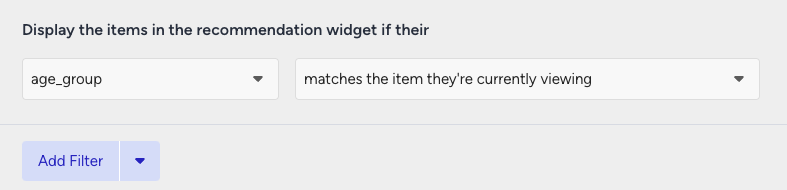
Add a filter for the age_group attribute to display recommendations that match the age group of the currently viewed toy.
Then, create your second strategy that you want to test against.
Select your page type as Product Detail Page.
Select your algorithm as Purchased Together to recommend suitable products for cross-selling.
Enter the same number of products to recommend.
Exclude the recently purchased products in the last 4 weeks to keep your customers engaged.
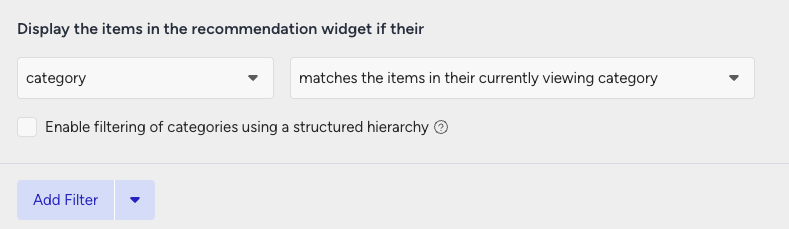
Add a filter for the category attribute to display recommendations from the same category as the currently viewed toy.
2. Launch your campaign
Now, launch your first campaign using your strategies.
Go to the Web Smart Recommender page and click Create.
Select your integration method for the widget.
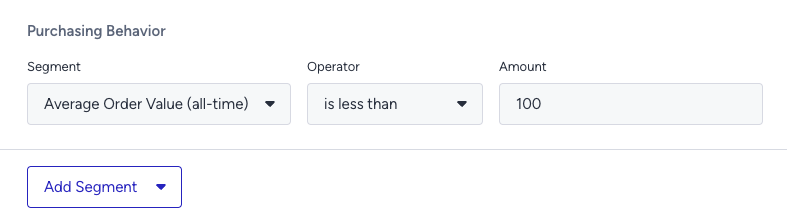
On the Segments step, target all users for broader testing. Optionally, apply a filter for users with a low-to-mid AOV to test upsell impact.
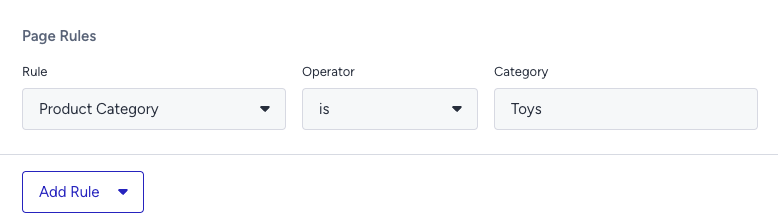
On the Rules step, set up Page Targeting to display the widget on all pages related to toy products.
On the Design step:
Assign your two strategies to the variants.
Assign traffic allocation for each variant.
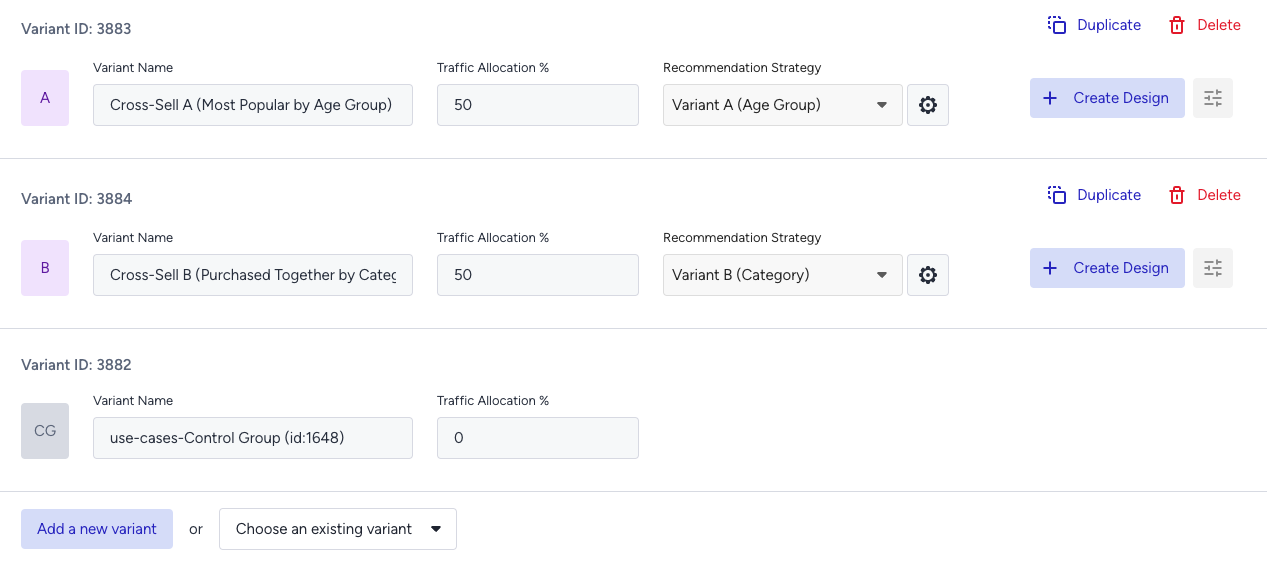
Now you’re ready to design your widget. Click Edit Design to open the Advanced Product Card Designer. Here, you can customize your product cards however you like.
Make sure all the attributes you want to display are included in your product catalog. If you need to show more information on your product cards, you can create custom attributes from Product Attributes page.
After finalizing your campaign design, the next step is to select the locales and stores where you want the campaign to appear.
Once your targeting is set:
Review the campaign details.
Confirm that all settings match your objectives.
Click Launch to activate your first campaign.
3. Track your campaign metrics
You’ve launched your campaign—great work! Now it’s time to track its performance.
Go to the Smart Recommender Analytics page.
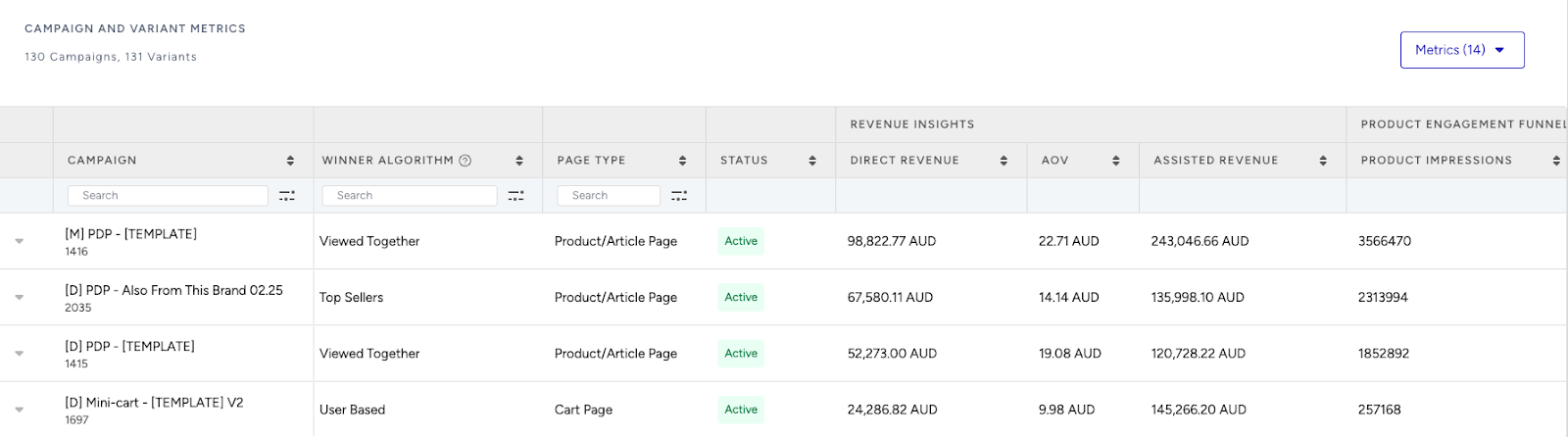
Locate your campaign under the Campaign and Variant Metrics table. Once the experiment duration ends, click your campaign name.
Compare key metrics, including Direct Revenue, Average Order Value (AOV), and Conversion Rate.
Look for signals on which recommendation type performs better:
Does Most Popular by Age Group drive more engagement due to age-appropriateness?
Or does Purchased Together by Category convert better by offering practical add-ons?
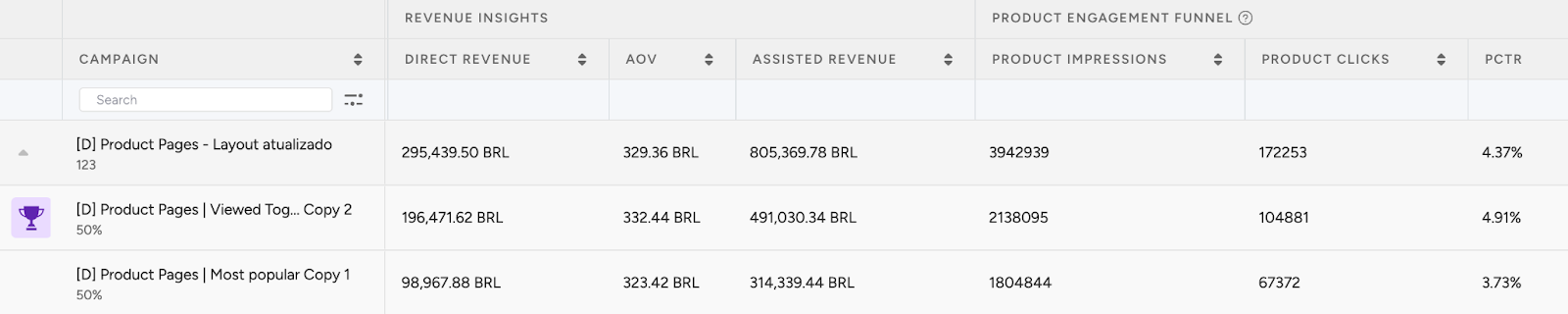
If one variant is clearly winning, adjust the traffic allocation to 100%. This ensures the best-performing strategy receives all traffic and maximizes impact.
You can test further add-on categories like protein boosts, soups, or sauces to refine your upsell approach and maximize impact.
4. Optimize your campaigns
Once your campaigns are live and running, it’s time to review results and apply data-driven improvements.
Go to the Smart Recommender Analytics page.
Evaluate campaign performance based on engagement metrics.
Track Engagement Funnel Metrics: Understand how users interact with your recommendations at every step. View product impressions, clickthrough rate, add-to-cart rate, and conversion rate for each campaign to pinpoint where you’re driving engagement and where there’s room to improve.

Compare Campaign and Variant Performance: Use the Campaign and Variant Metrics table to review key KPIs like AOV, Conversion Rate, and Direct Revenue. Identify which strategies are delivering the best results and refine or scale your winning variant accordingly.
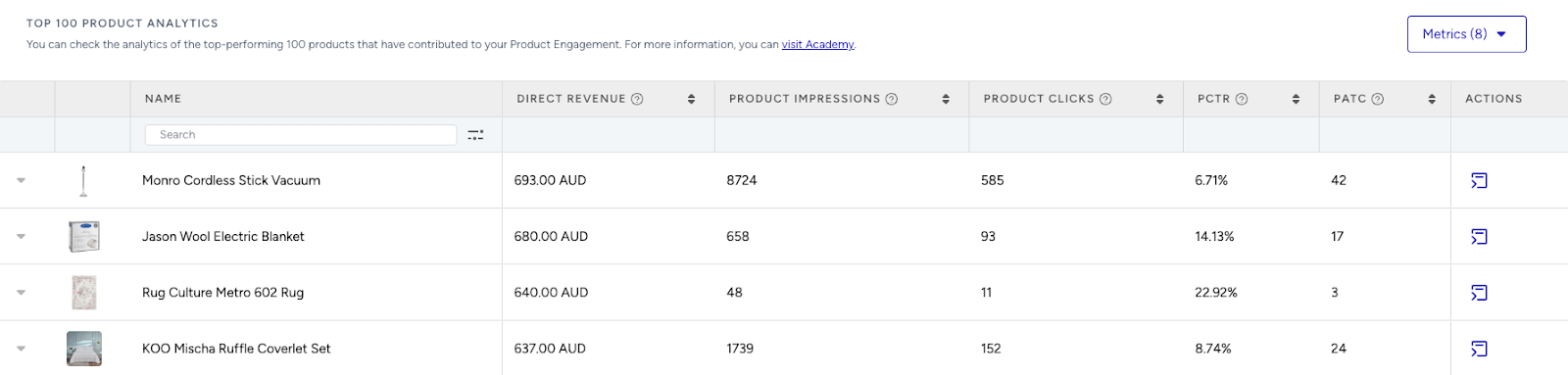
Analyze Product-Level Impact: Visit the Top 100 Product Analytics to see which products are performing well within your campaigns. Consider giving extra visibility to low-performing but strategic items by highlighting them in future recommendation widgets.
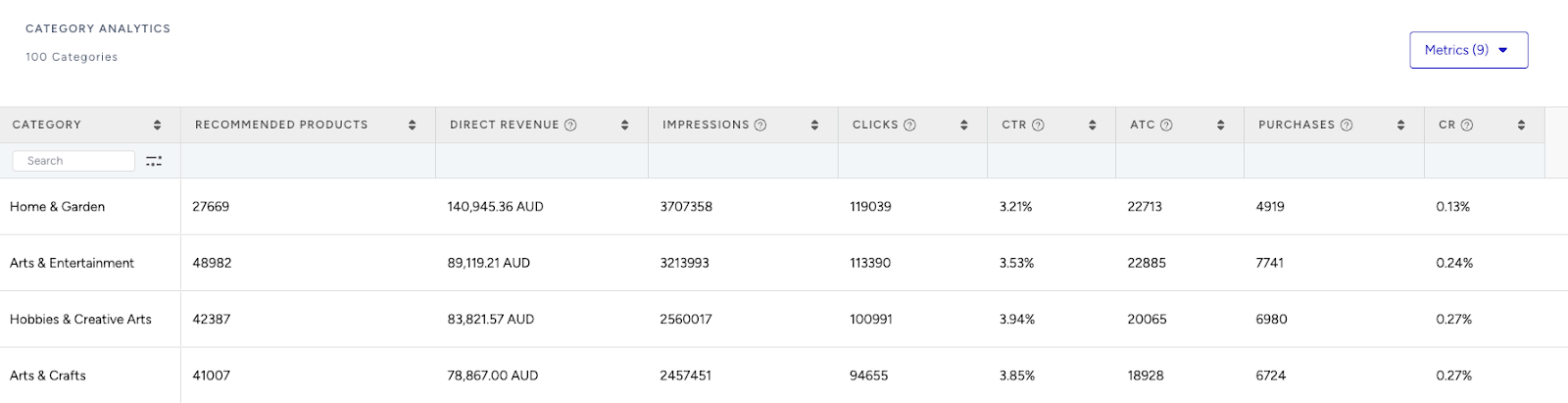
Review Category Trends: Use the Category Analytics view to assess which product categories drive the most conversions. You can prioritize high-performing categories to maximize conversions or spotlight underperforming categories to help boost their visibility and performance.
Use cases based on the page types
Home Page
Viral favorites
Create a strategy with the Trending Products algorithm to surface toys that are going viral across your store.
Enable the “Enhance recommendations based on Attribute Affinity” toggle to personalize recommendations based on the customer’s past behaviors and preferences.
No filters are required unless you want to restrict results by category (e.g., only show trending dolls or board games).
Set segments for new users to attract them with your viral products.
Use badges like “Hot Pick” or “Loved by Kids” to highlight social proof and drive more clicks.
Once your strategy is created, A/B test different widget positions—such as above the fold vs. mid-page—to see where viral product recommendations drive the most engagement. You can also A/B test your widget title with copy like “What Everyone’s Playing With” vs. “Trending Now” to boost conversions.
Gift finder collection
Help users easily discover the perfect gift with curated collections for different interests on special days.
Create a strategy with the Top Sellers algorithm.
Add filters such as Category + is + Gift Sets, Sets to show suitable gifts.
Don’t set any segments to show this recommendation to all visitors.
Try different widget headlines like “Best Gifts for Valentines' Day” vs. “Top Picks for Birthday Surprises” to see which drives more clicks.
Recently viewed items
Re-engage returning users by reminding them of toys they explored in previous visits.
Create a strategy with the Recently Viewed algorithm.
Exclude already purchased items to boost your conversion rate.
Set your segment to returning visitors to target those who've interacted before.
You can A/B test Recently Viewed algorithms against a User Based algorithm to determine which performs better in converting returning shoppers.
Product Detail Page
Explore more for the same age group
Encourage deeper exploration by recommending other top toys suitable for the same age range as the currently viewed product.
Create a strategy with the Viewed Together algorithm to display the relevant items.
Add a filter as Age Group + matches the item they’re currently viewing to surface relevant toys.
This widget works well under the product description section with a title like “Loved by Kids Aged 3–5” to match the shopper’s interest.
Complete the playtime
Increase the average order value by recommending complementary items, such as matching figurines, accessory packs, or batteries, to enhance the main product.
Use the Purchased Together algorithm to surface items that are frequently bought together with the currently viewed toy or game.
Add a Category + matches the item they’re currently viewing filter to ensure recommended products are related to the current toy/game type.
Leave affinity off to focus on functional relevance rather than personalization.
Try headlines like “Make It a Set” or “Everything You Need to Play” to encourage customers to explore the full play experience.
To recommend relevant add-ons like batteries, accessories or game extensions across all product pages, tag those items with a custom attribute like “Add-on” and use this attribute as a filter to fine-tune your strategy.
Category Page
Budget-friendly toys
Support price-conscious shoppers by showing the best deals in each toy category.
Use the Highest Discounted algorithm to surface discounted toys.
Add a filter as Category + matches the item they’re currently viewing to ensure alignment with shopper intent.
Turn off attribute affinity to keep the focus on discount rather than personalization.
Add discount badges (e.g., “30% Off” or “Clearance”) and test placement at top vs. mid-page to see what drives more clicks.
Top trending toys in category
Guide unsure buyers with top picks that are trending within the category.
Use the Trending Products algorithm.
Apply category + contains the currently viewing category’s attribute filter.
If your category type is hierarchical, enable the “Expand the category filter to include recommendations from the next category if there aren't enough products to display.” checkbox to make sure recommendations are shown even though there aren’t enough products to recommend from the category the user is visiting.
Turn on the “Enhance recommendations based on Attribute Affinity” toggle to add a layer of personalization.
Cart Page
Don’t forget the extras
Increase AOV by offering must-have accessories like batteries, cases, or expansion sets.
Use the Most Popular algorithm.
Add a filter as Category + is one of + Batteries, Storage, Expansion Packs to show relevant add-ons.
Turn off affinity to focus on practical utility over personalization.
Try headlines like “Make Sure You Have Everything!” or “Add These Before You Check Out” to encourage add-ons.
Reach free shipping threshold
Nudge shoppers to increase cart size to qualify for free shipping with smart suggestions.
Use the Checkout Recommendation algorithm with a spend threshold (e.g., $75).
No filters are needed; affinity is optional depending on the product variety.
Display a progress note such as “Top up to $75 for free shipping!” alongside the widget to boost urgency and conversion.