You cannot make any changes to External Platform Integrations without having either an Administrator or an Editor with PII access in InOne. Refer to User Roles for further information.
You can configure the Insider One Connector for Google BigQuery to send data via Insider One's InOne panel easily.
With this guide, you can find answers to the following questions:
- What are the use cases for Google BigQuery integration?
- What should I do before the BigQuery configuration?
- How can I create Google OAuth 2.0 Credentials?
- How can I authenticate the Connector from Insider One's InOne panel?
Use Cases
By leveraging the Insider One and Google BigQuery integration capabilities, you can easily send the data from Google BigQuery to Insider One and utilize it with Insider One’s extensive capabilities. The BigQuery connector lets you sync the selected user data from a table.
During configuration, you can also set filters to decide which data should be synced. For example;
- You can sync up the leads whose emails do not contain “@yourbrandname.com”
- Assume you have 300 rows of data in a sheet, and you can sync only the rows you choose.
After having set up the data connection, you can enable such use cases:
- You can keep the data in BigQuery as a segment in Insider One by synchronizing it. Therefore, you can create and analyze special campaigns for that segment.
- You can include users in the journey by synchronizing the data collected to BigQuery with the Lead Collection. Based on the user's past characteristics, they can be included in the journey and be more active.
What should I do before configuration?
Before configuring the connector, you should decide and define the following points clearly:
- You need to select the identifier(s) to be used. Insider One supports email, phone_number, and uuid identifiers by default. You can use a custom user identifier, too.
- You need to provide a mapping for the attributes you want to retrieve from BigQuery and sync to Insider One. You can refer to the table below:
| Column Name on BigQuery Table | Attribute Key on Insider One's InOne | Identifier | Attribute Type on Insider One | Attribute Type |
|---|---|---|---|---|
| Yes | Default Attribute | String | ||
| department | department | No | Custom Attribute | String |
How can I create Google OAuth 2.0 Credentials?
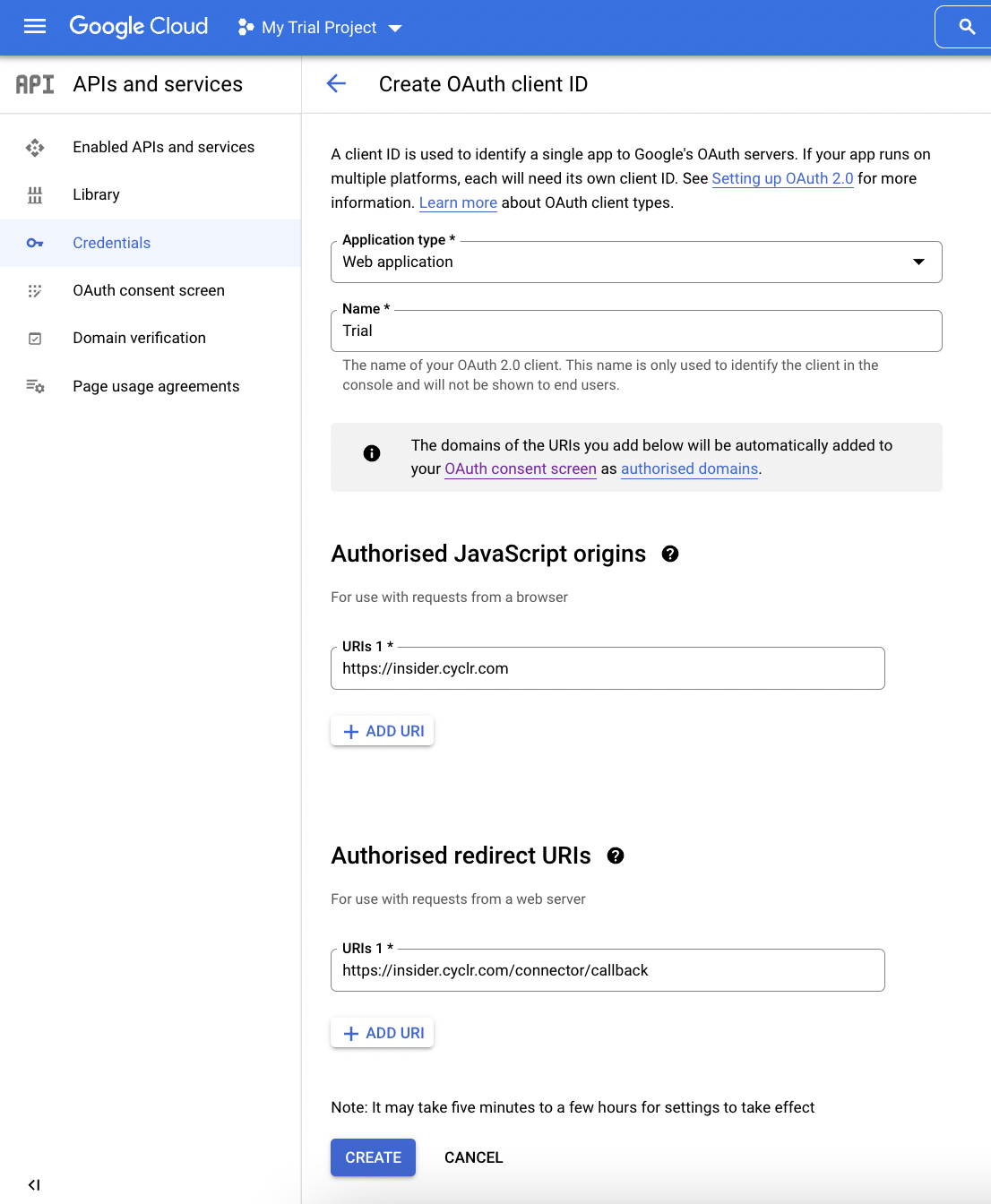
Before integration, you need to set up OAuth 2.0 within the Google Developer Console first.
- Log in to your Google BigQuery account.
- Go to https://console.developers.google.com/apis/credentials
- Click Create Credentials and then select "OAuth Client ID".
- Choose Application Type as Web Application.
- Enter the name of your OAuth 2.0 client.
- Under Authorised JavaScript origins, click ADD URL and enter “https://insider.cyclr.com”
- Under Authorised redirect URLs, click ADD URL and enter “https://insider.cyclr.com/connector/callback”
- Click the Create button and save the Client ID and Client Secret. You will need these settings to configure the connector on Insider One's InOne panel.
How can I authenticate the Connector from Insider One's InOne panel?
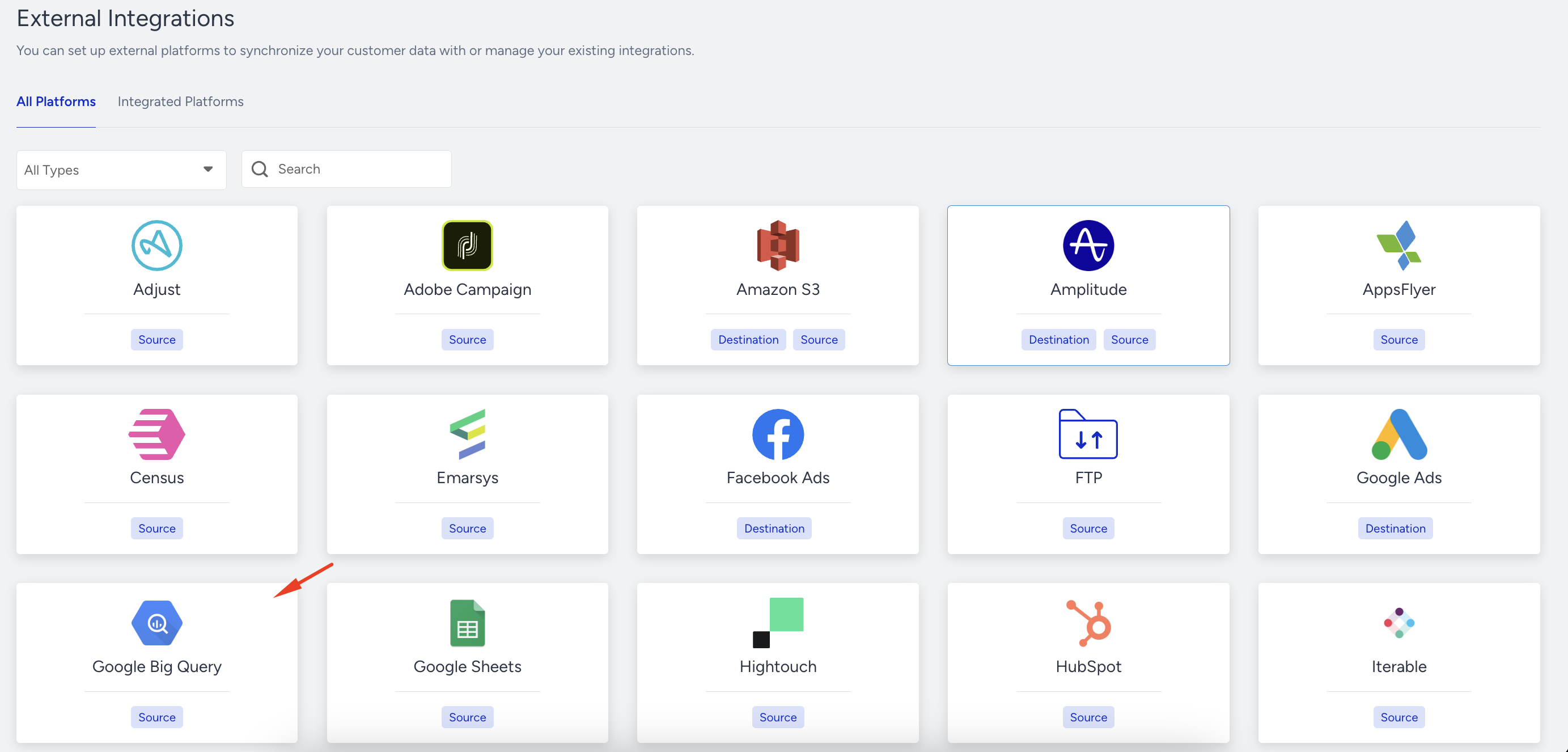
- Navigate to Components > Integrations > External Integrations.
.png)
- Select the Google BigQuery platform.
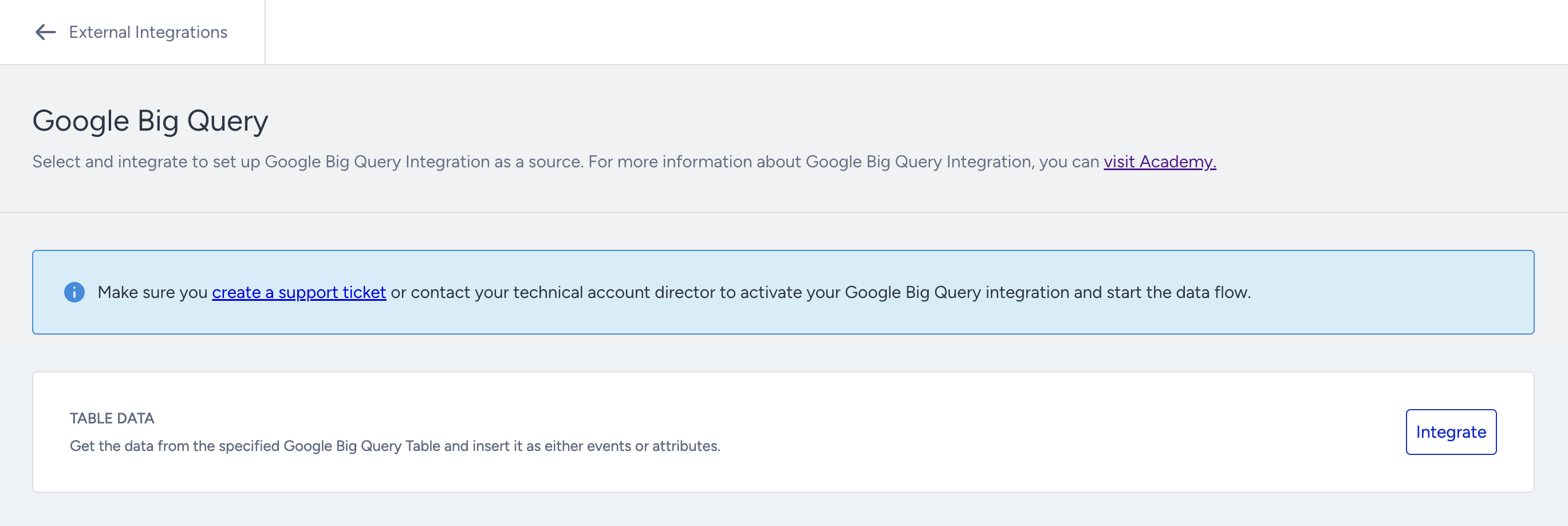
- Click the Integrate button for the desired connector template.
- Enter the information from your Google BigQuery account.
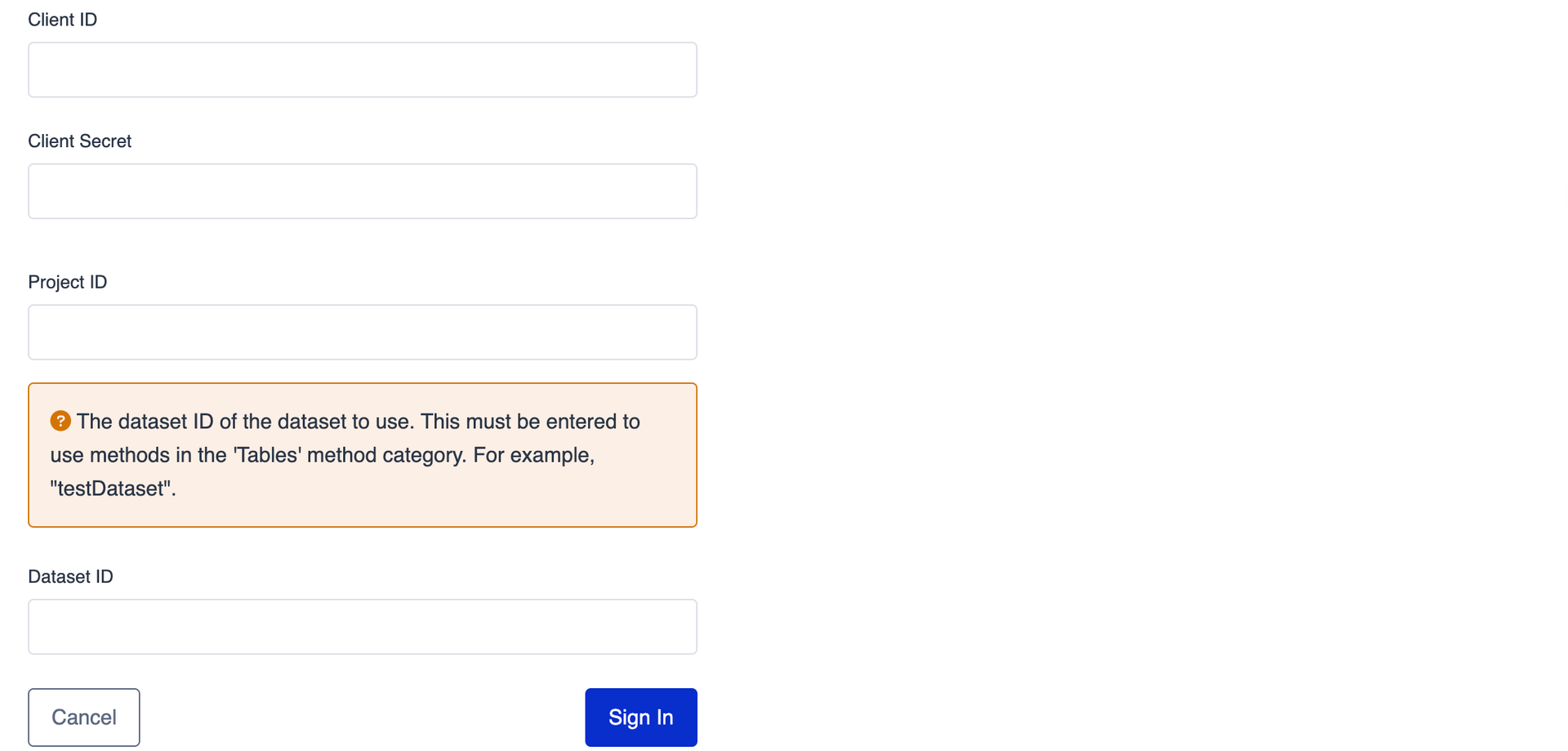
- Client ID: The default client ID to use. Only used with “OAuth 2.0 Authorization Code” Authentication. Leave it blank if you are using the “Service Account“.
- Client Secret: The default client secret to use. Only used with “OAuth 2.0 Authorization Code” Authentication. Leave it blank if you are using the “Service Account“.
- Project ID: The project ID of the project to use. You can find the Project ID next to the Project Name from the dropdown menu below.
 Ensure the data to be transferred is nested within the corresponding project.
 - Dataset ID: The dataset ID of the dataset to use. To get the Dataset ID,
- Navigate to SQL Workspace, and from the Explorer, find the corresponding Dataset and click the menu for the related Dataset. From the menu, click Open and locate your Dataset ID, separated by “.” from the Project ID.
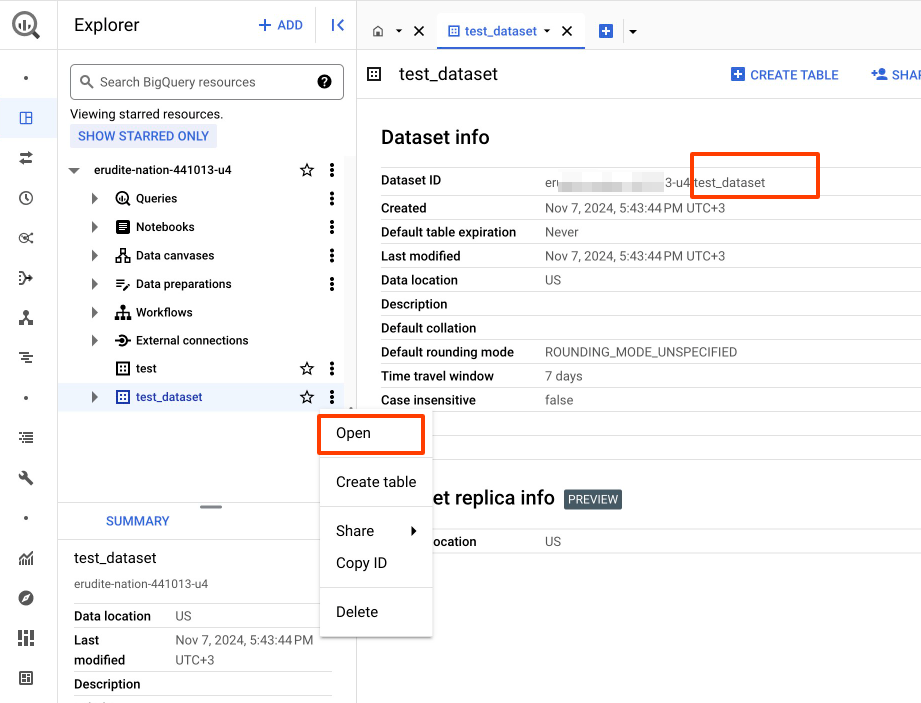
- Navigate to SQL Workspace, and from the Explorer, find the corresponding Dataset and click the menu for the related Dataset. From the menu, click Open and locate your Dataset ID, separated by “.” from the Project ID.
- After you enter the required fields, click the Sign In button, which will redirect you to the Google Sign In. Choose the account to sign in.
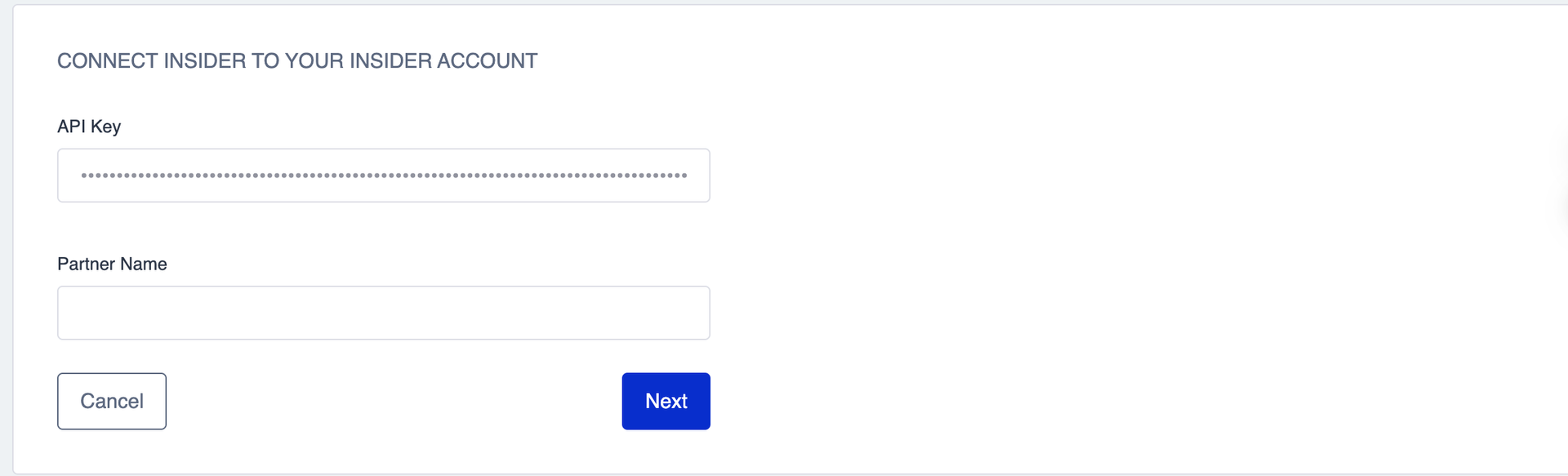
- If the area below shows up:
- Enter Partner Name, which you can find under Inone Settings > Account Settings.
- For API Key, generate a Unified Customer Database key under Inone Settings > Integration Settings.
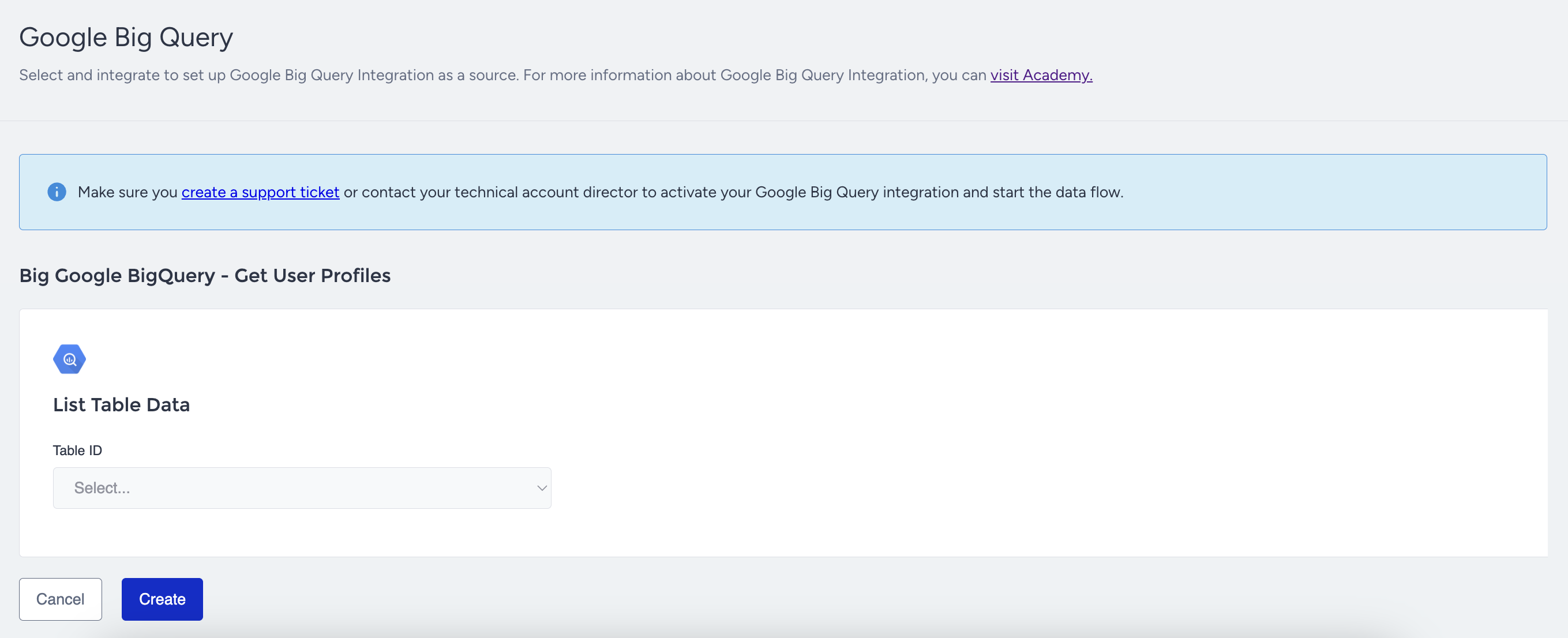
- Select the Table ID.
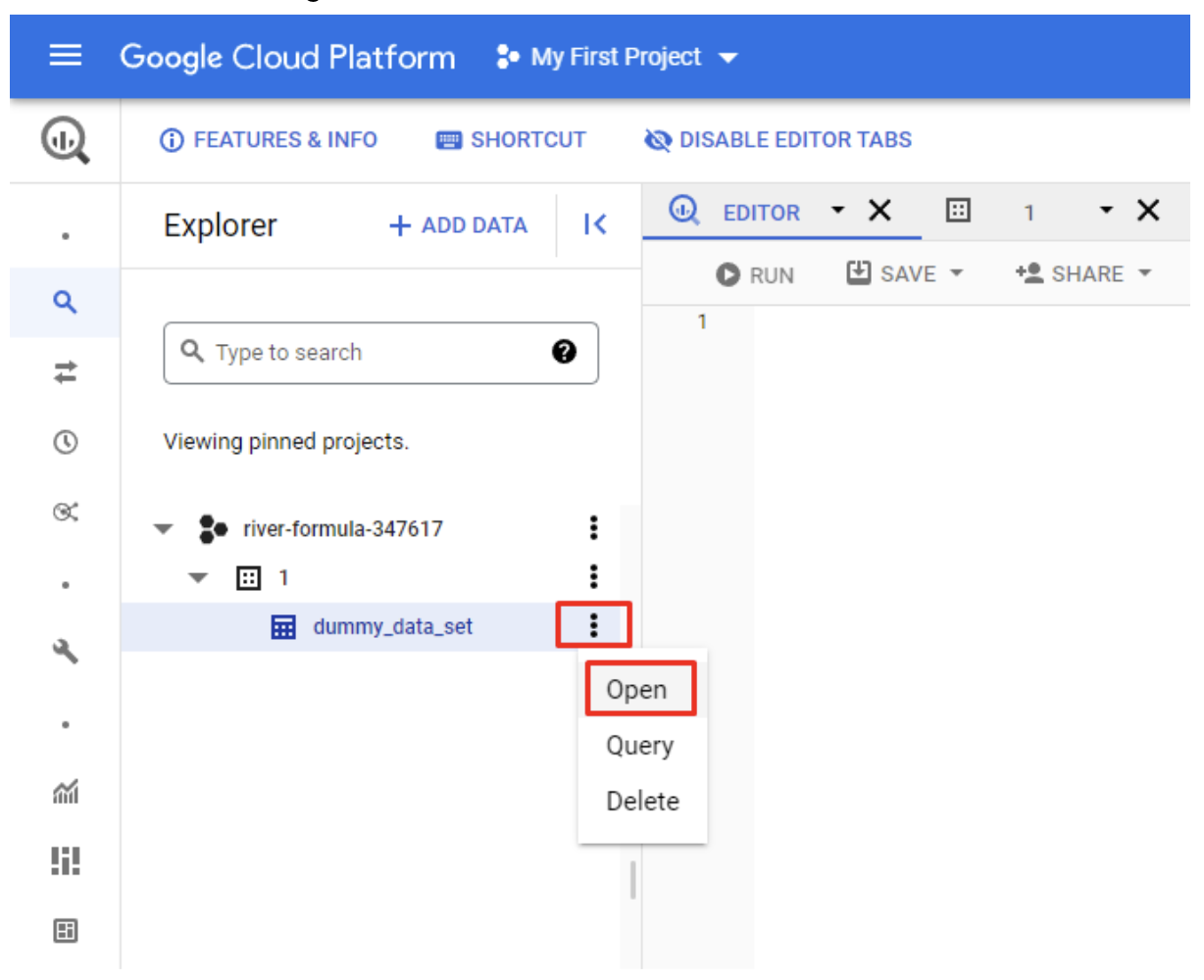
- To get your Table ID, find the table you are going to use in the connector and click the following buttons:
- Table ID is separated by “.” from your Dataset ID as follows:
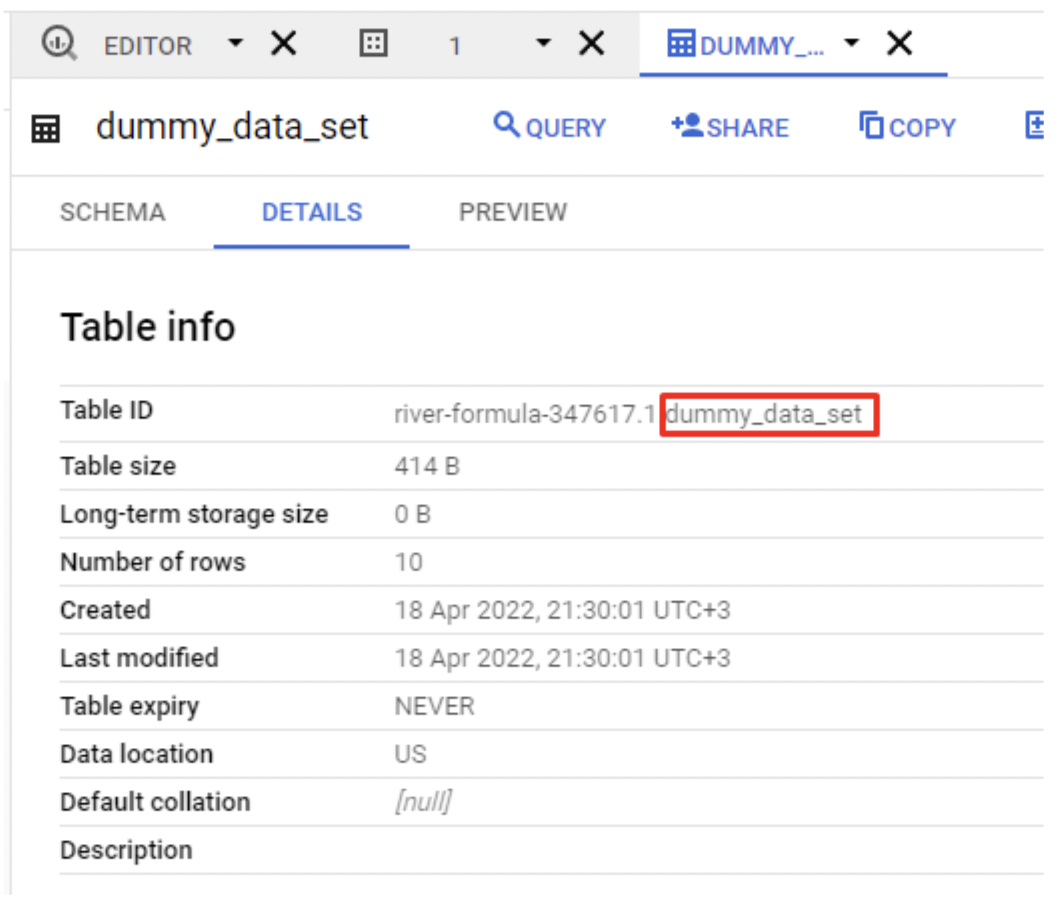
- To get your Table ID, find the table you are going to use in the connector and click the following buttons:
- Then, click the Create button.
Finalizing the Setup
After the authentication, Insider One will complete the connector field mappings according to the schema you provided. Once the mapping is complete, Insider One will start the connector.