This type of RFM segment is available in App Push, InApp, OnSite, Architect, and Web Push products. If you see the new design on your segments page, refer to RFM Segments.
RFM stands for Recency, Frequency, and Monetary value, a method used to evaluate customer value by analyzing past transaction data.
This model creates segment groups based on purchase history and assigns scores that indicate the customer’s value to the brand.
Scoring model
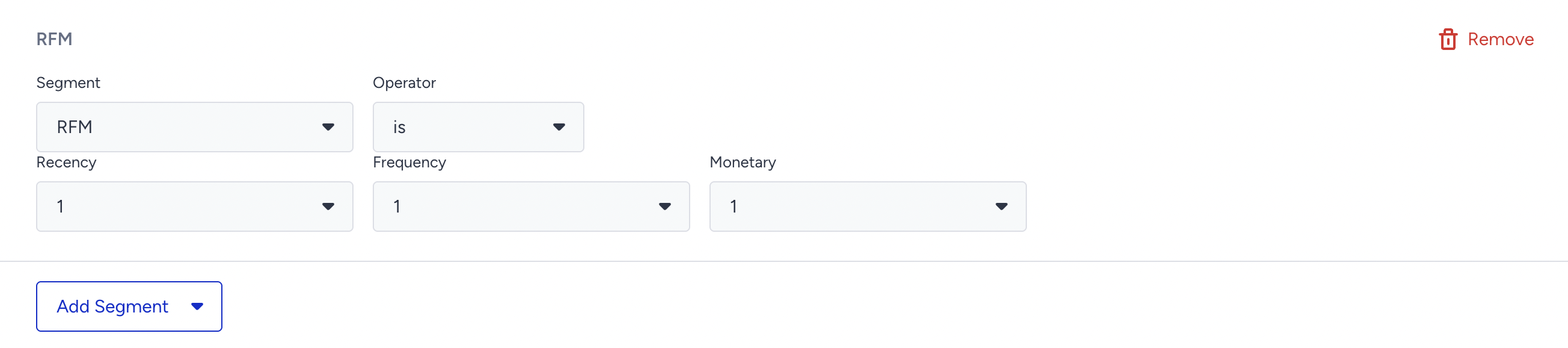
Five levels of scores are available for Recency, Frequency, and Monetary values (scores 1–5).
Total possible combinations: 125 segments (5³)
Score interpretation:
5 = Highest ranking (e.g., most recent activity, highest frequency, highest spending)
1 = Lowest ranking (e.g., long inactive, low frequency, low spending)
Definitions
Recency: Time since last purchase or activity with the brand.
Frequency: How often purchases or interactions occur with the brand during a particular period.
Monetary: How much a user spends during a defined period
Calculation basis
Ecommerce websites: RFM is calculated based on purchases.
Non-ecommerce websites: RFM is calculated based on sessions.
Use cases
High-Spending New Customers
High Recency + High Monetary + Low Frequency
Action: Encourage repeat purchases with personalized follow-ups
Frequent Low Spenders
High Frequency + Low Monetary
Action: Incentivize larger order values
One-Time High-Value Buyers
One purchase with above-average spend
Action: Drive loyalty through tailored offers
VIP Customers
High scores across all RFM attributes
Action: Reward loyalty with exclusive promotions or early access
High-Value Churn Risk
High Frequency + High Monetary + Low Recency
Action: Win-back campaigns with strong incentives
Low-Value Customers
Low scores across all RFM attributes
Action: Evaluate reactivation costs vs. potential return