Gardening is a seasonally driven, hobby-focused vertical with products ranging from tools and seeds to décor and care supplies. Buying behavior is often project-oriented, such as spring planting or patio upgrades, and is shaped by factors like regional climates, gardening experience levels, and garden types (indoor vs. outdoor).
Recommendations in this space should inspire, guide, and complement user intentions while adapting to seasonal cycles.
What you can achieve with Smart Recommender
Seasonal inspiration on the Homepage
Showcase timely collections, such as Spring Starters or Fall Prep, that keep content relevant and engaging throughout the year.
Personalized garden starter kits for new gardeners
Recommend beginner-friendly kits such as Balcony Garden Basics or Herb Garden Essentials on the homepage to guide first-time buyers.
Cross-selling with relevant gardening products
On product and category pages, surface add-ons like tools with soil or planters with seeds to increase basket size.
Reactivating gardeners with personalized plant picks
Re-engage inactive customers by showcasing trending products or personalized recommendations that align with their past interests.
Last-minute gardening essentials at checkout
Use cart page campaigns to suggest gloves, fertilizer, or watering cans as last-minute add-ons to boost Average Order Value (AOV).
Tailored homepage experiences for every type of gardener
Adjust homepage content dynamically based on behavior, such as garden type or care level, and test which approaches drive the most engagement.
Affinity-based plant and tool recommendations
Enhance relevance by using Attribute Affinity to prioritize products based on traits like planting season, favorite plant types, or gardening environment.
Built-in A/B testing across the journey
Experiment with widget placement, visual design, and recommendation algorithms to identify strategies that maximize clicks, conversions, and repeat visits.
Walkthrough: Boosting AOV with Cross-Sells
One of the most effective ways to increase Average Order Value (AOV) is by encouraging customers to add complementary products to their purchase. In gardening, purchases are often part of a larger project—such as starting a container garden or refreshing a patio—so surfacing related items at the right moment creates meaningful cross-sell opportunities.
In this example, we’ll walk you through how to create and test a cross-sell campaign on plant product pages to boost the AOV of customers who currently have low AOV. The goal is to test and compare which complementary category—pots or soil—leads to a higher AOV when recommended alongside plants.
Create two separate cross-sell strategies:
Strategy A → Recommend pots with plants.
Strategy B → Recommend soil with plants.
Run an A/B test to compare performance.
Measure which complementary category delivers a higher AOV.
Identify the best-performing cross-sell category and apply the winning strategy to maximize customer basket size.
1. Create your Recommendation Strategy
It's time to create your first recommendation strategy. Navigate to the Recommendation Strategies and click Create.
Select your page type as Product Detail Page.
Select your algorithm as Purchased Together to recommend suitable products for cross-selling.
Enter the number of products you want to recommend.
Exclude the recently purchased products in the last 4 weeks to keep your customer engaged.
Add a filter for the category attribute to display recommendations from the “Pots” category.
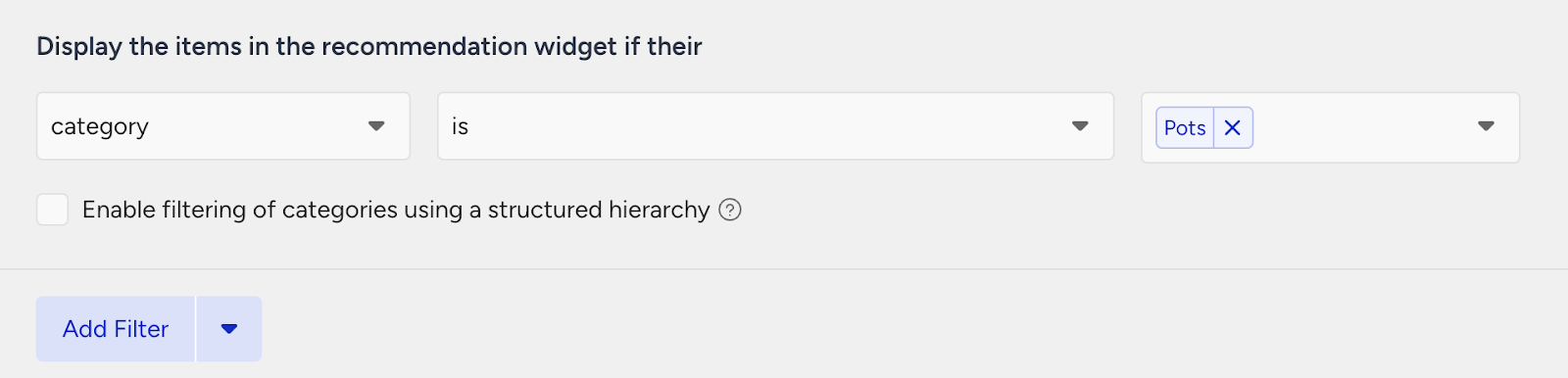
Then, create your second strategy that you want to test against.
Select your page type as Product Detail Page.
Select your algorithm as Purchased Together to recommend suitable products for cross-selling.
Enter the number of products you want to recommend.
Exclude the recently purchased products in the last 4 weeks to keep your customer engaged.
Add a filter for the category attribute to display recommendations from the “Soil” category.
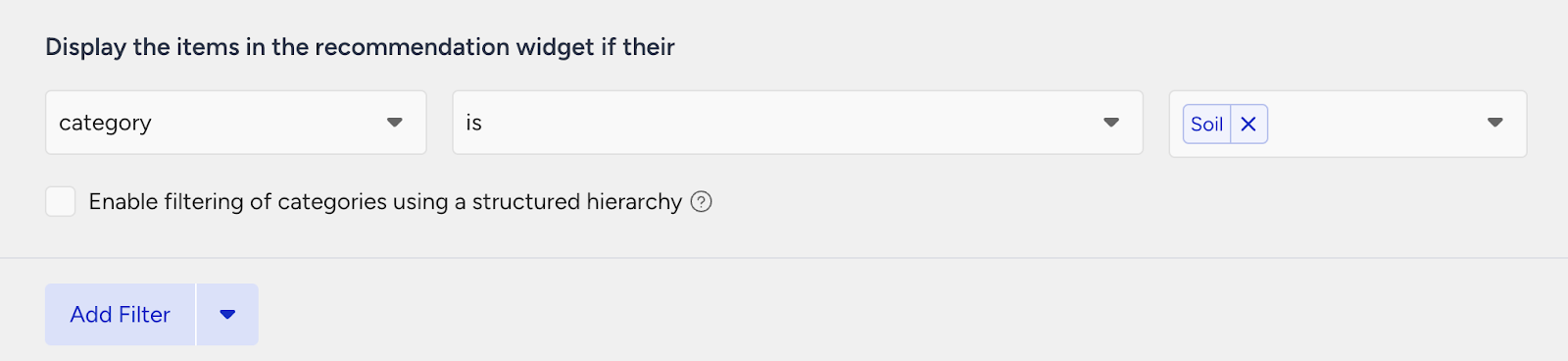
2. Launch your campaign
Now, launch your first campaign using your strategies.
Go to the Web Smart Recommender page and click Create.
Select your integration method for the widget.
On the Segments step, pick the audience.
For this example, you can select customers with a low AOV under Purchasing Behavior and set your threshold.
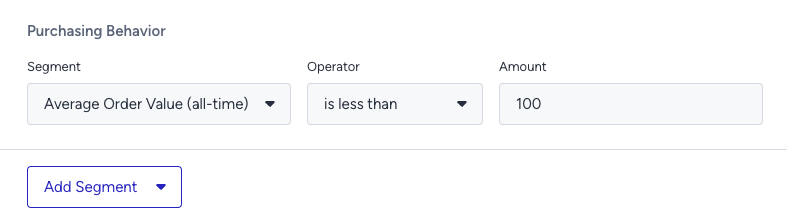
On the Rules step, decide where and when to show your campaign.
Use Page Rules to target the product detail pages of plant products.
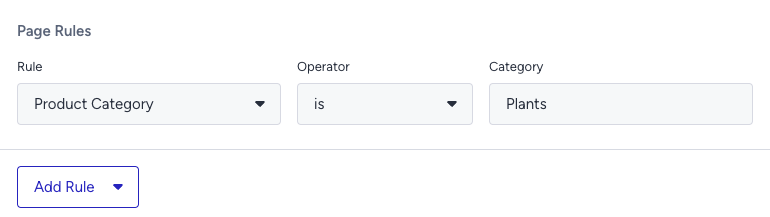
On the Design step:
Assign your two strategies to the variants.
Assign traffic allocation for each variant.
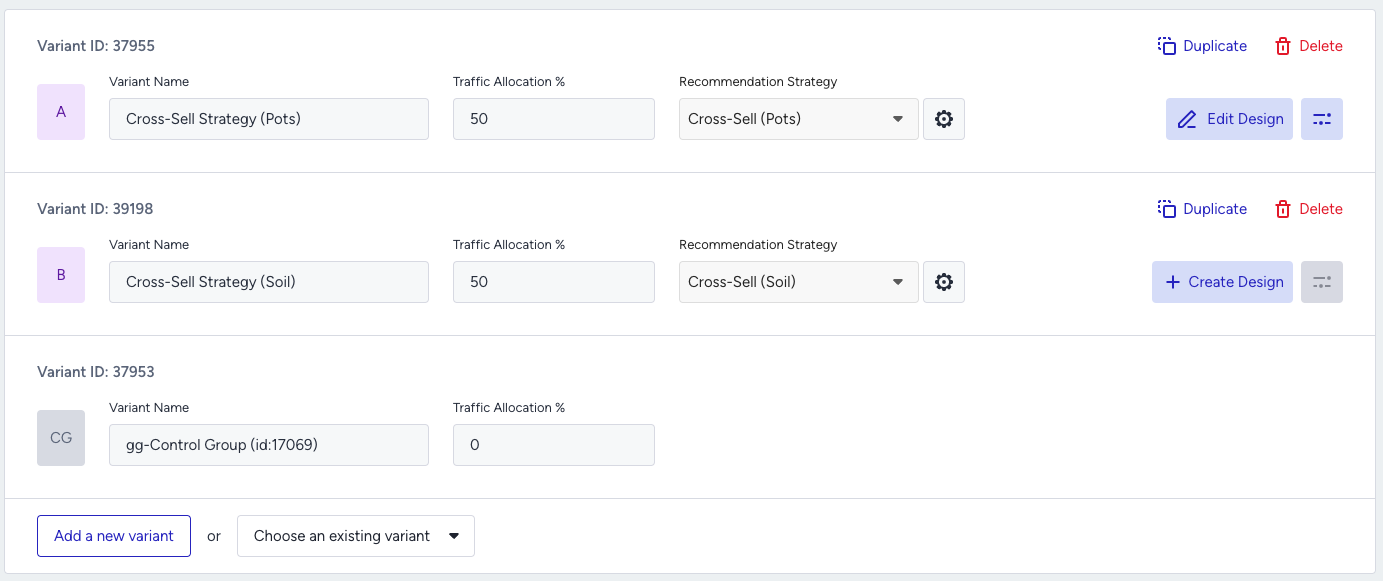
Now you’re ready to design your widget. Click Edit Design to open the Advanced Product Card Designer. Here, you can customize your product cards however you like.
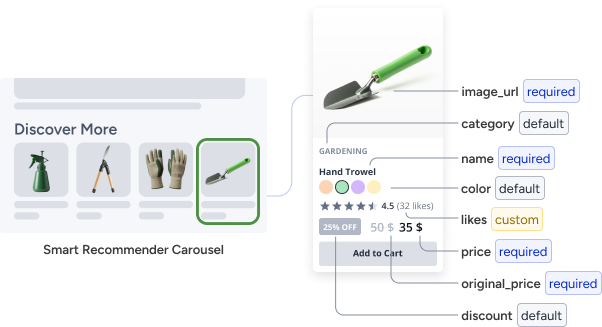
Make sure all the attributes you want to display are included in your product catalog. If you need to show more information on your product cards, you can create custom attributes from Product Attributes page.
After finalizing your campaign design, the next step is to select the locales and stores where you want the campaign to appear.
Once your targeting is set:
Review the campaign details.
Confirm that all settings match your objectives.
Click Launch to activate your first campaign.
3. Track your campaign metrics
You’ve launched your campaign—great work! Now it’s time to track its performance.
Go to the Smart Recommender Analytics page.
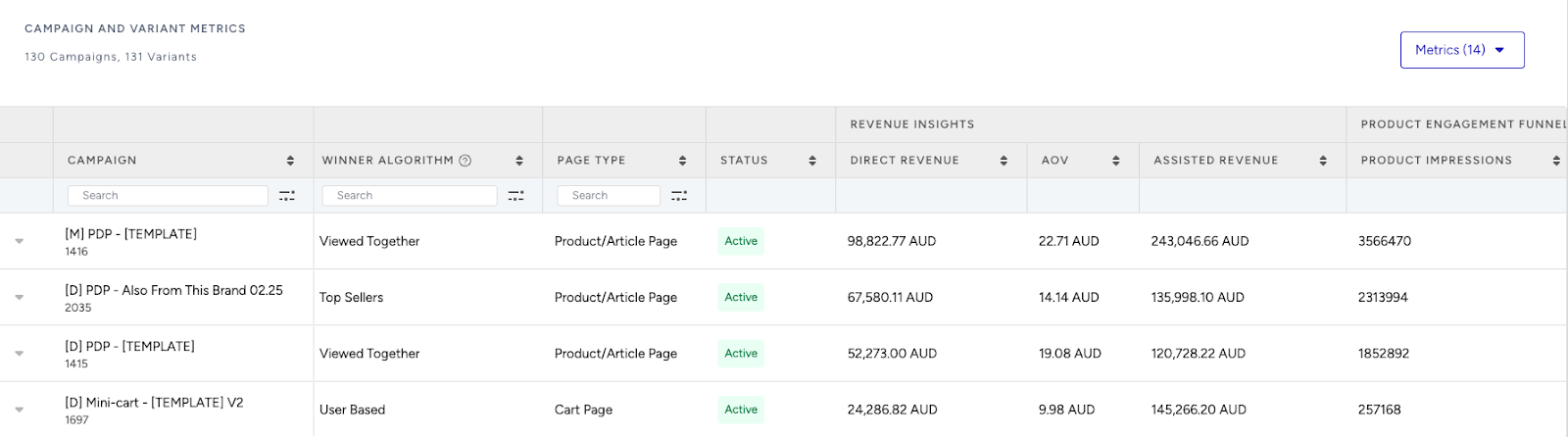
Locate your campaign under the Campaign and Variant Metrics table. Once the experiment duration ends, click your campaign name.
Compare key metrics, including Direct Revenue, Average Order Value (AOV), and Conversion Rate.
You can see which product category—pots or soil—led to higher AOV for low-spending customers.
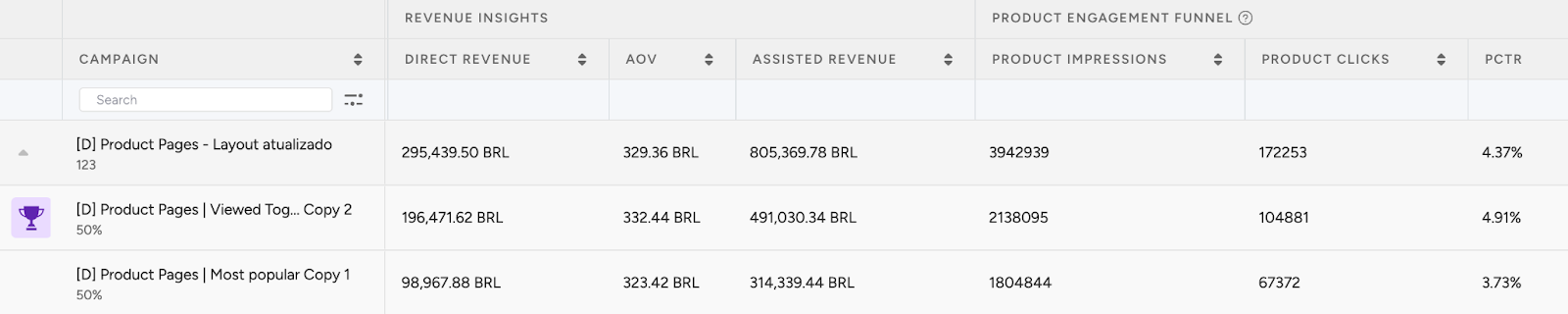
If one variant is clearly winning, adjust the traffic allocation to 100%. This ensures the best-performing strategy receives all traffic and maximizes impact.
You can also test and compare additional cross-sell strategies by adjusting the rules and filters based on other product categories, such as pairing gardening gloves with tools or recommending fertilizer with soil to discover which combinations drive the most value.
4. Optimize your campaigns
Once your campaigns are live and running, it’s time to review results and apply data-driven improvements.
Go to the Smart Recommender Analytics page.
Evaluate campaign performance based on engagement metrics.
Track Engagement Funnel Metrics: Understand how users interact with your recommendations at every step. View product impressions, clickthrough rate, add-to-cart rate, and conversion rate for each campaign to pinpoint where you’re driving engagement and where there’s room to improve.

Compare Campaign and Variant Performance: Use the Campaign and Variant Metrics table to review key KPIs like AOV, Conversion Rate, and Direct Revenue. Identify which strategies are delivering the best results and refine or scale your winning variant accordingly.
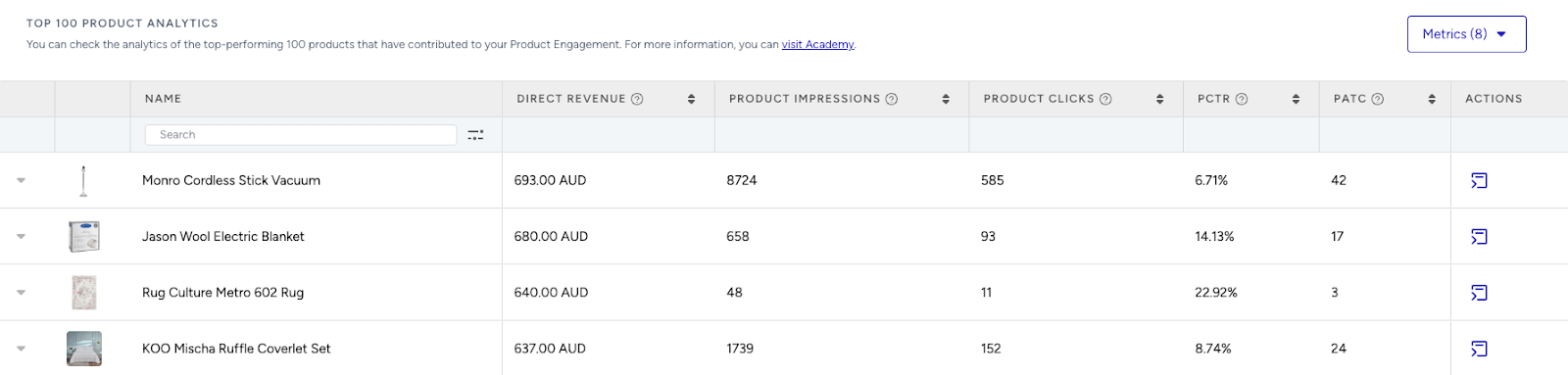
Analyze Product-Level Impact: Visit the Top 100 Product Analytics to see which products are performing well within your campaigns. Consider giving extra visibility to low-performing but strategic items by highlighting them in future recommendation widgets.
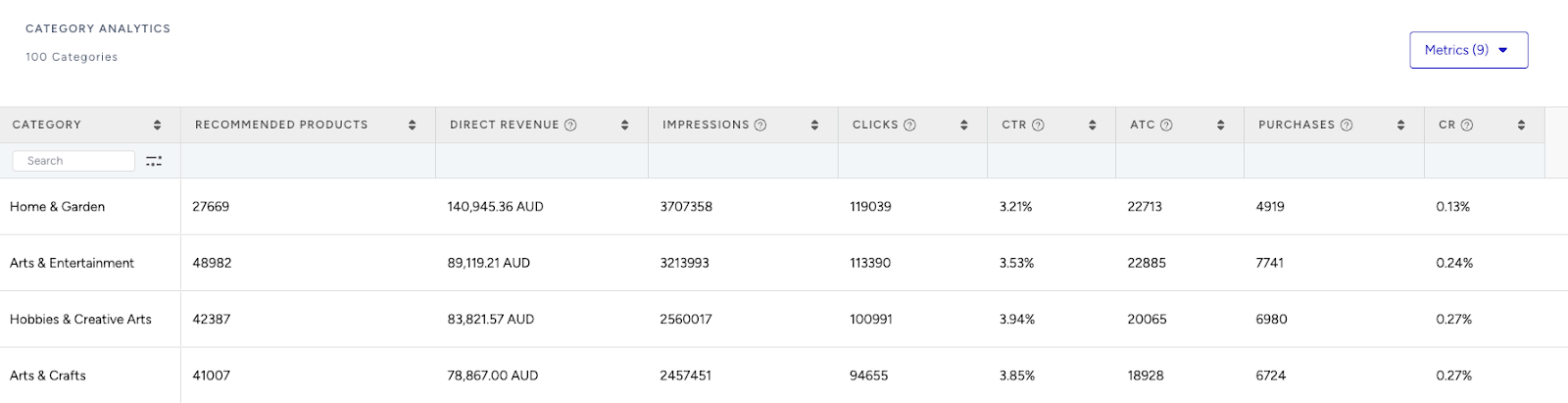
Review Category Trends: Use the Category Analytics view to assess which product categories drive the most conversions. You can prioritize high-performing categories to maximize conversions or spotlight underperforming categories to help boost their visibility and performance.
Use cases based on the page types
Home Page
Seasonal Picks
Showcase timely collections, such as Spring Starters or Fall Prep, that adapt to stay relevant and engaging with the season.
Create a strategy with the Most Popular algorithm to highlight top-viewed popular products on your homepage.
Enable the “Enhance recommendations based on Attribute Affinity” toggle to personalize recommendations based on your customer’s affinities.
Add Season + is + Fall filter to your strategy to display popular items of the season.
To filter your recommendations based on the season, create a new custom attribute from the Product Attributes page and add season information for your products.
After creating your strategy, you can A/B test your widget designs with seasonal visual cues (e.g., icons, colors) or try different widget positions (top of page vs. below banners) to determine what drives the most engagement.
Gardening Starter Kits
Help users get started with gardening kits, including tools, soil, and beginner-friendly seeds tailored to their specific needs.
Create a strategy with the Top Sellers algorithm.
Add Category + is + Starter Kits filter to your strategy to display products from the starter kits.
Set segments for new users on the campaign to address the right audience for starter kits.
A/B test different headlines like “Your Garden Starter Kit” vs. “Ready to Start Planting?” to see which copy boosts conversions most.
To recommend kits, create a custom attribute called Kit ID on the Product Attributes page. Assign the same Kit ID (e.g., Starter Kit 01, Expert Gardener 02 ) to all items in the kit. Then, use the Kit ID attribute in your filters to recommend other products from the same kit.
Recently Viewed Items
Re-engage returning users by reminding them of plants, tools, or planters they explored in previous visits.
Create a strategy with the Recently Viewed algorithm to resurface previously explored items.
Exclude already purchased items to boost your conversion chance.
Set segments for returning users on the campaign to address the right audience.
You can A/B test Recently Viewed algorithms with the User-Based algorithm to see which one helps you the most to boost your conversions on returning customers.
Recently Viewed and User-Based are personalized algorithms that rely on a user's past behavior. To use them effectively, ensure your segments are set to returning users.
Product Detail Page
Real-Time Browsing Trends
Boost discovery by showing products frequently viewed right after the current one by other users, such as recommending fertilizers for tomatoes right after viewing tomato seeds.
Choose the Real-Time User Engagement algorithm to surface trending follow-ups.
Exclude the recently purchased products.
You can use this widget with headlines like “Continue your gardening journey” to capture more attention.
More for Your Balcony/Outdoor Garden/Indoor Garden
Encourage deeper exploration by showcasing more items from the same gardening environment.
Utilize the Trending Products algorithm to showcase popular items in the gardening category.
Add filters: Garden Type + matches currently viewed item, and Category + contains currently viewed category. Connect these two filters with an OR connector to recommend relevant products.
You can use the dynamic name in your widget title to match the garden type (balcony, indoor garden, or outdoor garden) and encourage customers.
You can create a new custom product for garden types from the Product Attributes page to use it in your recommendation strategies and recommend related products based on the garden types.
Category Page
Discounted Gardening Products
Help price-sensitive shoppers by highlighting discounted items in the current category.
Use the Highest Discounted algorithm to surface the biggest deals.
Add a Category + matches the category they’re currently viewing filter to recommend products from the category they are viewing, like recommending the highest discounted pots for the pots category page.
Keep attribute affinity off to focus on value rather than personalization.
Add a clear visual badge—such as '25% Off' or 'Today’s Deal'—to product cards to help boost conversions. Run an A/B test with two widget variants: one placed at the top of the page and the other at the bottom, to determine which placement drives the most customer engagement.
Trending in This Category
Assist decision-making with bestsellers trusted by other gardeners.
Use Trending Products algorithm to recommend viral products of the category.
Apply category + contains the currently viewing category’s attribute filter.
If your category type is hierarchical, enable the “Expand the category filter to include recommendations from the next category if there aren't enough products to display.” checkbox to make sure recommendations are shown even though there aren’t enough products to recommend from the category the user is visiting.
Enable the “Enhance recommendations based on Attribute Affinity” toggle to personalize recommendations based on your customer’s affinities.
A/B test different headlines like “What’s Trending Right Now” vs. “Bestsellers in Gardening” to see which resonates more.
Cart Page
Complete the Gardening Set
Encourage customers to complete their gardening project with relevant add-ons, such as fertilizer, gloves, or soil enhancers.
Use Most Popular algorithm.
Add a Category + is one of + Fertilizer, Soil, Gloves, Pots filter to suggest practical add-ons.
Leave affinity off to prioritize functional relevance.
A/B test whether messaging like “Don’t Forget These Essentials” or “Complete Your Garden Kit” increases order value better.
Boost to Free Shipping
Encourage upsells by showing products that help users meet shipping thresholds.
Use the Checkout Recommendation algorithm with a spend threshold (e.g., 100 USD).
No filters required; affinity is optional.
Highlight remaining spend with a note like “Top up to 100 USD more for free shipping!” for urgency. If you don’t have a free shipping campaign, you can also use the Purchased Together algorithm to recommend possible upsell products that align with the items in their cart.