It is not possible to combine email engagement segments with other segment groups.
In email marketing, engagement is a metric defined by the click and open rates of your email campaigns.
What does High Engagement mean?
When recipients are interested in your emails and find them useful, they are highly engaged. Segmenting your users based on their engagement would help.
Segmentation is an effective marketing strategy that enables you to offer the right content to the right group of recipients and personalize their experience. With Email Segments, you can divide your users into smaller groups.
Segmenting your users based on their engagement level will help you deliver more relevant content to the right population, which will increase their engagement and loyalty and improve the deliverability of your email campaigns.
Engagement Segments enable you to re-engage inactive subscribers and reward your engaged subscribers with new offerings. They will also significantly impact your sender's reputation.
What are the Engagement Segments?
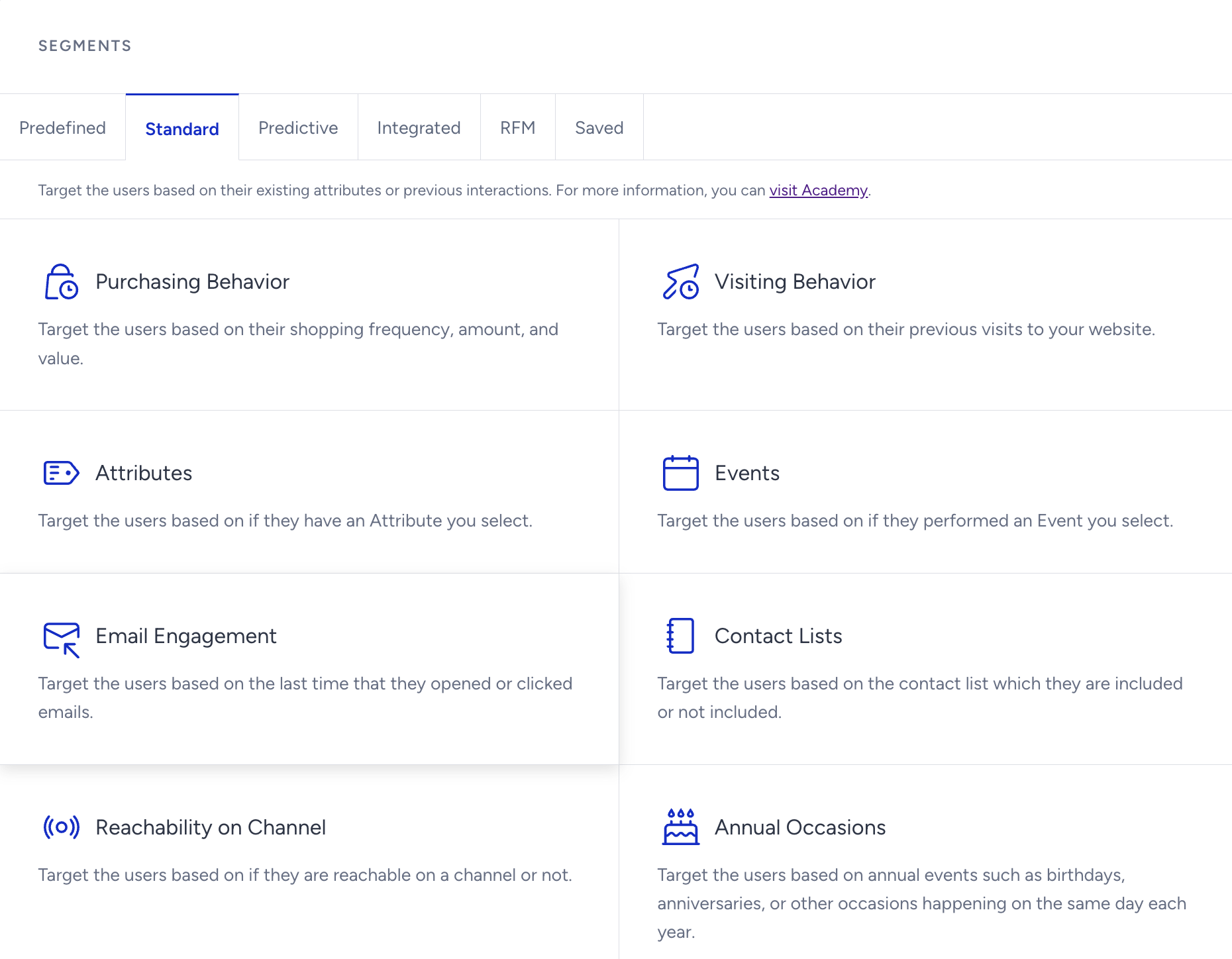
You can use the following email engagement segments to segment your users based on the last time they opened or clicked emails, along with the respective operator to include or exclude the selected user group.
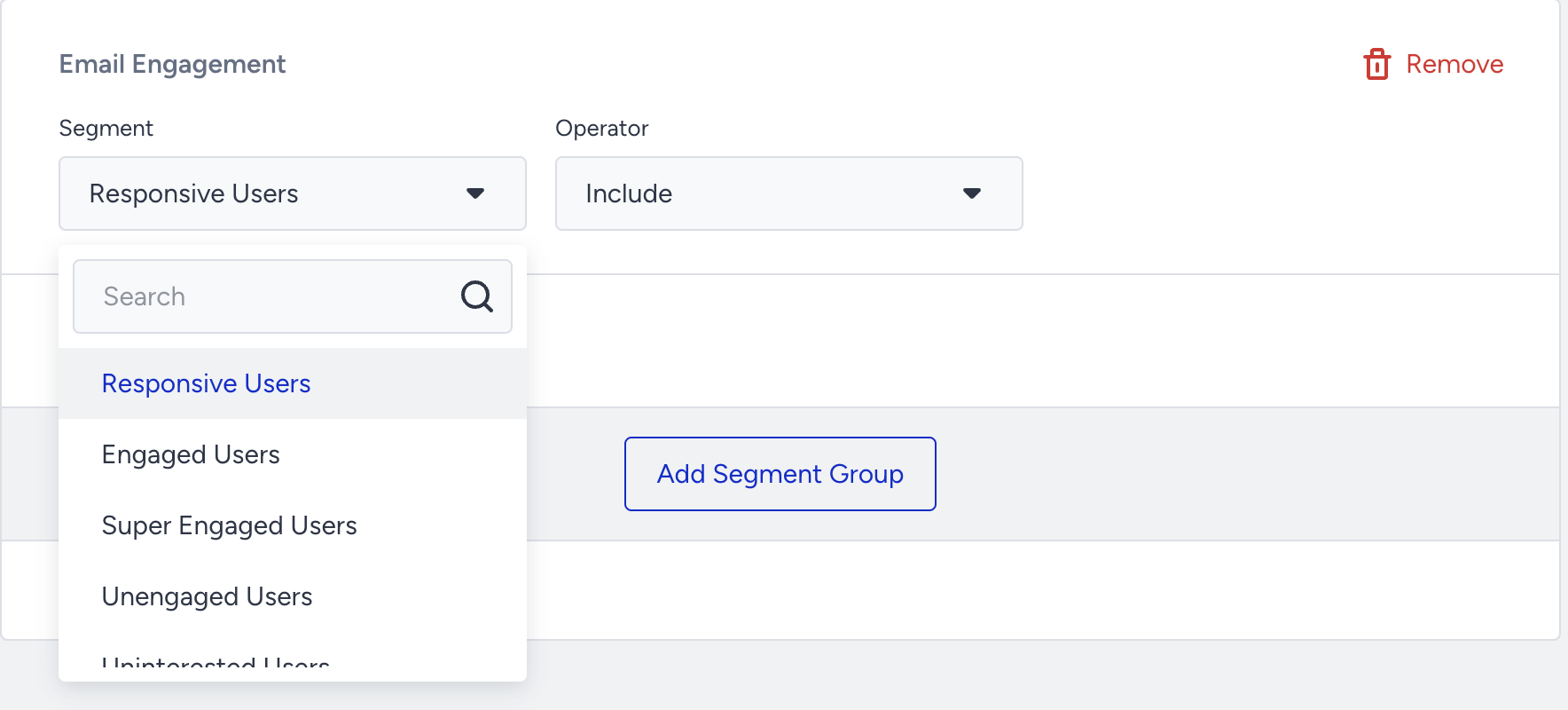
Responsive Users: Responsive users are the subscribers who have opened or clicked an email in the past 60 days.
Engaged Users: Engaged users are the subscribers who have opened or clicked an email in the past 30 days.
Super Engaged Users: Super-engaged users are the subscribers who have clicked an email in the past 30 days.
Unengaged Users: Unengaged users are subscribers whose last email open or last click date is more than 90 days ago.
Uninterested Users: Uninterested users are the subscribers who have never opened or clicked any email.