Drag & Drop Editor enables you to use a recommendation module in your emails of all types and those you have in Architect. This module brings product recommendations to your emails and has the same features as Email Recommendation.
You can use this module to enrich your emails with product recommendations or to create recommendation-only emails. You can create new email templates using this module or add it to your existing recurring emails.
In this article, you can find answers to the following questions:
Using more than one Recommendation module within the same email template might affect the delivery speed and cause delays in emails reaching the end users.
If Send Time Optimization, A/B Testing, or Throttling is enabled in your campaign along with the Recommendation module, your email campaigns may not be delivered at the exact send time as these features adjust the timing when users will receive the emails.
Add the Email Recommendation block
To add the recommendation module:
1. Go to the Design step of your email campaign.
2. Select the Drag & Drop Editor.
3. Click Blocks on the editor and choose the Recommendation block.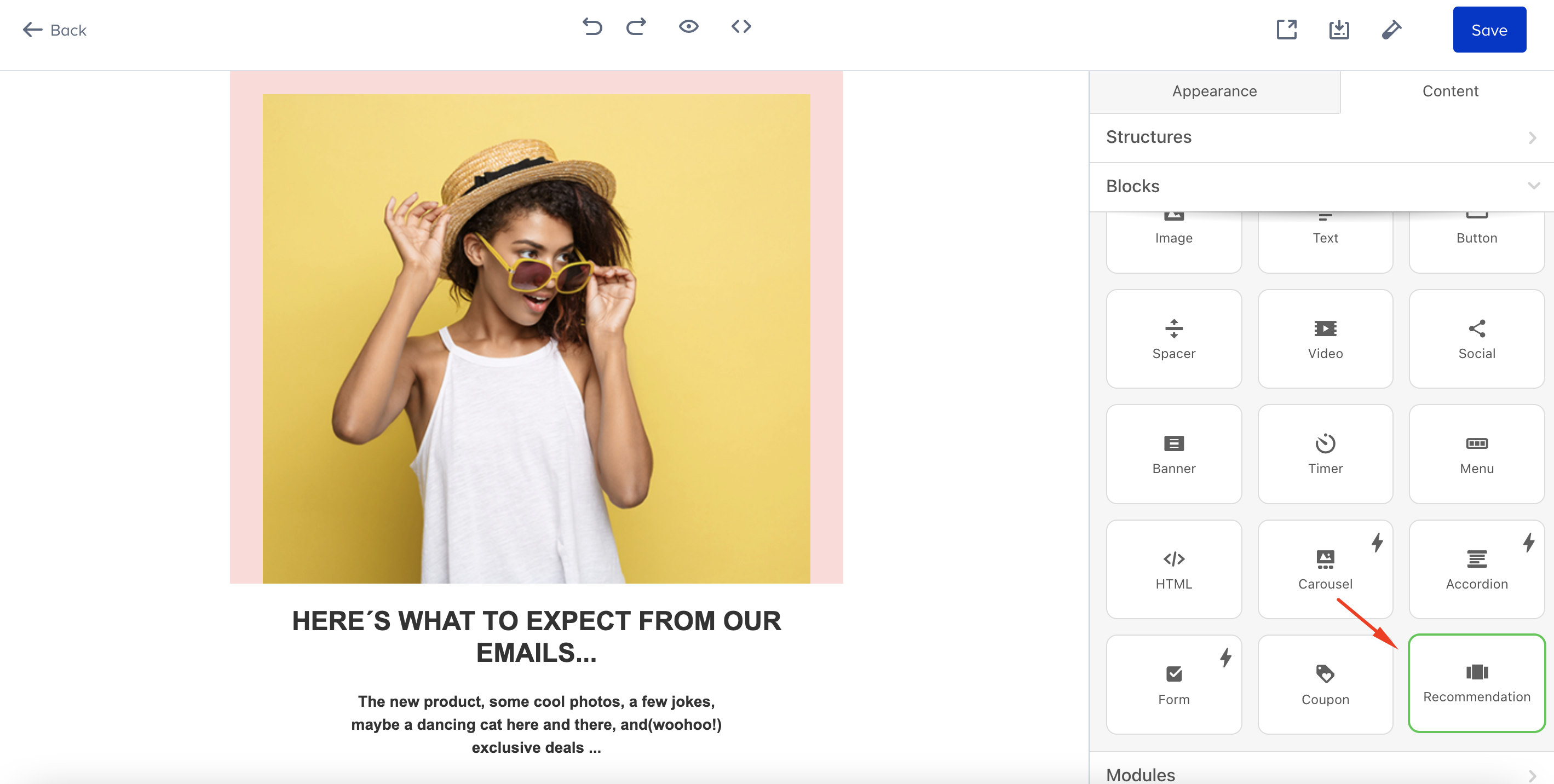
Configure the Recommendation Strategy
4. Select the Recommendation Strategy you want to have in your email and the Recommendation Language.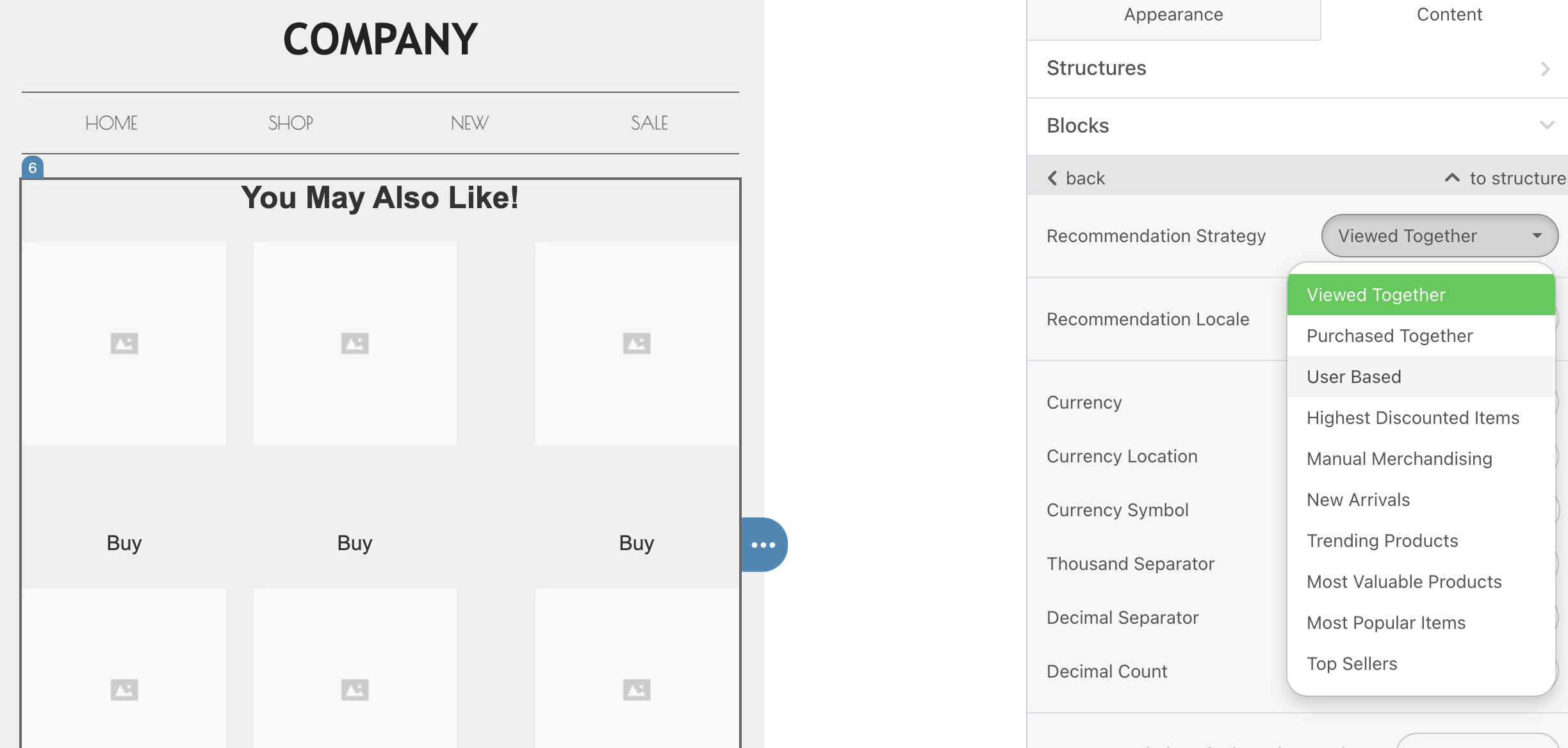
The recommendation Strategy defines which products will be recommended to the recipients. You can select from the following strategies for your email: User Based, Viewed Together, Purchased Together, Most Popular Items, Top Sellers, Highest Discounted Products, Trending Products, Most Valuable Products, Manual Merchandising, and New Arrivals.
In the Manual Merchandising strategy, you can select the products by their unique product IDs separated by commas. With this strategy, you can create recommendations targeting the same specific products for all your receivers.
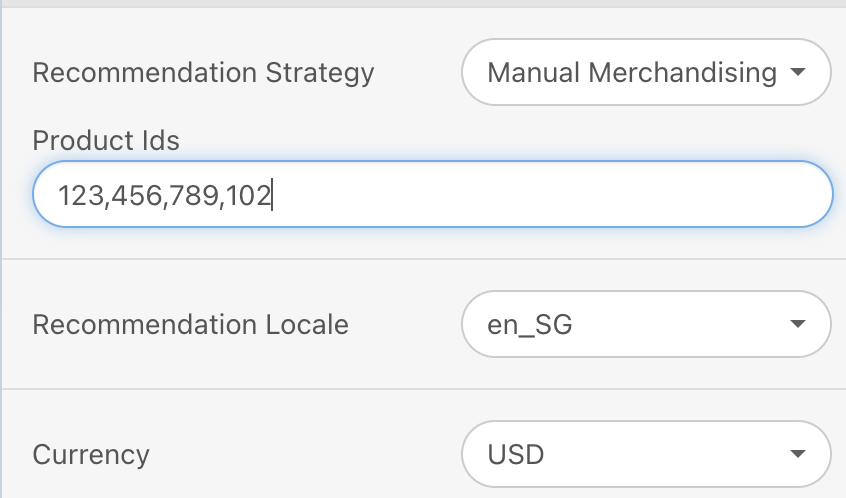
Recommendation Language defines the language in the recommended products that will be displayed in the email.
"Most Viewed" is a retired strategy name from older email templates. Recommendation blocks that still use it are automatically mapped to Most Popular Items when the template is opened or saved, so no action is needed on your side. If a migrated block has no strategy selected, the editor applies Most Popular Items by default. You can change the strategy at any time from the block settings.
Configure the currency settings for the Recommendation block
5. Select your Currency, Currency Location, Currency Symbol, Thousand Separator, Decimal Separator, and Decimal Count to style your product cards.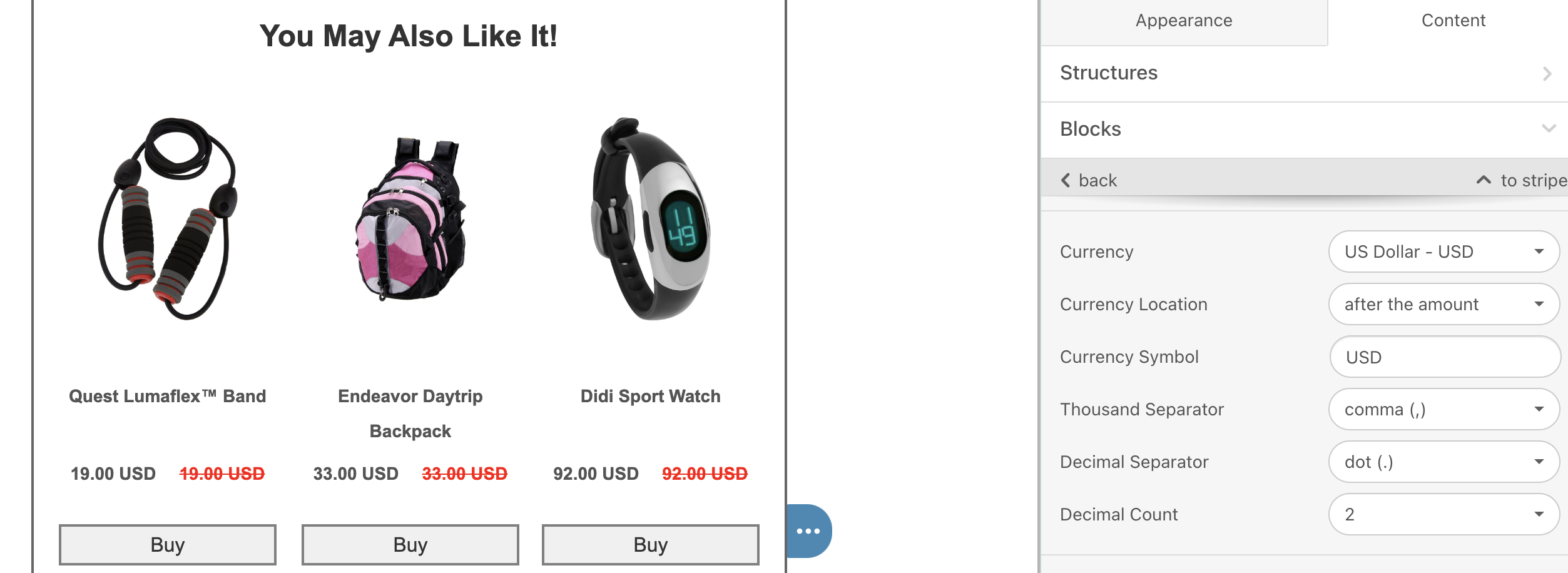
You can configure your currency settings through your Account Preferences. The currency location defines whether the currency symbol will be before or after the amount. You can also personalize the currency name with a text or symbol.
Thousand and decimal separators help you configure what you want to display as a separator. It can be a comma, a dot, or a space. Lastly, you can specify how many digits you want to display after the decimal.
6. Choose a background color for the recommendation block and the product cards.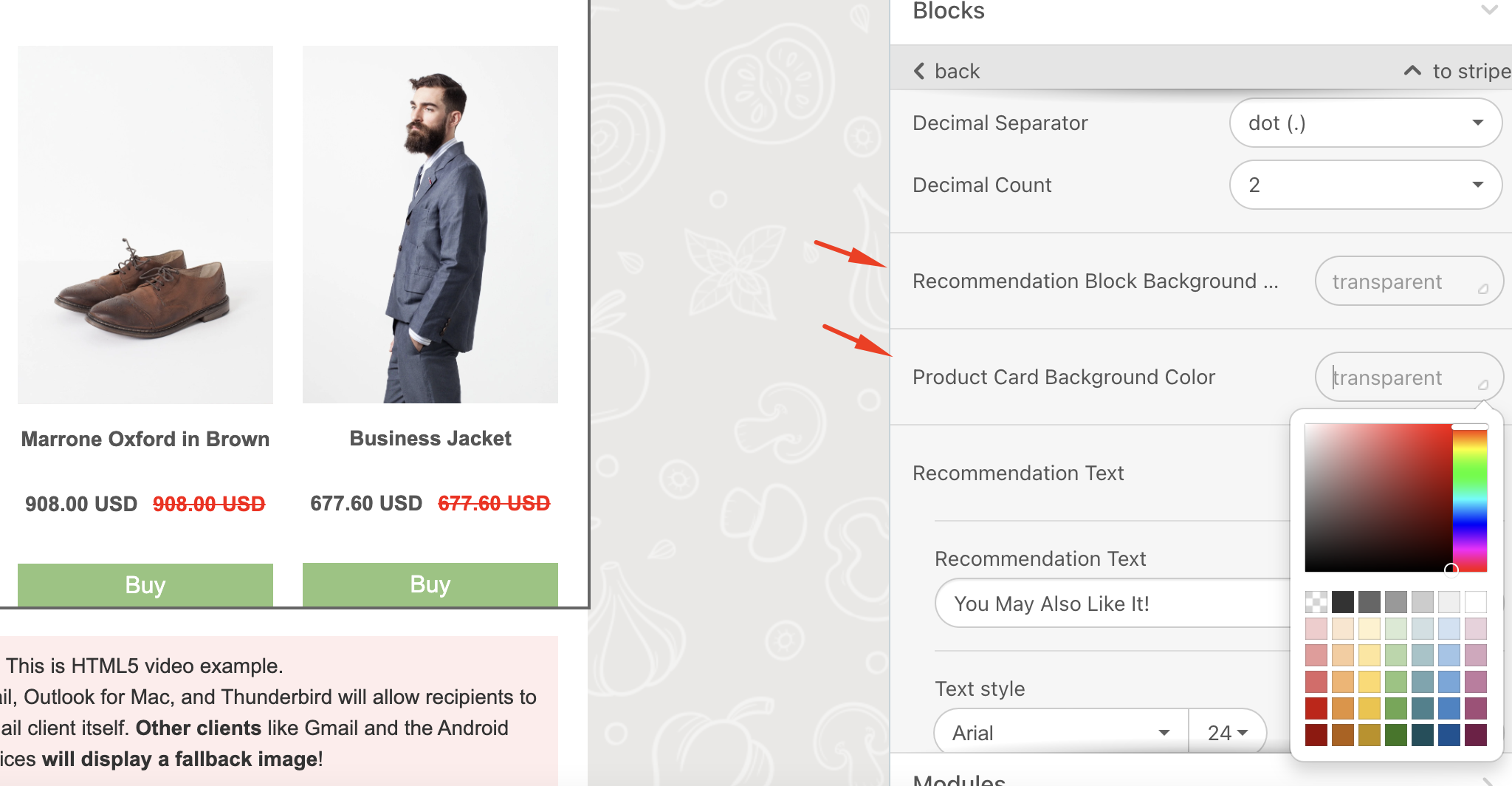
To change the color, you can set a new color on the color palette.
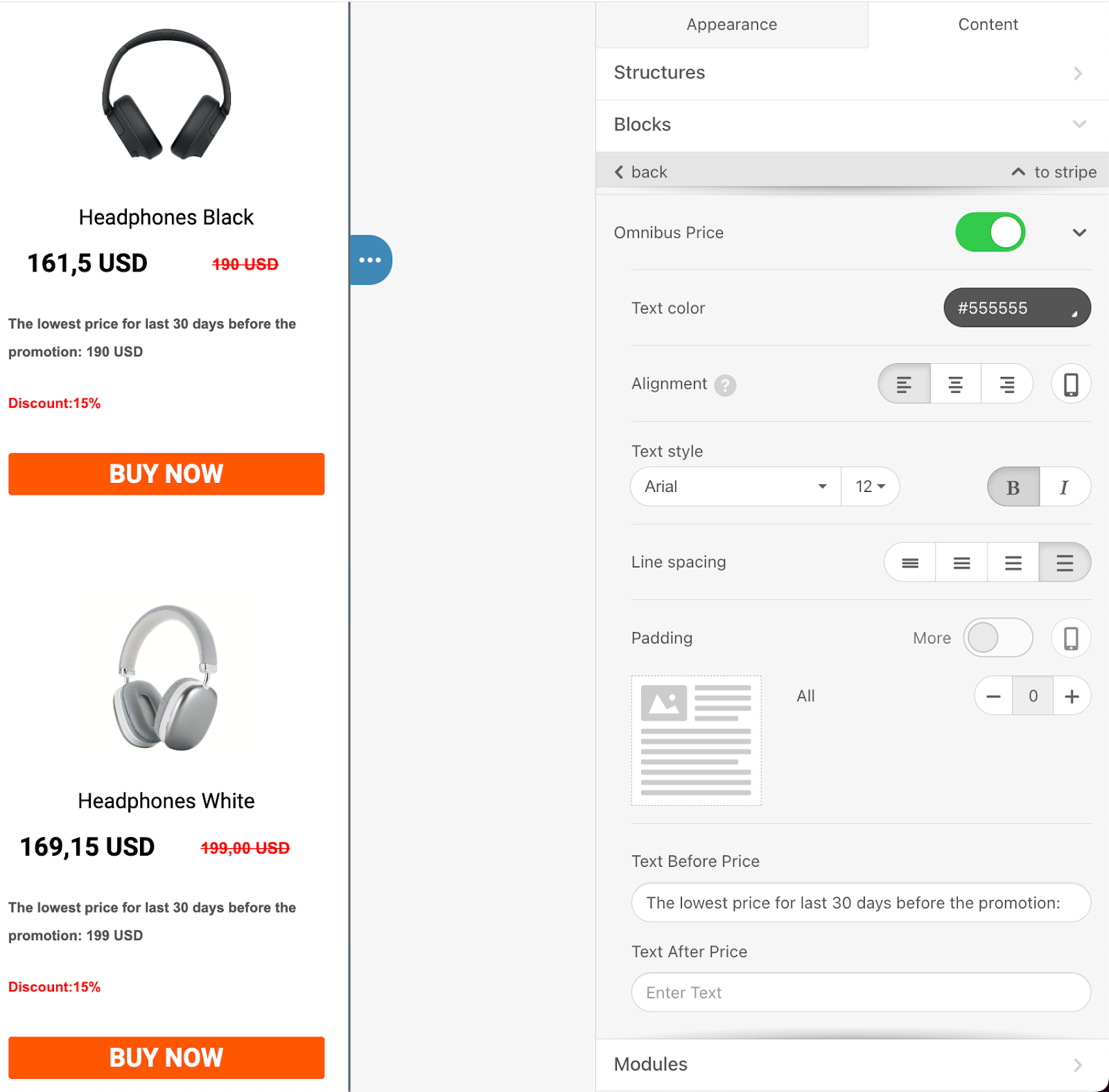
Configure Omnibus Price for the products
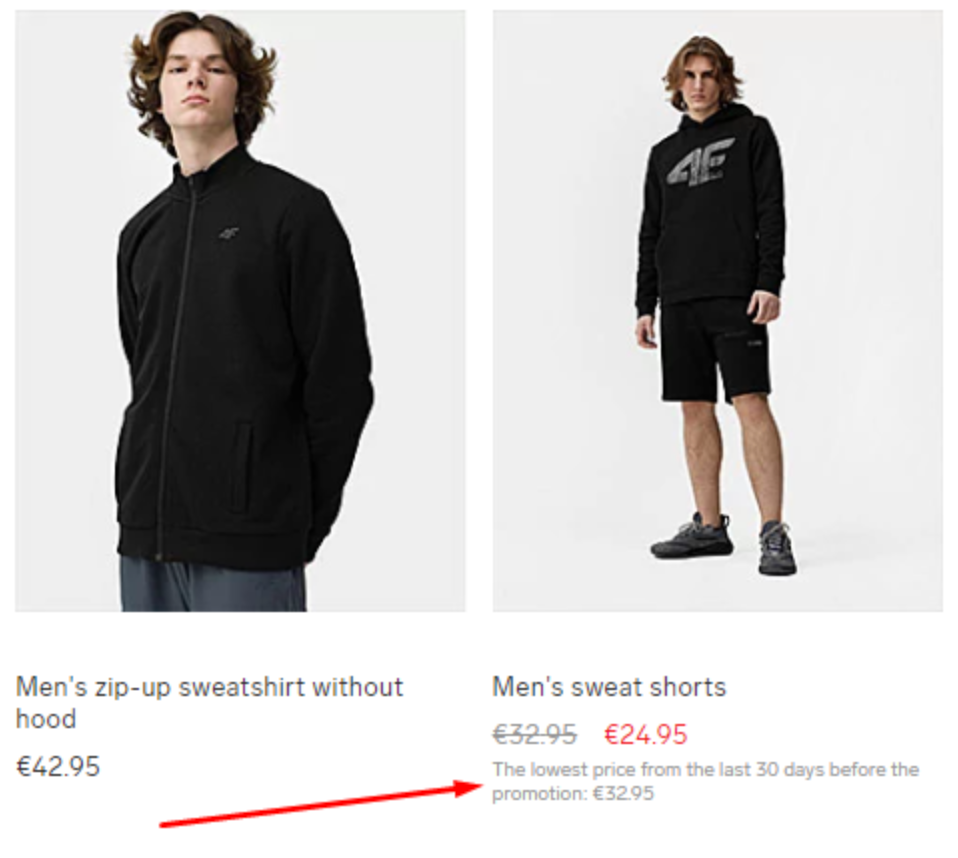
Omnibus price indicates the lowest price a product has been sold for in a specific period (often 30 days). It's used in marketing and pricing regulations to show consumers a reference price, helping them understand discounts and ensure transparent pricing.
When a discount or promotion is advertised, the seller must display the lowest price the product has been sold for in the last 30 days (the omnibus price) alongside the new discounted price. This regulation ensures customers see a clear reference price and aren't deceived by the inflated pre-sale prices.
The regulation typically applies to price reductions in consumer goods, both online and offline, and covers a 30-day window before the discount. New products introduced within the last 30 days or short-term price reductions like flash sales may have exceptions depending on local regulations.
This regulation aims to enhance price transparency and protect consumers from deceptive pricing practices.
About the regulation
According to the EU Directive 2019/2161, also known as the "Omnibus Directive", the omnibus price regulation is primarily required in the European Union (EU) countries. Some of the countries where this regulation applies include the following. This list might change over time:
All EU Member States
Norway and Iceland also follow similar rules as they are part of the European Economic Area (EEA), which aligns closely with EU regulations.
Outside of the EU, other countries may have their own price transparency or consumer protection regulations, but the omnibus price regulation itself is specific to the EU and EEA region.
How does the omnibus price work?
The omnibus price is a product attribute displayed only for the products with discounts. The customer should create the omnibus price as a product attribute in the product catalog.
How can you use the omnibus price in the block?
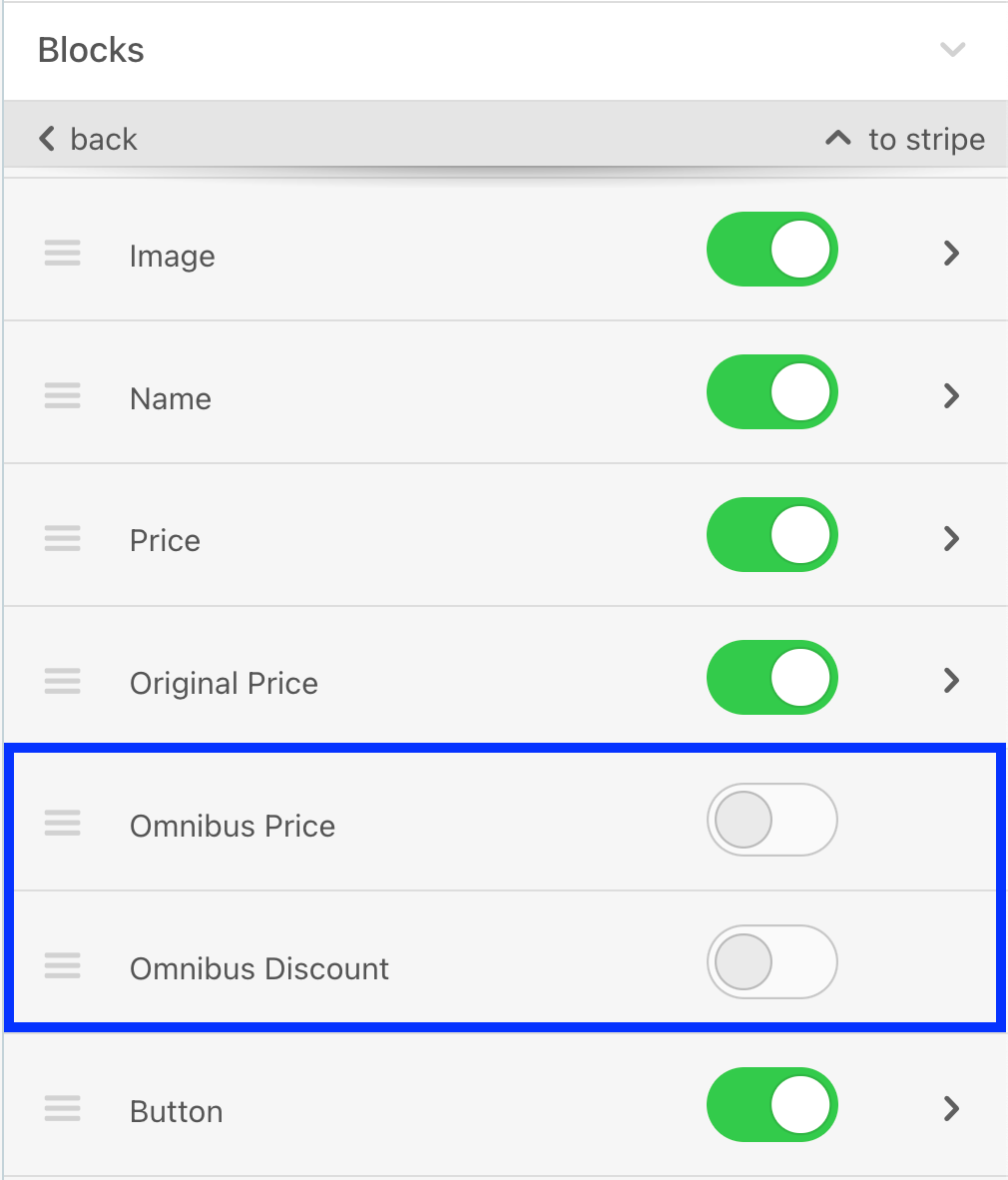
The configuration settings for the omnibus price and omnibus discount are available in the Recommendation block only if the "omnibus price" and "omnibus discount" attributes are defined in the product catalog. Otherwise, the respective toggles will not be visible.
The Omnibus Price and Omnibus Discount toggles are disabled by default. You should toggle them on if you want to add them to your email.
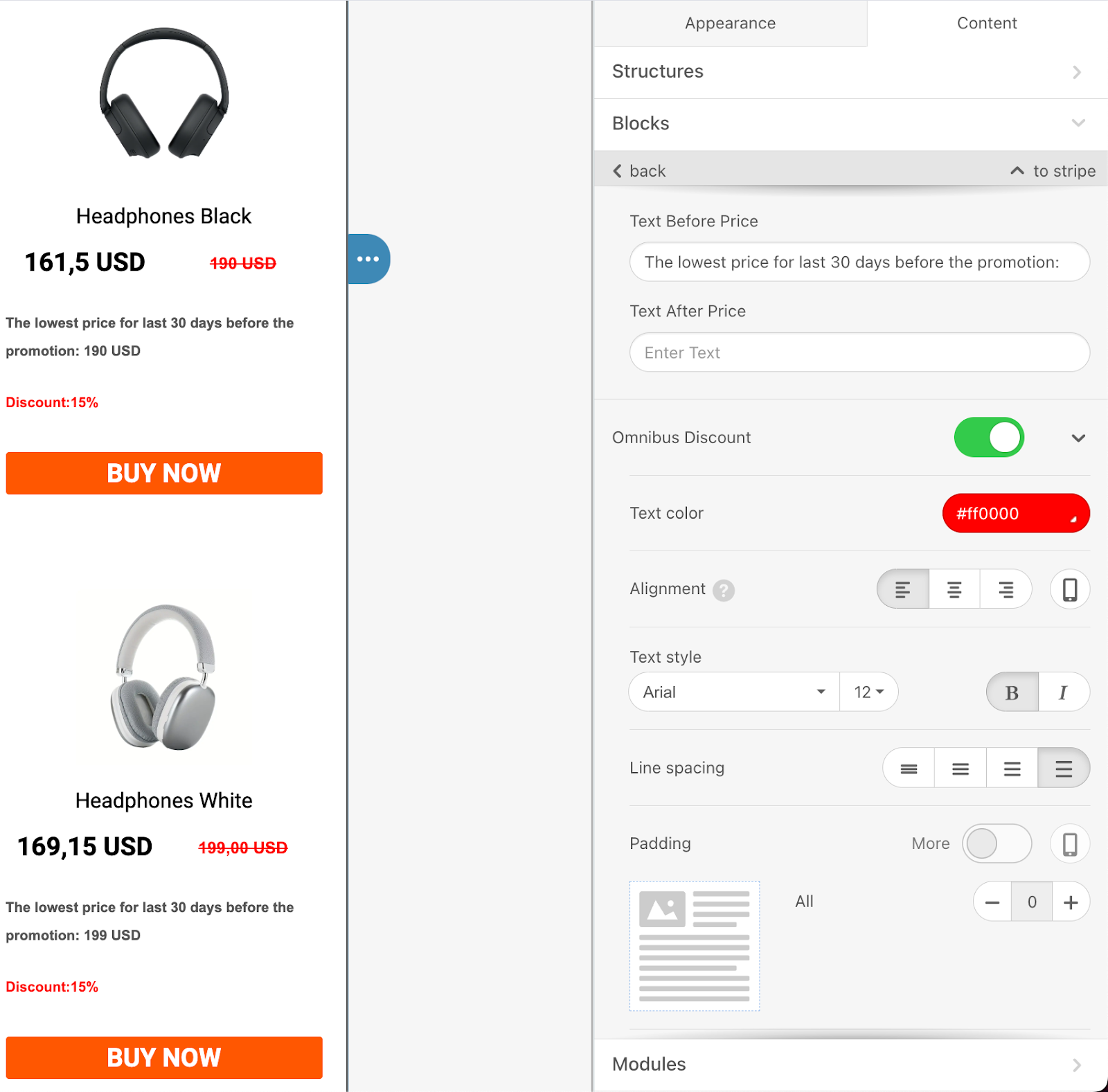
Omnibus Price and Omnibus Discount also have all the necessary settings to adjust the text styles, font size, and alignments, and add custom text before and after the omnibus price and discount values.
Configure the Recommendation Text
7. Toggle on/off the title of the recommendation card. Change your copy, its text style, font weight, text alignment, and color.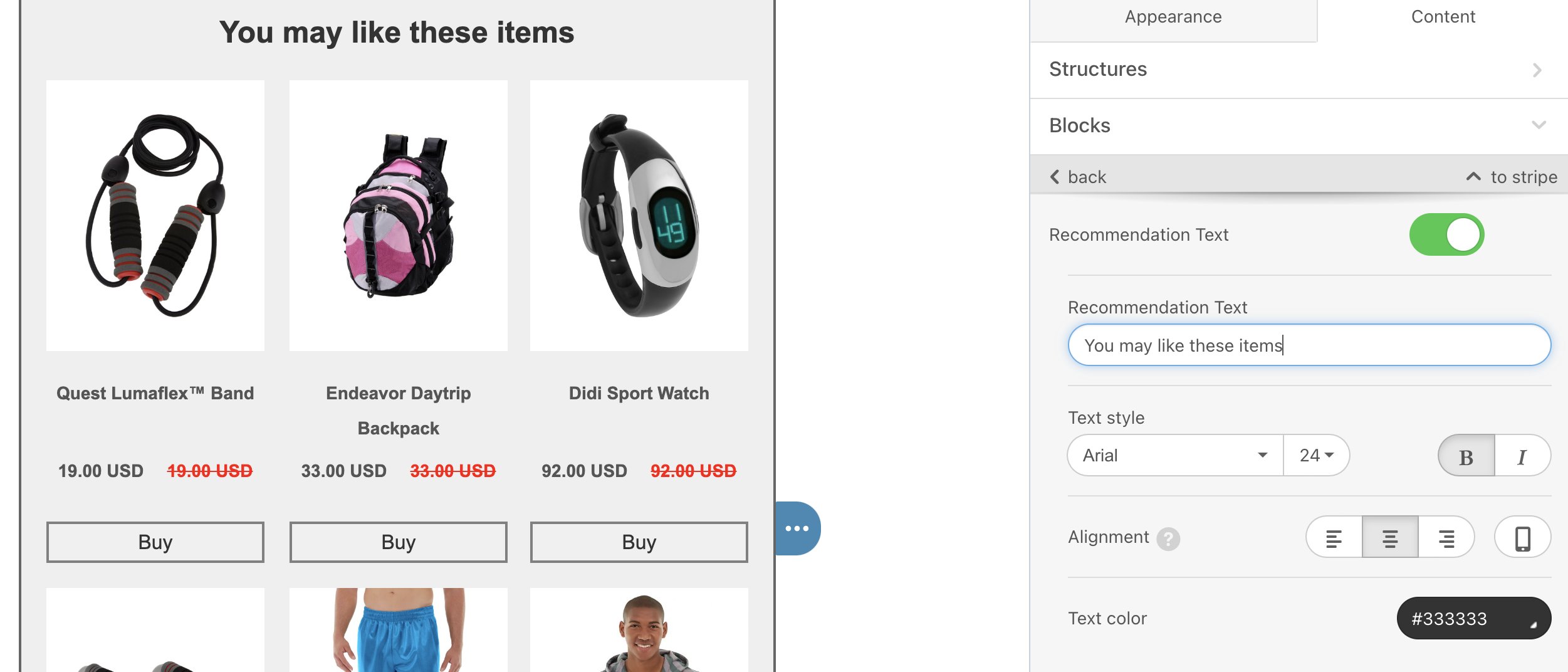
Once you toggle on the Recommendation Text, the header text will be displayed on top of the module. You can insert your header in the input field.
To customize its style, you can use the Text Style option to select a font family, the Alignment option to decide where to display the text on the page, and the Text Color option to change the header color on the color palette.
Add filters to the Recommendation block
8. Click the Add Filter button to add filter(s) to filter out the recommended products real time.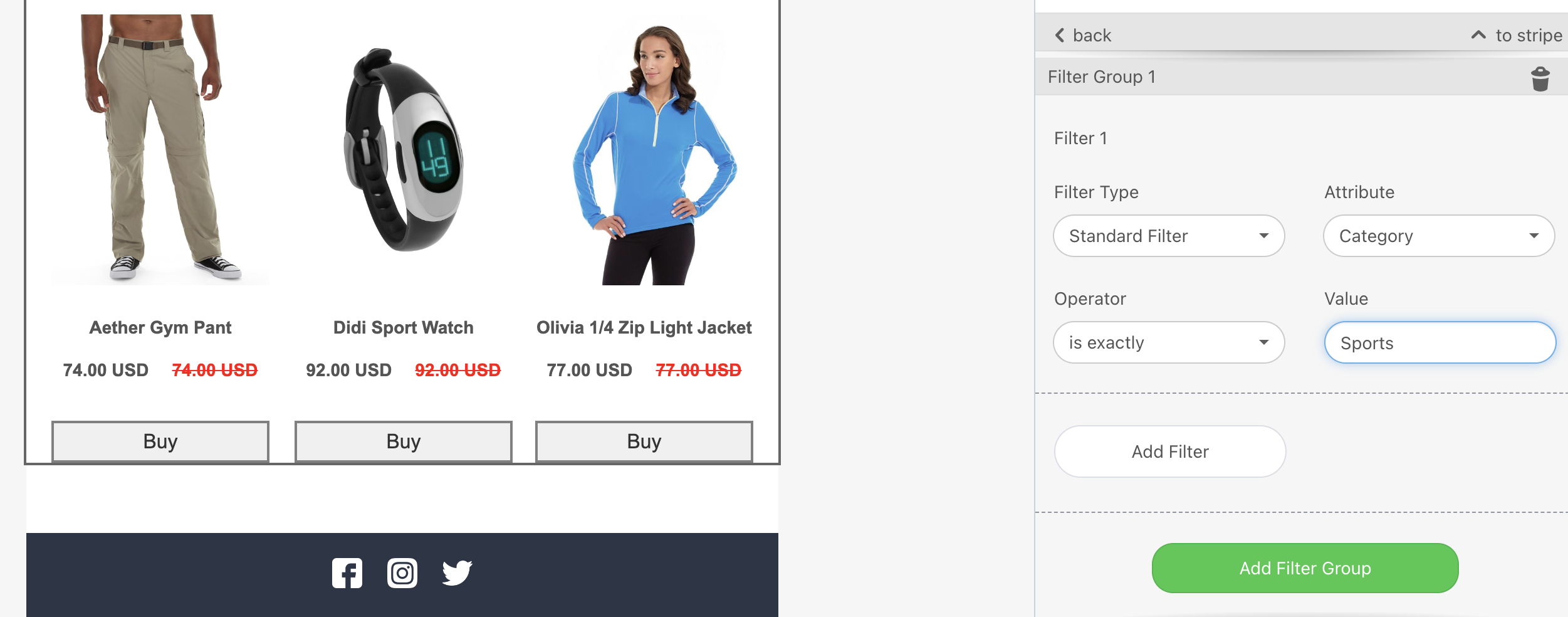
9. Now you can add filters or filter groups. If you add multiple filters in one filter group, you can use the AND or OR logical operators.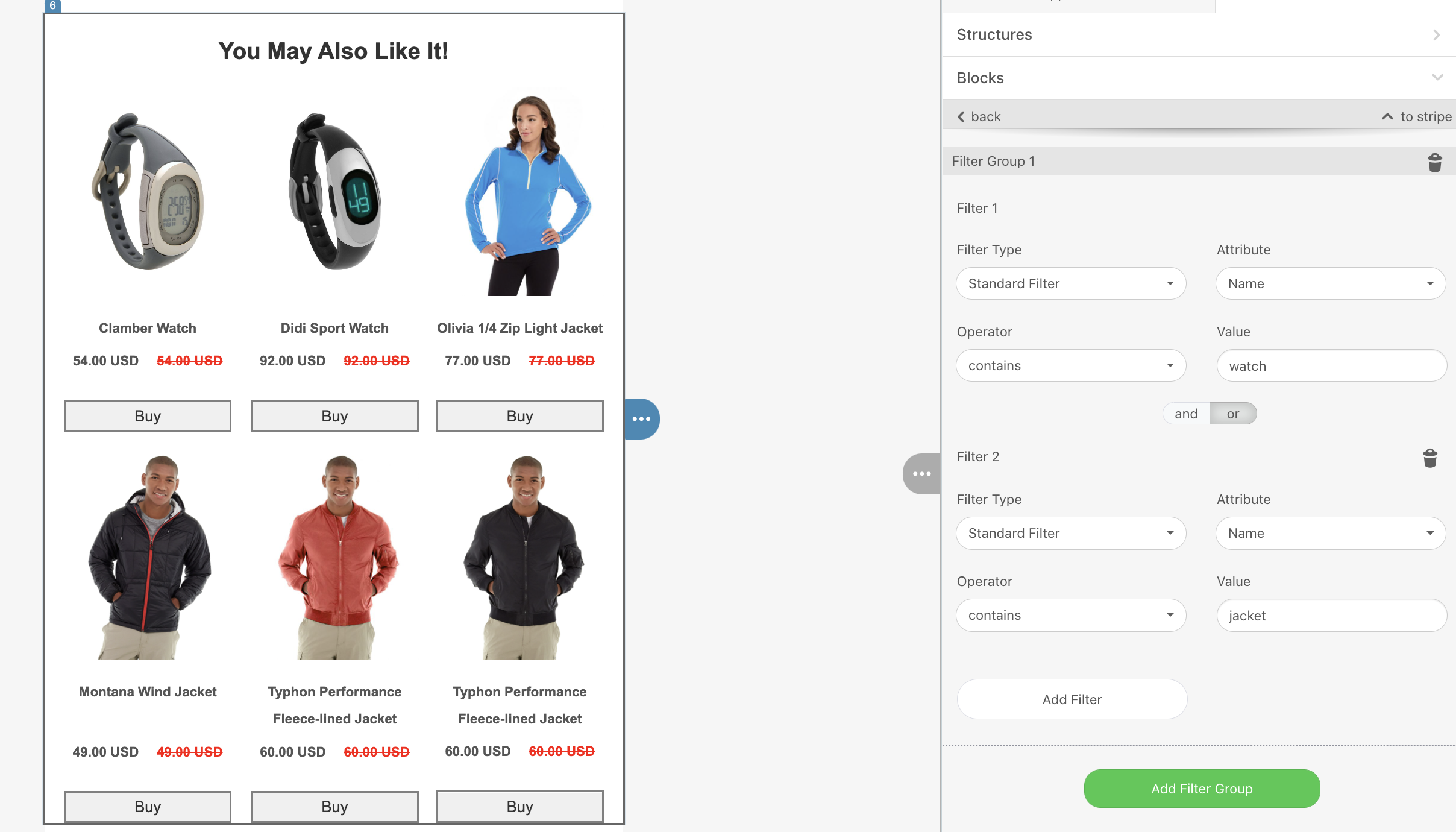
10. If you click the Add Filter Group button, you can add more filter groups, and use the AND or OR logical operators between these filter groups.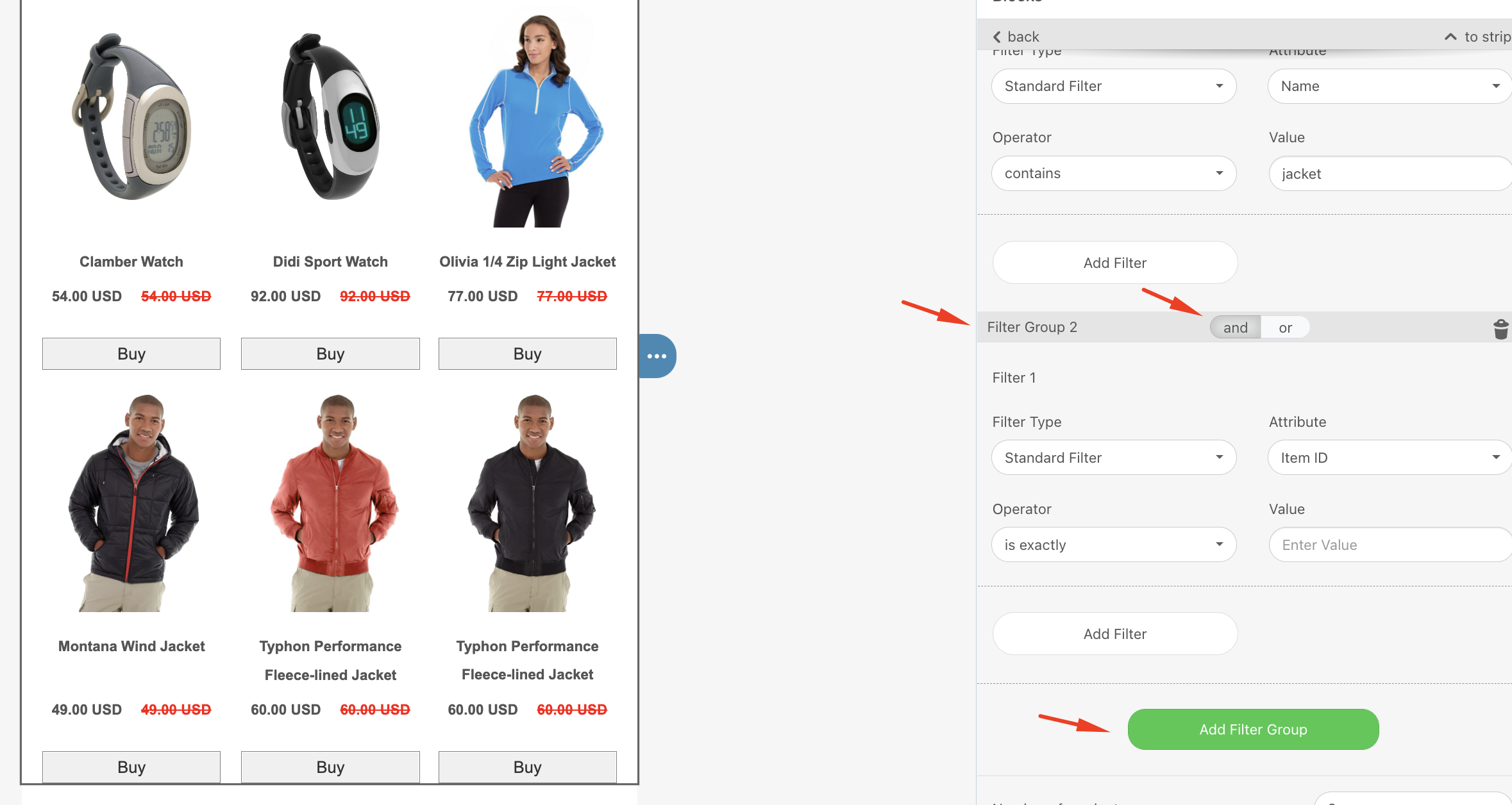
You can add filters or filter groups to specify the products you want to display in your emails. You can create up to 3 filter groups, and add up to 10 filters to each group.
There is no limitation on combining filters with AND and OR filters. You can select different operators within a single filter and filter groups. While reading the operators, the operators will be prioritized as AND first, and OR second.
You can create up to 3 filter groups and 10 filters within each group.
You can use the AND/OR operators to build the logic between filters. The AND operator has higher priority than the OR operator. You can build a filter logic with only AND, only OR, or a combination of AND and OR.
When you add a new filter, the filter type will be standard by default. You can choose an attribute for your filter and set the condition with an operator and a value.
If you create a filter condition, the value of the condition cannot be left empty.
Design the Recommendation block layout
11. Configure the number of recommended products to display, how many products to display in a row, how to display the products, and the row padding.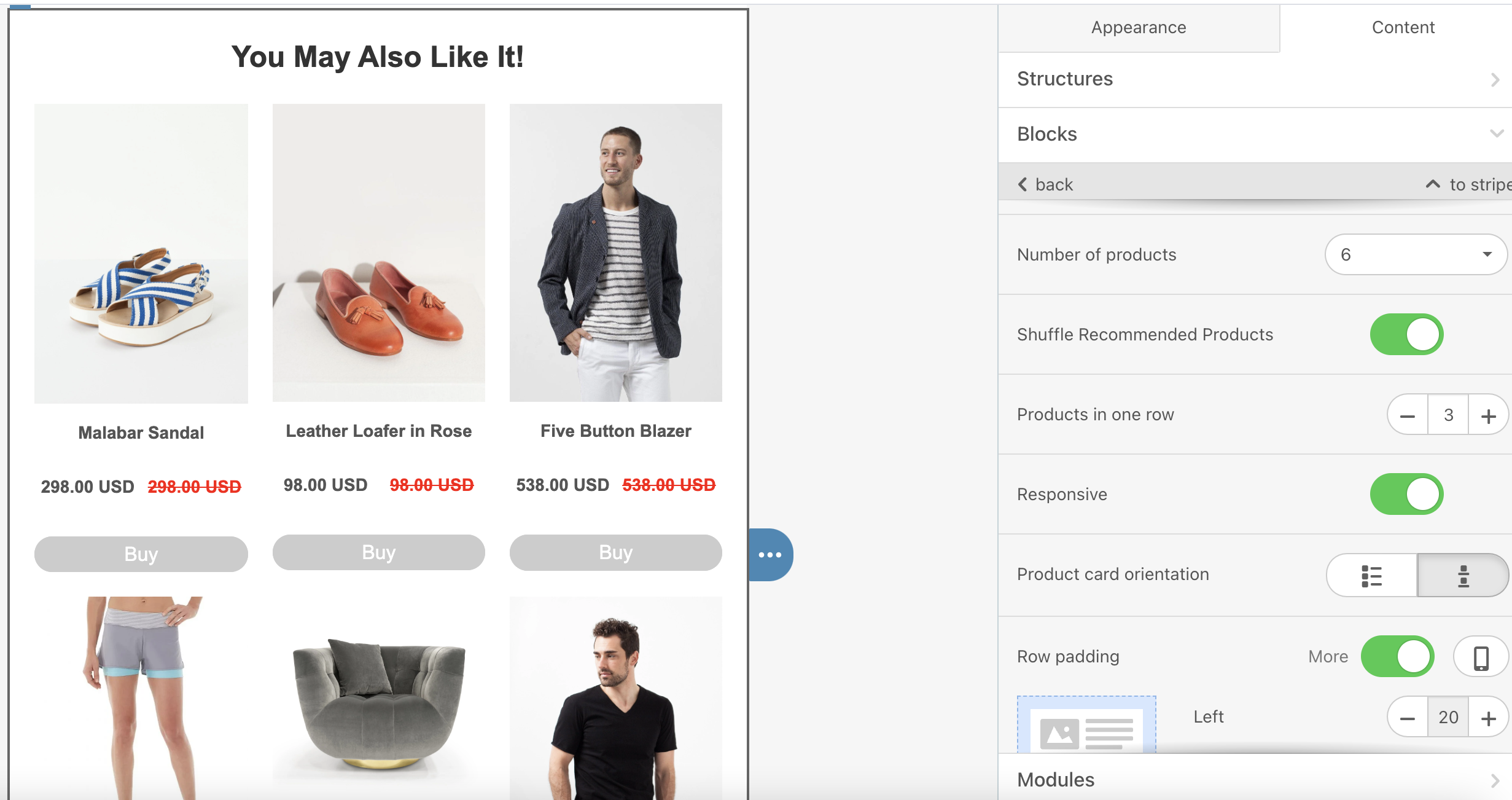
Number of products defines how many products will be displayed in the module while Products in one row defines the number of products in each row.
Shuffle Recommended Products shuffles the products displayed in the recommendation module to change their order.
Responsive defines the responsiveness of the cells according to screen sizes. When enabled, the number of products in a row will be modified to fit the screen. Otherwise, the size of the product card will be modified so that all products can be displayed without any change in the default layout.
Products can be displayed in a vertical or horizontal layout. If you select a product card orientation, you can define the products in a row and decide on the responsiveness.
Row padding helps you resize and reposition the items in the recommendation module. Once you toggle on the More option, you can change the empty space size for each side of the module. If you click the mobile layout button, you can modify the spaces for the mobile version.
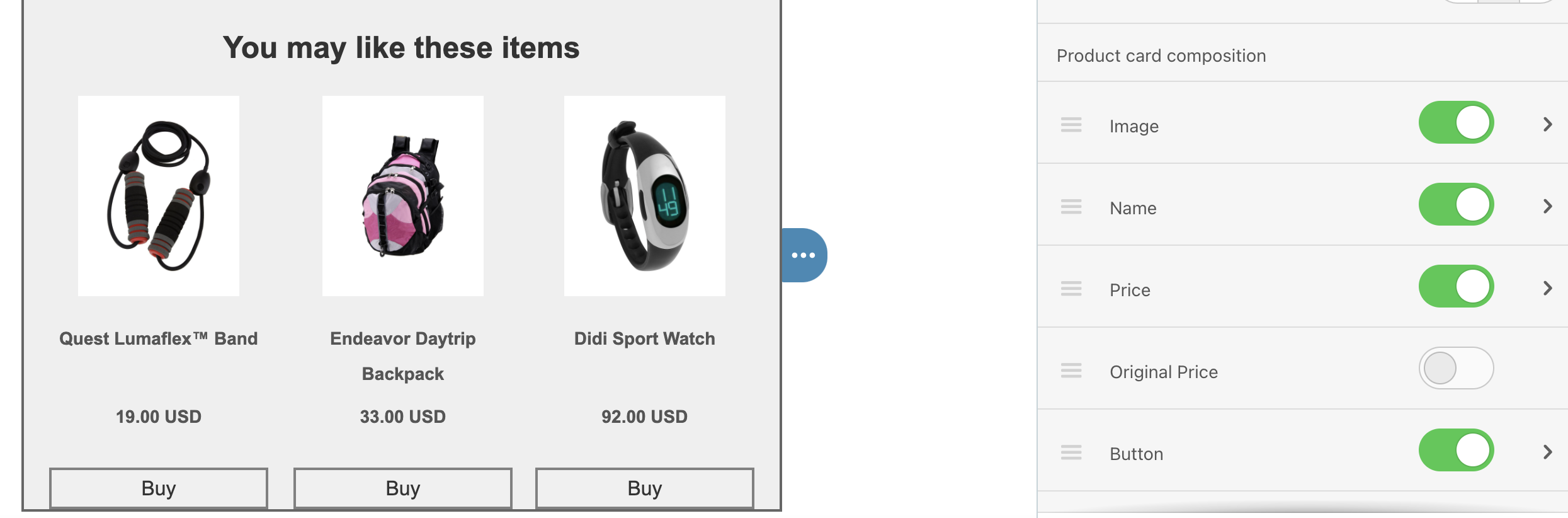
12. Choose what product attributes to display, and change their order in the product card where necessary. These attributes can be product image, name, price, original price, and button.
If a user clicks on the image of a recommended product, they will be redirected to the product link on the website.
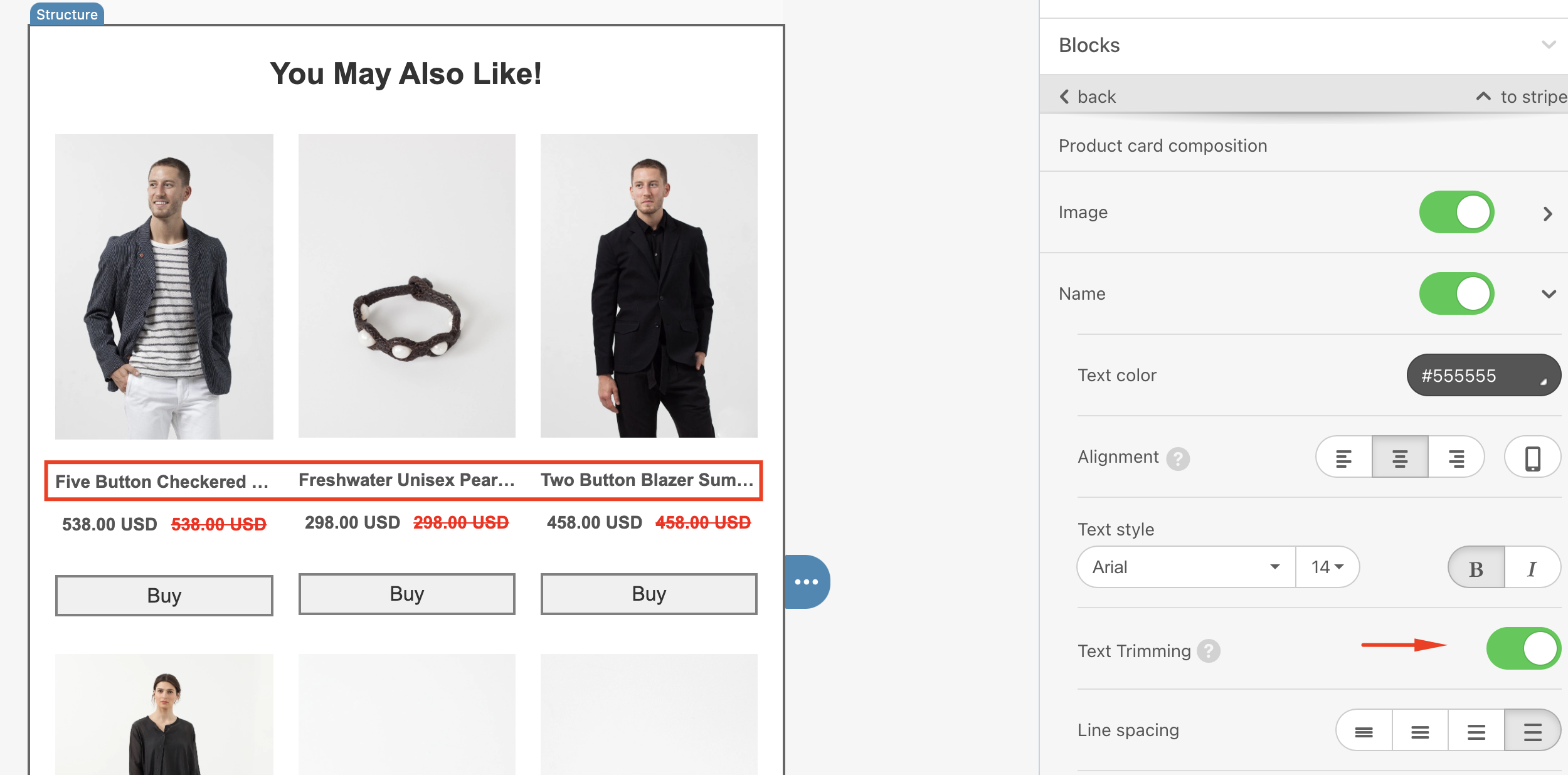
The Text Trimming in Product card composition > Name area is toggled on by default. This option shortens the product names and ends them with "..." on one single line. If you do not want shortened product names, you can toggle this option off in your recommendation block.
The text trimming feature is only supported in the new Outlook application for Microsoft 365. Older versions of Outlook (2019, 2016, standard 365) do not render this feature correctly. While these versions can understand the template code, they fail to render the trimming properly.
We recommend avoiding this feature for targets using these versions. If the product name does not meet the required length to trigger trimming, this feature will not render on certain ISP providers either, regardless of the Outlook version.
To modify each card, you can enable/disable attributes, and add additional attributes to the product cards. You can customize each attribute, add buttons to each product, and create your custom attributes with your customer data.
Custom attributes have a trimming toggle that is enabled by default. It trims the value with "..." at the end of the line.
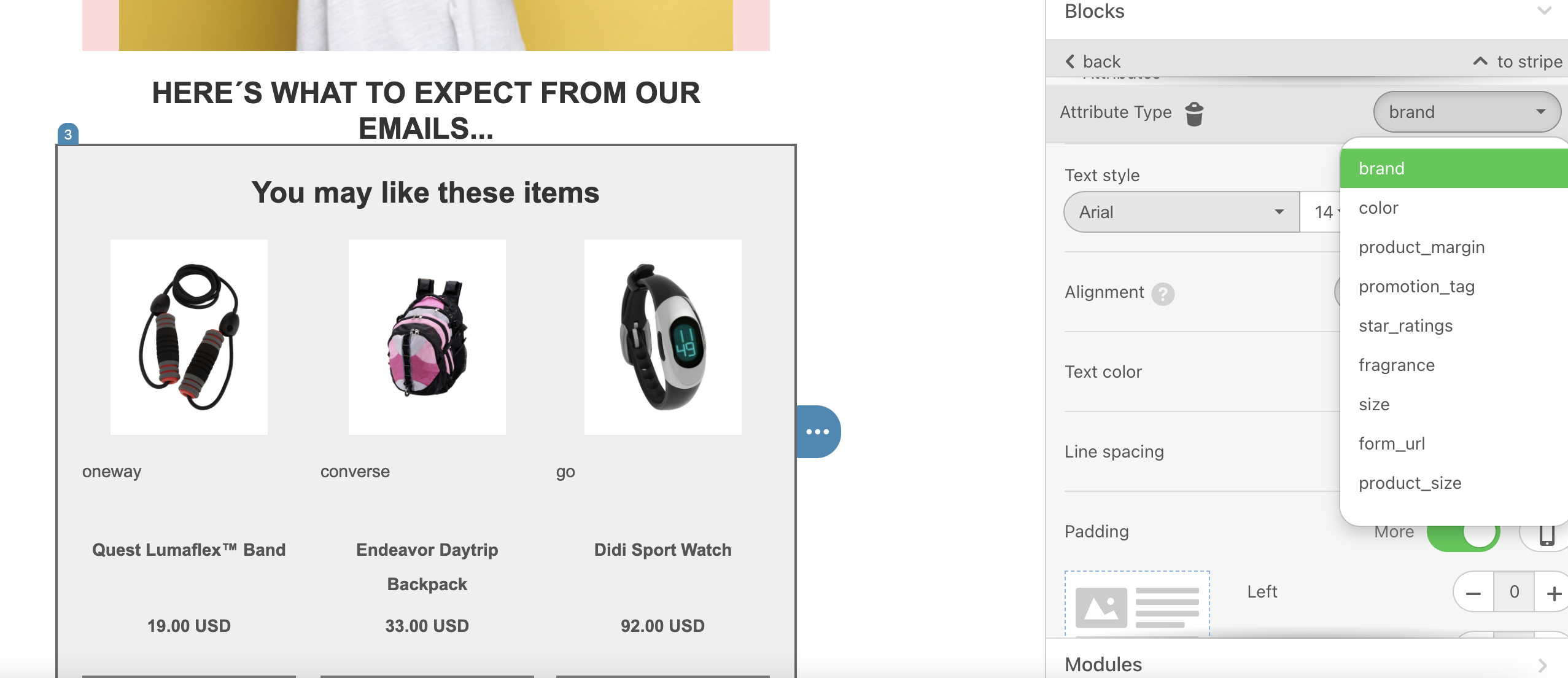
13. Click the Add Attribute button to add more product attributes to display if necessary. Select the attribute type to change its style.
You can only add custom product attributes to the product card; the default product attributes are not listed in the dropdown.
Once you complete customizing your product recommendations, you can save your email and test it as usual.
You can save the design with the Email Recommendation block with its configurations as a template and reuse it in other campaigns. However, it is not possible to save the email recommendation as a module for now.
Email Recommendation content like product images, product names, and descriptions, prices, availability, etc. is generated when your email campaign is sent to the recipients, not when the email is opened.