An algorithm takes in user events and product catalog information, processes them, and produces a curated list of recommended products. When evaluating performance, two crucial factors influencing recommendation quality are:
- The volume of user event data processed by the algorithm
- The quality of the product catalog structure (such as diverse attributes and non-missing mandatory attributes)
To ensure the accuracy and quality of recommendations, each algorithm requires a minimum threshold of user events and a minimum number of eligible products in the catalog that have the necessary attributes. The Algorithm's Accuracy is determined by the ratio of user events to eligible products in the catalog.
Monitor the Recommendation Algorithms Health
Assessing an algorithm's health involves examining the breakdown of which mandatory user events are missing and evaluating how many eligible products are available in the catalog. This transparency in understanding missing events and catalog eligibility provides insights into the algorithm's performance and robustness.
If multiple locales exist, any problematic locales are highlighted in a yellow ribbon attached to the top bar for quick identification. This design feature enhances visibility and enables easy monitoring of the health of algorithms operating across different locales.
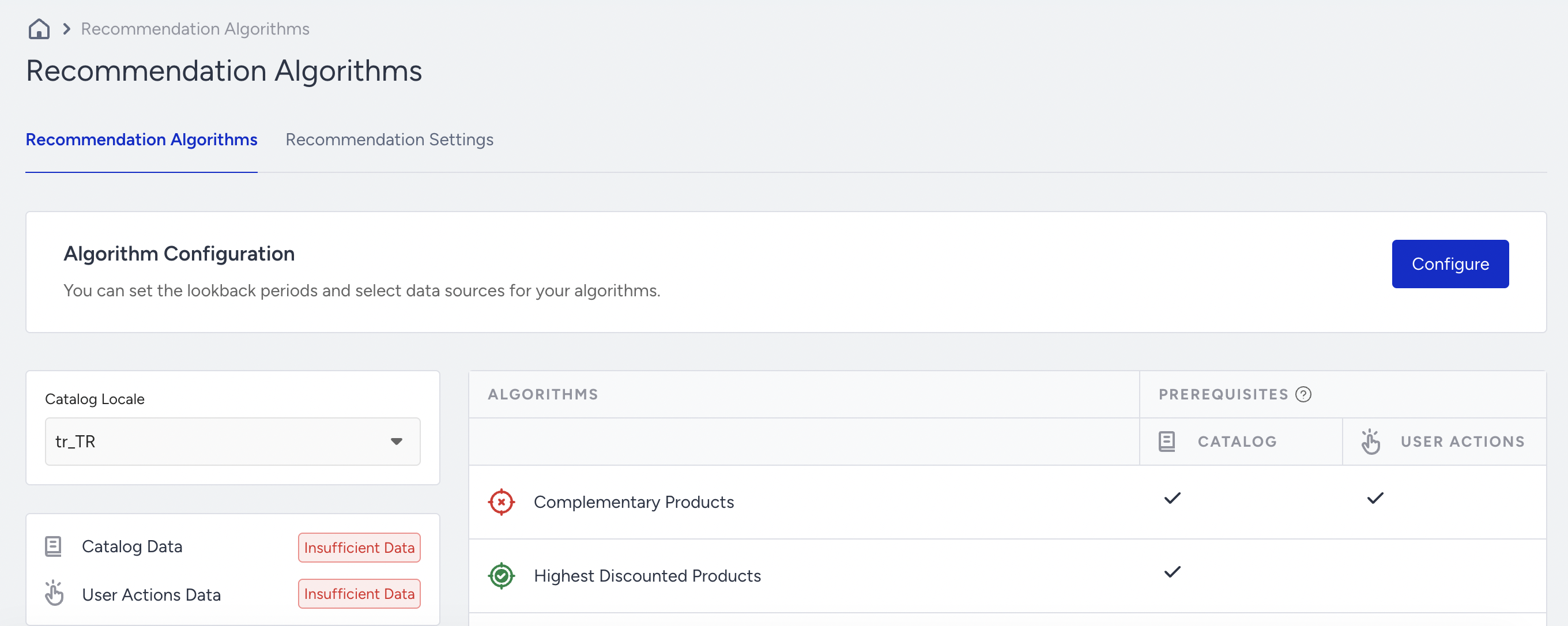
On the left side of the screen, you can see the real-time status of your product catalog and user events data. If either is registered as "Low," troubleshooting is highly recommended. You can visit the Product Catalog Management Panel on InOne to check your product catalog.
The red and green icons following the algorithms signify their live accuracy status. If it shows as "Low" (in red), it indicates that the algorithm may result in fallbacks, which can diminish recommendation accuracy.
When you click an algorithm in the listing table, you see its details.
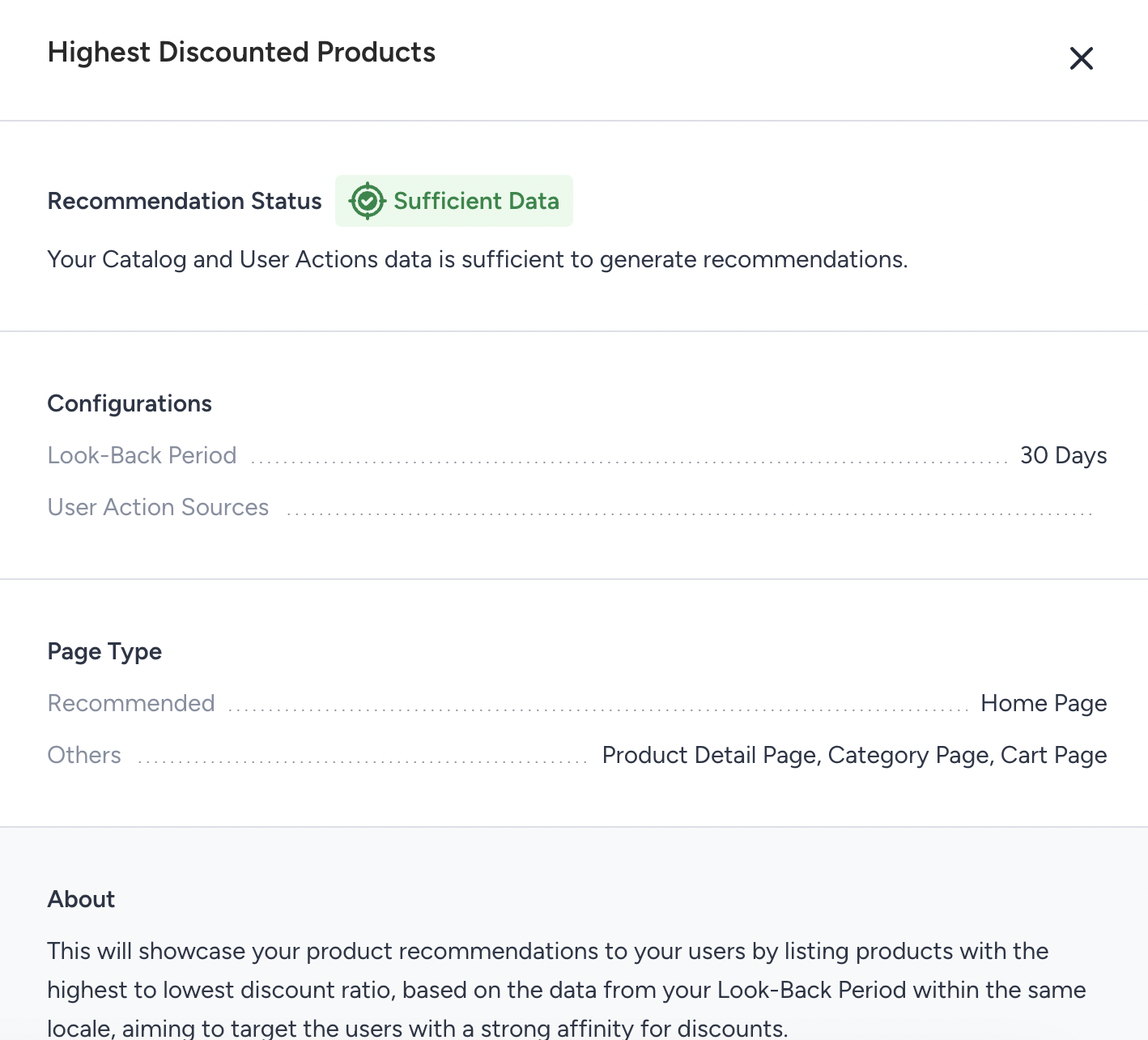
- Recommendation Accuracy reflects whether the algorithm has sufficient data to generate accurate results without fallbacks.
- Configurations specify the chosen look-back period and user event sources used by the algorithm.
- Page Type identifies your pages as recommended for this algorithm based on compatibility and lists other page types where it can be applied.
- About provides a brief explanation of the algorithm's functioning and methodology.