User-based targeting is becoming increasingly important in digital marketing, especially when identifying users based on their affinity for product-level attributes. This approach supports personalized recommendations and enables segmentation based on user engagement and likelihood of conversion.
The Attribute Affinity model collects historical data from the past 30 days based on user interactions with products, such as views, add-to-cart actions, and purchases. It determines each user's affinity for specific attributes (e.g., brand, category, or color) and segments users accordingly, allowing marketers to deliver highly targeted recommendations and campaigns.
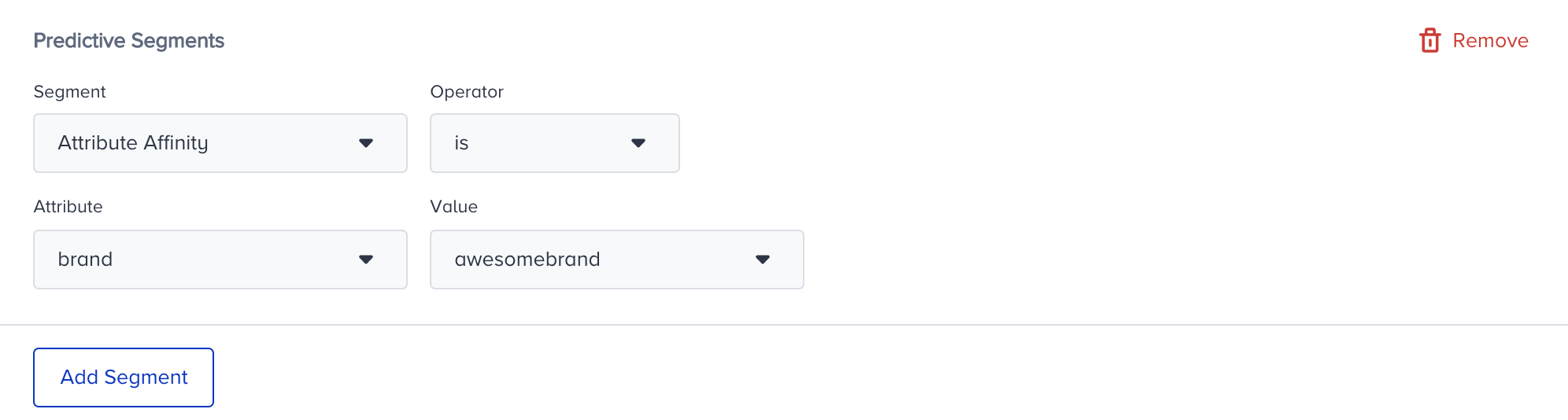
Model Details
The model evaluates user behavior by tracking product interactions and identifying preferences for specific attributes such as brand, color, or size. This segmentation enables more effective personalized recommendations and targeted marketing.
Segment update frequency: Daily
Data span: Last 30 days
Calculation time: 30 days
Model type: Clustering algorithm or multi-class classification model
Data Used
The following data points are analyzed to infer user preferences and build attribute-based segments:
Product page views
Purchases
Specific interactions with different product types
Filter preferences (e.g., color, size, brand)
Key Features
The following features are used to evaluate and segment users based on their interactions with product attributes:
Filter interactions
Browsing history and category preferences
Time spent viewing specific products
This model supports use cases like surfacing preferred colors at the top of catalogs or highlighting a user's favorite brands, helping increase engagement and conversions.