Meta, the company behind WhatsApp, recently updated its WhatsApp Business Messaging Policy on opt-ins, also known as WhatsApp consent rules or GDPR opt-in requirements for messaging. In Meta's November 2024 update, businesses must obtain opt-in permission before messaging people on WhatsApp. This permission can be general or not specifically for WhatsApp, as long as businesses comply with all local laws.
This means a general SMS opt-in might be sufficient to send marketing messages via WhatsApp. However, this raises an important question: how does this align with GDPR regulations?
GDPR and WhatsApp Business
The General Data Protection Regulation (GDPR) requires consent to be specific to each processing activity, including receiving messages on WhatsApp. Although Meta’s new policy seems to loosen the opt-in requirements, businesses subject to GDPR must still ensure compliance.
To stay compliant, businesses should follow these GDPR principles:
Explicit consent: Users must give clear and informed permission before receiving messages. Generic opt-ins might not be sufficient.
Data minimization: Only collect and process essential data for communication.
Right to erasure: Users should be able to request that their data be deleted, and businesses are required to apply.
Transparency and accountability: Businesses should be clear about how they use customer data and keep records of opt-ins for legal purposes.
Why did Meta change this policy?
Meta’s adjustment to the opt-in policy likely reflects a strategic move to:
Stay competitive: Google’s Rich Communication Services (RCS) allows SMS opt-ins, and Meta wants to align WhatsApp with similar ease of use.
Encourage business adoption: Simplifying the opt-in process could drive more businesses to use WhatsApp for marketing.
Prevent spam: While making opt-ins easier, Meta still aims to prevent WhatsApp from becoming a spam-heavy platform.
GDPR Compliance Best Practices for WhatsApp Business
To ensure compliance while using WhatsApp Business for marketing, businesses should:
Obtain explicit opt-ins: Make sure users clearly agree to receive WhatsApp messages. Avoid assuming general consent applies.
Provide clear opt-out options: Allow users to unsubscribe easily from messages anytime.
Secure customer data: Protect all collected data with strong security measures to prevent breaches.
Maintain consent records: Keep detailed logs of when and how users provided consent in case of audits or legal inquiries.
New Opt-Out Mechanisms Introduced by Meta
In addition to changes in opt-in policies, Meta has also introduced new opt-out methods to give WhatsApp users more control over the marketing messages they receive.
Share message feedback
Your end users can use the Thumbs Up and Thumbs Down buttons in their chat with your business to share feedback about the marketing messages they receive. Based on this feedback, WhatsApp may adjust how frequently promotional messages are shown to them.
Continue receiving offers and announcements
Your end users can continue receiving marketing messages from your business by following these steps:
Open the chat with your business on WhatsApp.
Tap the Thumbs Up button.
End users can tap the Undo icon to remove their feedback.
Receive fewer offers and announcements
Your end users can request fewer marketing messages from your business by following these steps:
Open the chat with your business on WhatsApp.
Tap the Thumbs Down button.
If a user clicks Thumbs Down, it can affect per-user marketing template messaging limits between you and the user.
After submitting negative feedback, end users can:
Tap the Undo icon to remove their feedback.
Tap the Stop icon to stop receiving offers and announcements from your business.
Tap the Block icon to block your business on WhatsApp.
Stop offers and announcements
WhatsApp users can stop receiving promotional offers and announcement messages from your business at any time by enabling or disabling the Offers and Announcements toggle on your business profile to stop or resume receiving the marketing messages from your business.
Even if end users stop promotional offers and announcements, they can still receive other message types they have opted in to, such as boarding passes, delivery updates, and one-time passwords.
Since this will stop sending Meta messages to these users, users who have disabled the Offers and Announcements button will be marked as opt-out and will not be included in the audience for the next campaign segmentation.
If the user disables this toggle, they opt out. 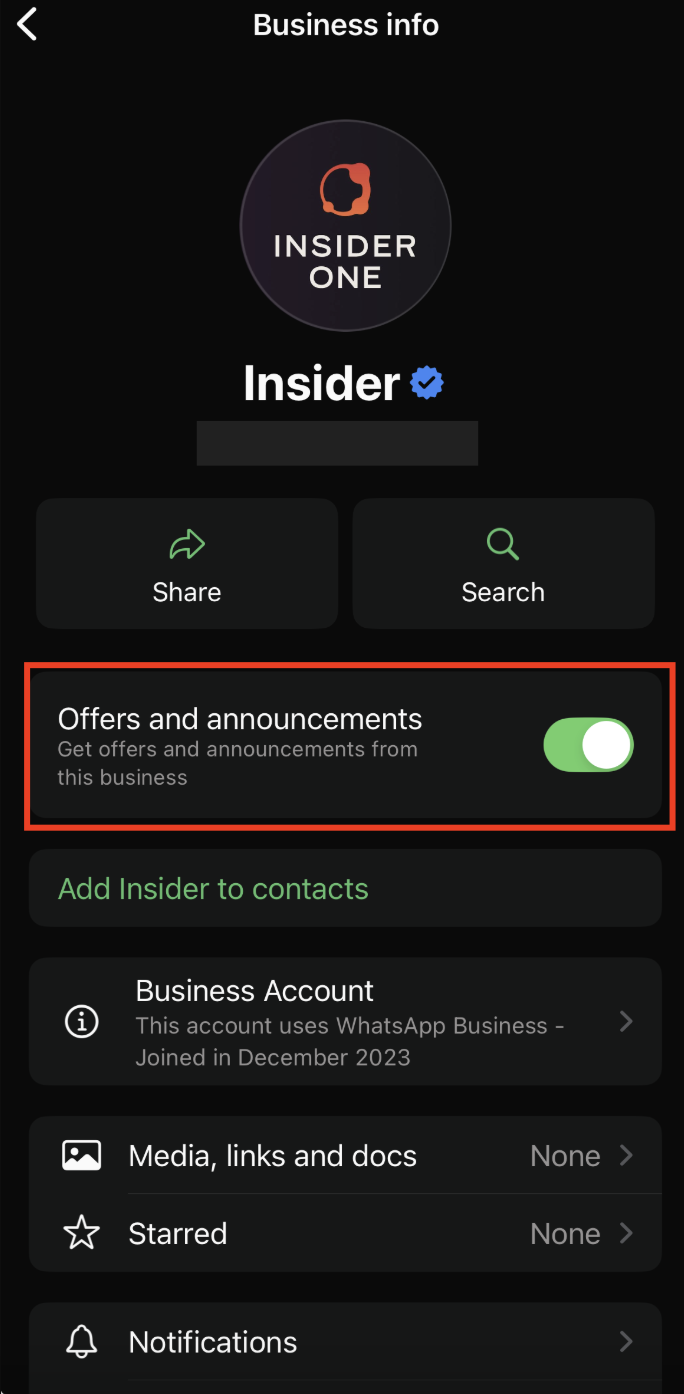
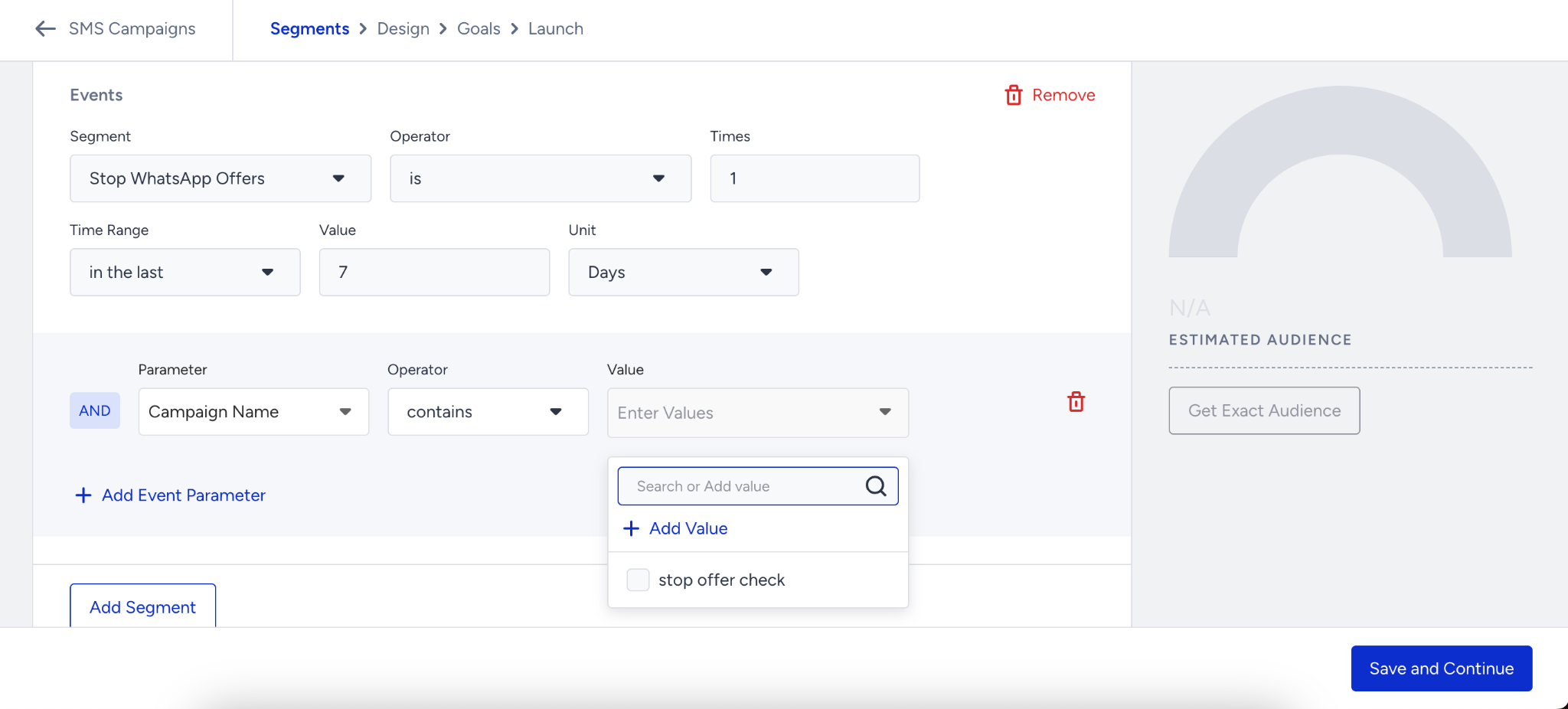
If you want to identify the users included in your campaign's Unsubscribe Rate who clicked the "Stop offer" button, you can export their information from the InOne panel.
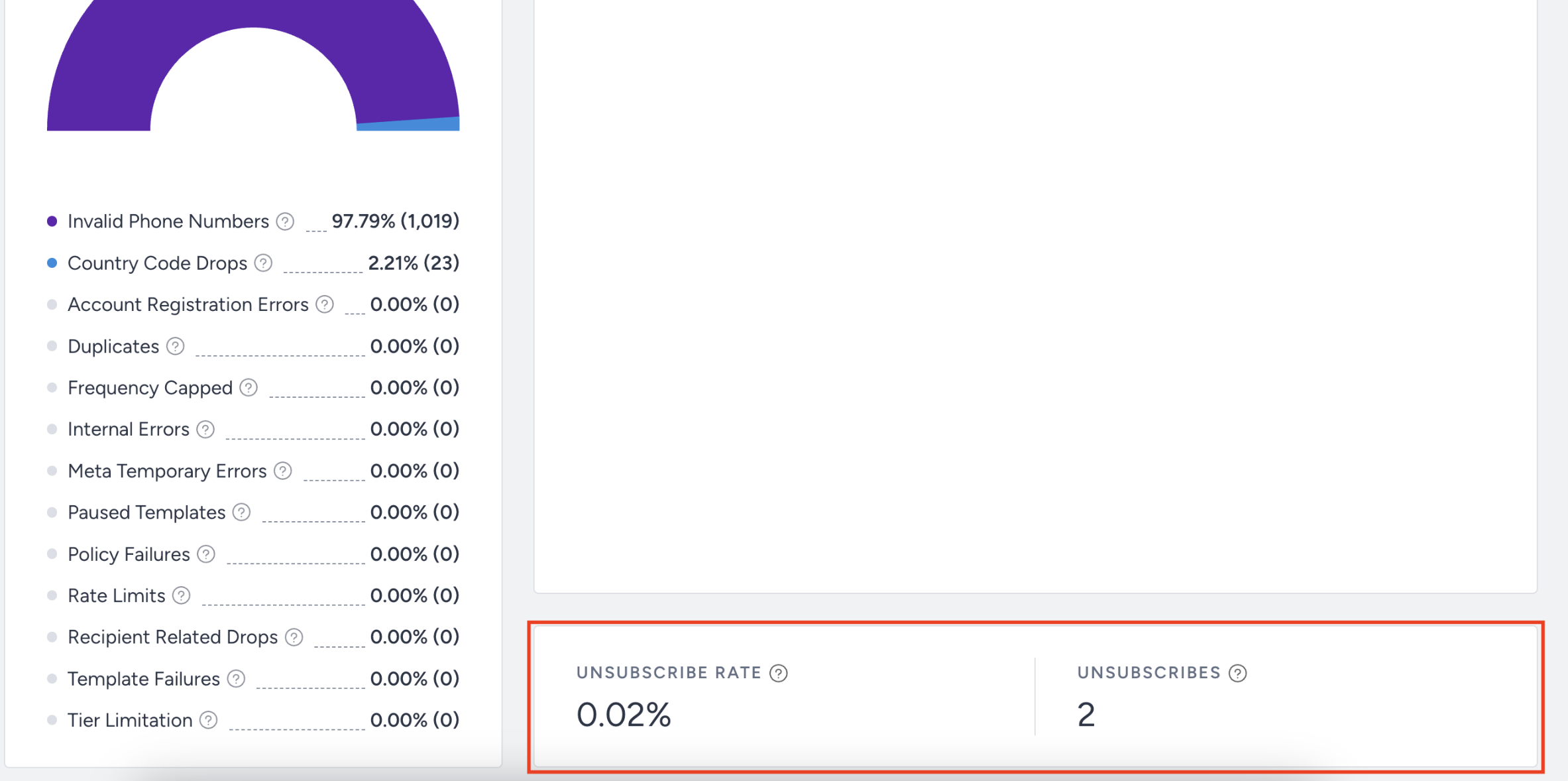
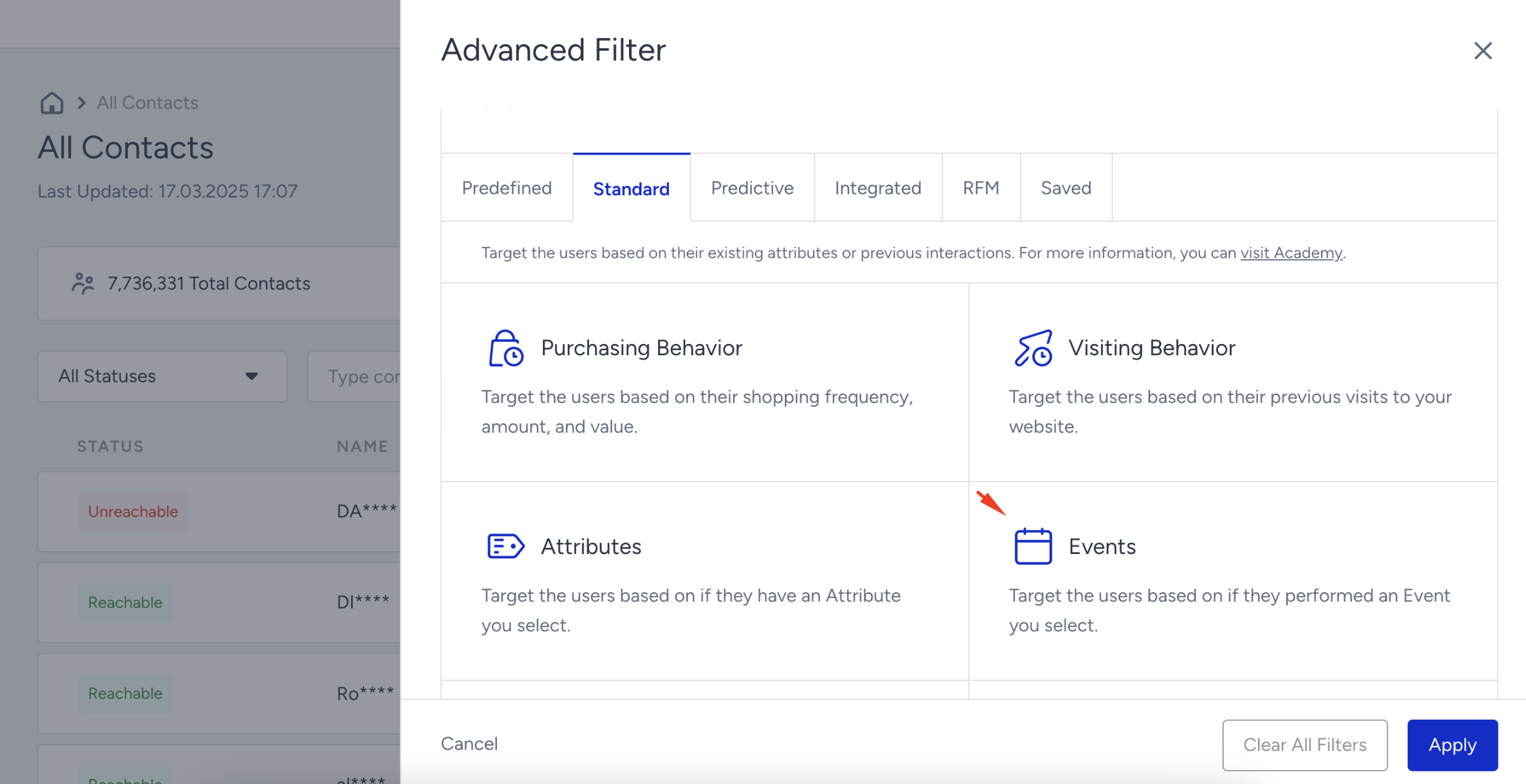
To export these users,
Go to Audience > Contacts Management > All Contacts. Click Filter Contacts and select Events in the Standard segment.
Apply the filter below.
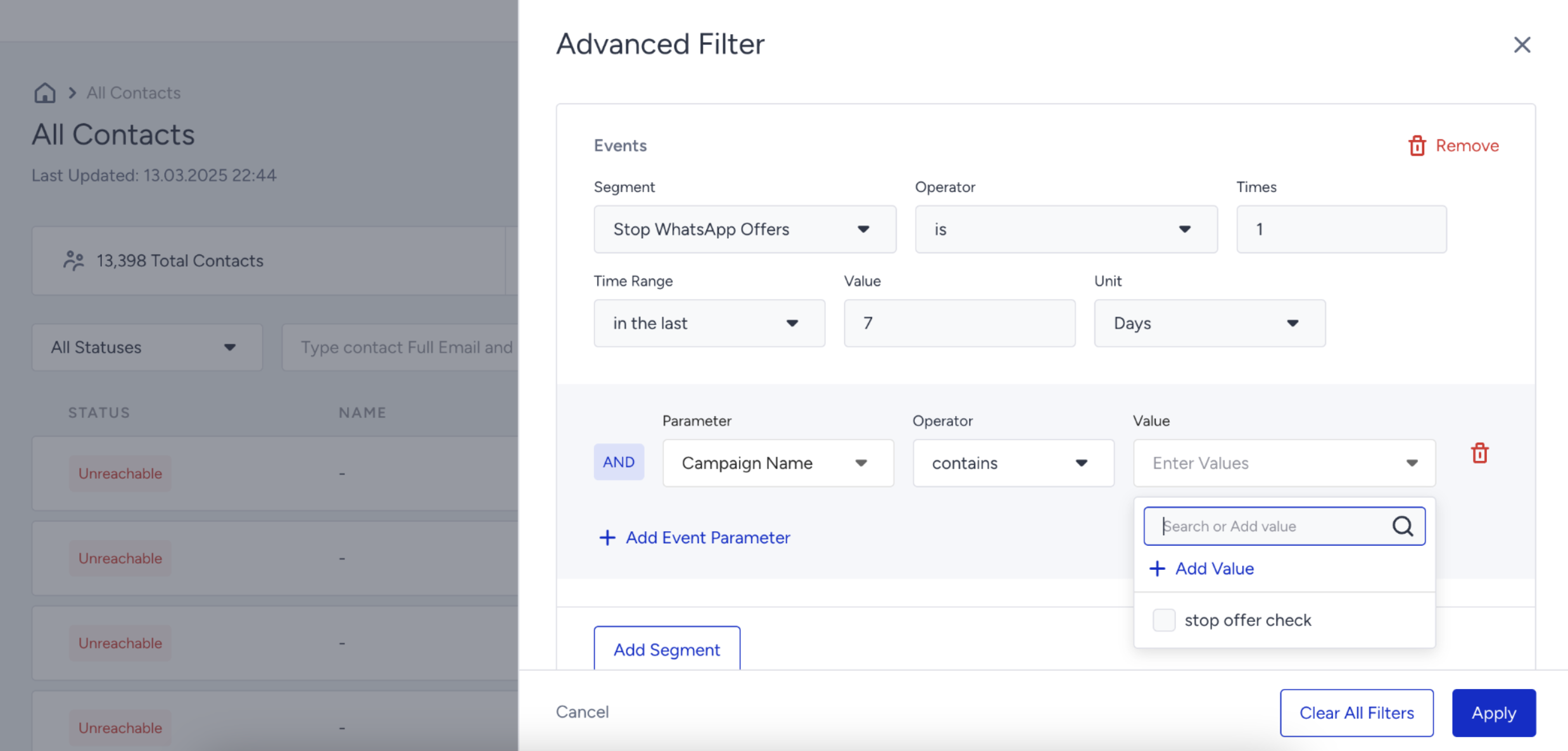
If you want to evaluate these users for opt-in, you can segment them by marketing channel as follows.